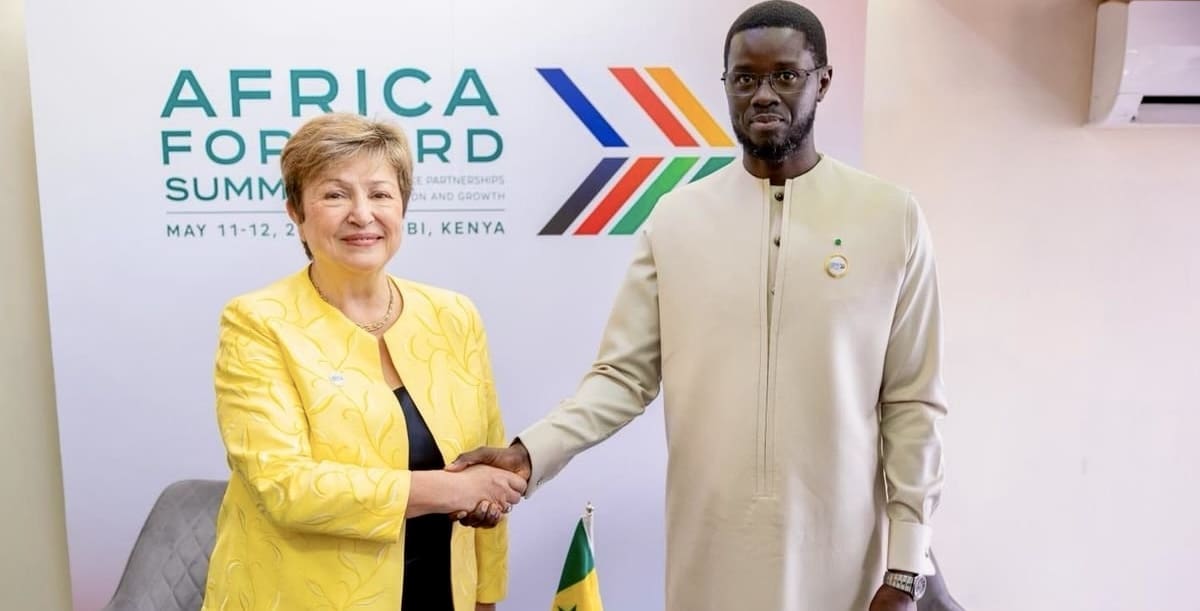
While the Senegalese Prime Minister Ousmane Sonko was hosting a high-profile conference in Dakar on “exploring alternatives to solutions proposed by Bretton Woods institutions,” featuring academics and self-styled ‘outsider economists,’ the office of President Bassirou Diomaye Faye clarified from Nairobi this week that the head of state is directly overseeing negotiations with the International Monetary Fund (IMF). This move comes after the discovery of undisclosed liabilities in 2024, inherited from the previous administration.
The President’s decisive involvement underscores his commitment to addressing Senegal’s debt crisis. Faye recently held a pivotal meeting with IMF Managing Director Kristalina Georgieva on the sidelines of the Africa Forward Summit in Nairobi. The two leaders explored potential solutions to Senegal’s mounting debt challenges, with both sides agreeing to continue discussions. According to a statement from the President’s office, Faye is personally invested in resolving this issue: “This is a matter to which the Head of State is deeply committed and to which he is devoting all his energy.”
The discussions also tackled the broader economic pressures facing Senegal, particularly the ripple effects of geopolitical instability in the Middle East. Rising energy costs and their impact on the national economy were highlighted as key concerns that require urgent attention.
Earlier this year, Prime Minister Ousmane Sonko had publicly pushed back against IMF demands for debt restructuring, dismissing such measures as unacceptable. However, the situation has evolved, prompting a shift in strategy as the government seeks fresh financial support from the Fund.
The IMF had suspended a $1.8 billion loan program in 2024 following discrepancies in economic reports. Now, Senegal is pursuing a new lending arrangement to alleviate its debt burden, which has surged to over 130% of its Gross Domestic Product (GDP). The Fund has also revised its growth forecasts for the country downward, citing a wider-than-expected current account deficit as a growing concern.