Sonara’s 700 billion cfa bluff: a financial maneuver or genuine revival?
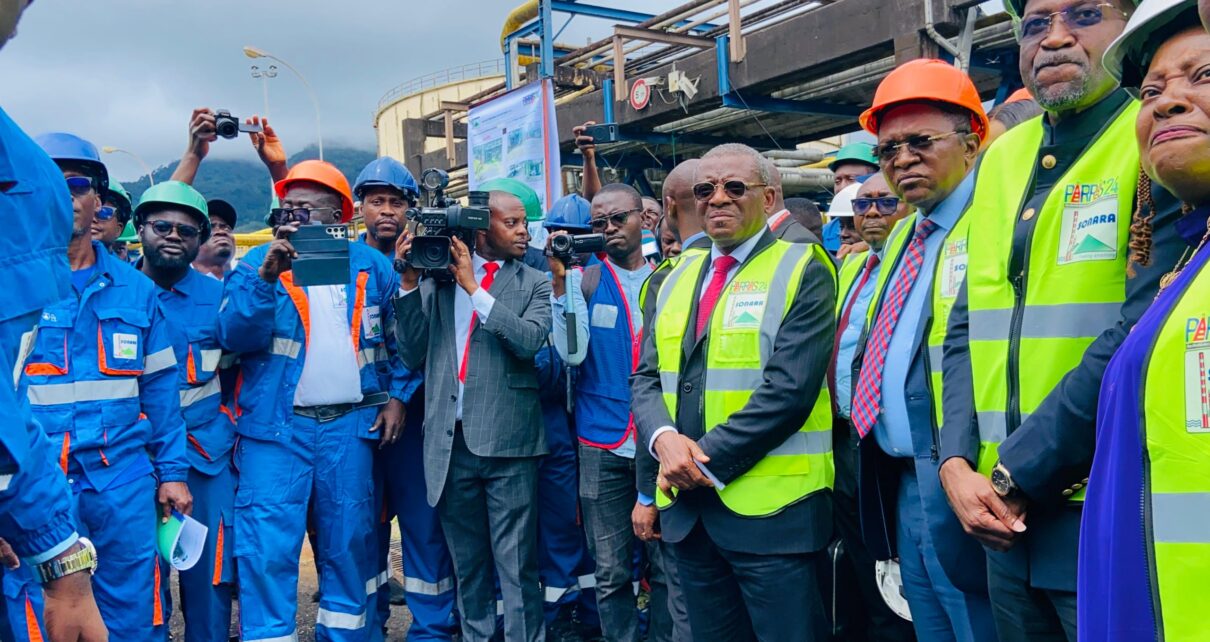
Seven years after the devastating fire at Sonara, its CEO addressed global media with a bold claim: the company is reborn, backed by a 700 billion cfa financing plan. But is this announcement a strategic move or an attempt to mislead?
Sonara’s resurrection: a 700 billion cfa gamble
Seven years after a catastrophic fire crippled the Sonara refinery, its directors made a sweeping declaration to international media: the company is reborn, backed by a colossal 700 billion cfa financing plan. Yet this announcement raises pressing questions. Where is the signed memorandum of understanding with a financial partner? The response is clear: none exists yet.
Instead, the revelation came during a closed-door ministerial meeting evaluating reconstruction costs and financing models. The chosen approach follows a Design-Build-Finance-Maintain (DBFM) framework, encompassing design, construction, financing, and long-term maintenance. This model, while innovative, leaves many skeptical.
If seven years post-fire, the government is only now contemplating this financing model, how long will it take to secure a partner? The process may already be repeating a familiar Cameroonian pattern: agreements signed without upfront funding, only to later seek bank loans. This contrasts sharply with successful models observed in neighboring mining sectors.
The SNH shadow and Nathalie Moudiki’s role
A closer look at timing reveals this announcement followed the Célestin Tawamba, president of Cameroon’s employers’ federation, praising the SNH for its Kribi refinery project—a venture spearheaded by Nathalie Moudiki. This international recognition highlights a stark contrast in project execution efficiency.
Political timing and strategic maneuvering
At its core, yesterday’s announcement appears designed to create an illusion of progress as President Paul Biya, currently in Switzerland, reassesses the performance of his appointees. The Sonara’s communication strategically incorporated the mention of a hydrocracker unit to resonate with Cameroonians—a project initially planned before the fire and already incorporated into the Kribi refinery’s blueprint.
The sabotage question surrounding the Kribi refinery
Consider this: why do shadowy whistleblowers simultaneously attack key figures behind major projects? Since yesterday, Boris Bertolt has intensified his attacks on the SNH‘s Kribi refinery project with baseless claims. Is this an attempt to derail a project the same day Sonara makes its comeback announcement?
Interestingly, the SNH has consistently praised Sonara’s historical significance. Looking back to 2020, a high-profile Russian Lukoil delegation visited Yaoundé proposing a reconstruction plan with modern equipment. The government declined the offer, with officials citing sovereignty concerns. Yet this rationale seems flawed when compared to global benchmarks: Nigeria’s private Dangote refinery processes over 60% of the country’s oil, and similar projects across Africa are being built by international partners without compromising national sovereignty.
Why then is the SNH‘s successful gas model not being applied to the oil-focused Sonara? Angola’s Lobito refinery was built by China, Zambia’s Copperbelt by China, and Uganda’s first refinery by Russia. The Congo is also planning a new facility. The pattern is clear—yet Cameroon’s approach remains an outlier.
Cameroonians are left to wonder: is this a genuine revival or a calculated distraction?



Comments