Sonko exposes moral divide behind Senegal’s political split
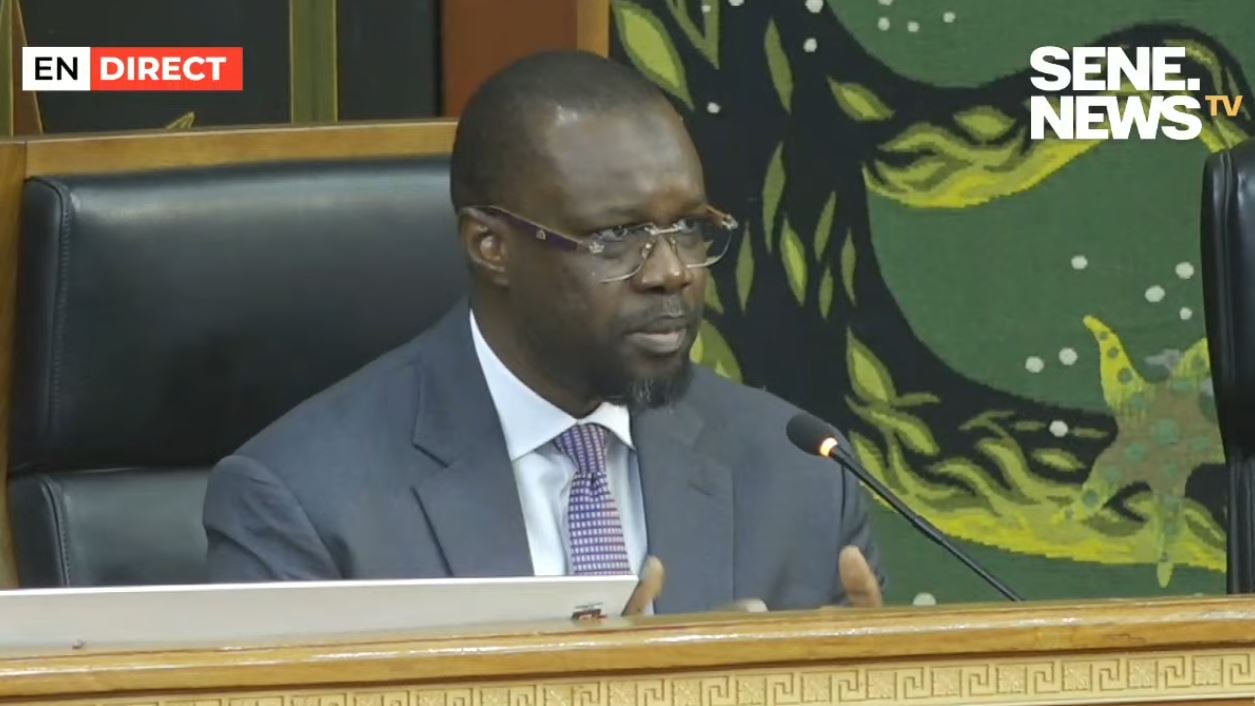
Senegal’s newly elected National Assembly President, Ousmane Sonko, has broken his silence on the political rift with President Bassirou Diomaye Faye. Speaking with philosophical depth, he frames the split not as a clash of personalities, but as a fundamental struggle between ethical governance and political power.
Days after his dismissal from the prime minister’s office and subsequent election to the Assembly’s top post, Ousmane Sonko delivered a speech rich in philosophical reflection to explain the roots of his political break with Bassirou Diomaye Faye. The former head of government shifted the conversation from power acquisition to its purpose, declaring that the true test of leadership lies not in control, but in service.
He framed the national crisis not as a personal feud, but as a confrontation between morality and governance. Drawing from Aristotle’s teachings, Sonko argued that politics, when practiced with integrity, becomes the highest form of human endeavor—one that must serve the common good above all else. ‘No nation endures,’ he asserted, ‘when its leaders abandon virtue for personal ambition.’
Sonko invoked Senegal’s political heritage, particularly the legacy of Mamadou Dia, whose warnings from the early independence era still resonate today. Dia had cautioned against conflating state power with private gain, emphasizing that sovereignty extends beyond symbols and institutions—it must be moral, economic, and social. ‘A country may have a flag and anthem,’ Sonko reflected, ‘yet still suffer under leaders who hollow out the Republic from within.’
He extended his critique to contemporary African governance, warning that nations decline not only from material poverty, but from a ‘moral fatigue’—when institutions stop serving citizens and instead become tools of elite comfort. Without naming names, Sonko implied that his split with the President stems from a deep disagreement over the ethical foundations of leadership.