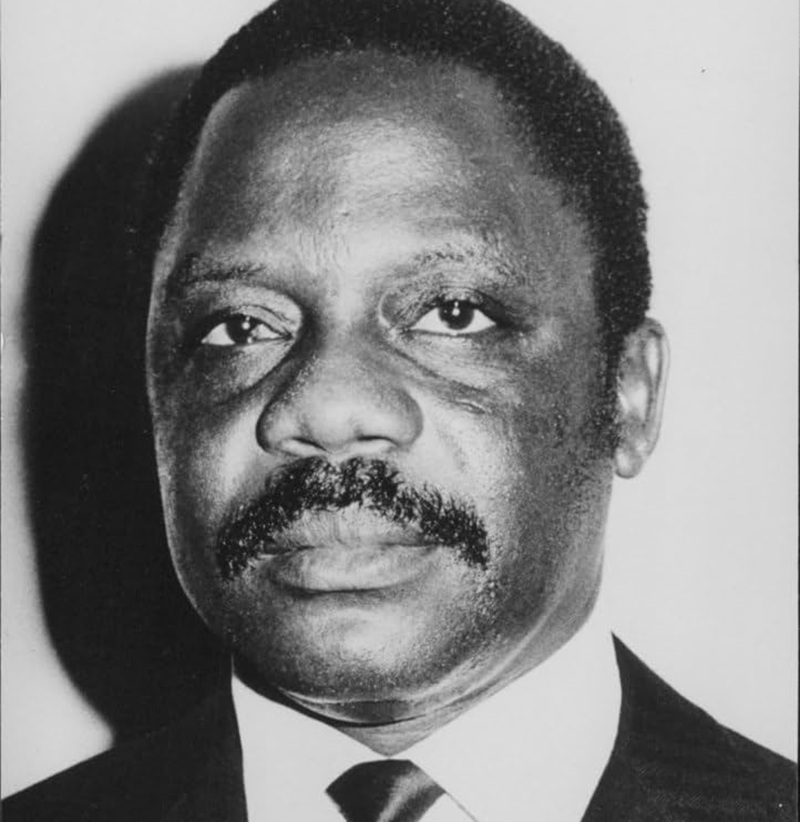
The shadow over the Congo River: the untold story of Congo’s spy chiefs
In the Democratic Republic of the Congo (DRC), power has never been seized through parliamentary debates—it has always been taken in the shadows. Since gaining independence in 1960, every president, rebellion, and transition has relied on a shadowy figure: the master spy. These spies are not just part of the state apparatus—they are the state. When the National Security Service (Sûreté Nationale) coughs, the presidential palace shudders. When the National Documentation Center (CND) listens, ministers fall silent. When the National Intelligence Agency (ANR) acts, justice complies.
The birth of a shadow state
The roots of Congo’s intelligence machinery trace back to the chaos of the Cold War, coups, and deep distrust. On June 30, 1960, independence was declared—by September 14, Mobutu had already executed his first coup. Between those dates, a void emerged—and the Sûreté rushed to fill it.
Their official mandate reads like a bureaucratic checklist: collect political, economic, and social intelligence. But their true purpose has always been threefold:
- Protect the leader—from enemies, the military, even the people;
- Monitor everyone—opposition figures, cabinet members, clergy, students, and the diaspora;
- Instill fear—to deter anyone from challenging the status quo.
Three architects of terror: from infirmary to iron fist
From 1960 to 1990, one system wore three faces. Three men shaped Congo’s culture of fear:
- Victor Nendaka Bika, “The Oufkir”: A former nurse turned spymaster, he transformed the colonial-era security service into a political weapon. His golden rule? The head of intelligence answers only to the president—not to ministers. He set the precedent: threaten officials, manipulate documents, and eliminate opponents. His most infamous act? Orchestrating the fatal transfer of Patrice Lumumba in 1961—a move he later disavowed, claiming innocence until his death.
- Seti Yale, “The Grey Eminence”: A Cold War professional trained in Israel and the United States, he built the CND—the “KGB of Zaire”—institutionalizing wiretapping, surveillance, and torture. He turned intelligence into a political project, influencing who held power behind the scenes.
- Honoré Ngbanda, “Terminator”: He industrialized the system. The CND became a state within a state, with spies embedded in every ministry and embassy. Fear was exported as far as Europe. Even Mobutu, wary of overmighty lieutenants, eventually sidelined him in 1990.
The common thread? Whoever controls intelligence controls power. Mobutu understood this early. He multiplied rival agencies—CND, SNIP, SARM, DSP—ensuring they spied on each other. But he never let one man dominate the machine for too long: Nendaka was dismissed in 1965, Yale marginalized, and Ngbanda ousted in 1990.
From Mobutu’s fall to the ANR: a system that never died
The system collapsed with Mobutu in 1997—but it did not vanish. It mutated. The SNIP became the AND, then the ANR. The acronyms changed, but the cells remained. The methods evolved, but the fear endured.
This is the story of 30 years of power seen from the basement archives. It begins in October 1960, when a nurse named Victor Nendaka was hastily appointed to head the Sûreté. It ends in 1990, with Honoré Ngbanda—“Terminator”—driven out by the winds of democracy. In between: wiretaps, disappearances, fatal transfers, and twisted coups.
This is the real history of power in Kinshasa—a history that is never broadcast on airwaves or whispered into microphones, but passed in windowless offices where decisions are made without witnesses.
The Oufkir of the Congo: how Victor Nendaka invented the power-grinding machine
He never wore a uniform. Yet from 1960 to 1965, Victor Nendaka Bika—a former nurse turned spymaster—made the entire country tremble. As the first director of the Sûreté Nationale, he didn’t just collect intelligence; he weaponized it.
Nendaka rebranded the Sûreté as the National Bureau of Investigations (BIN), shifting its focus from petty crime to tracking, profiling, and neutralizing Lumumbists. He joined Mobutu’s secretive “Binza Group,” a cabal of unelected power brokers who shaped the nation’s fate from the shadows. His legacy? Three rules that haunted Congo for decades:
- The Sûreté above the law: When Minister of the Interior Christophe Gbenye tried to sack Nendaka in December 1961, the spymaster surrounded his office with troops—backed by Mobutu. Gbenye was dismissed instead.
- Intelligence as a political tool: A member of the Binza Group, Nendaka helped install and topple prime ministers with CIA support.
- Plausible deniability: On Lumumba’s death, Nendaka always shifted blame: “It wasn’t me—it was D’Aspremont, Tshombe, Lahaye.”
By 1965, Mobutu had grown uneasy with Nendaka’s power and removed him. But the machine was already running. Future spymasters like Seti Yale and Honoré Ngbanda merely perfected the method.
A note that changed history: the paper that sealed Lumumba’s fate
In January 1961, a yellowed note became a death warrant. Victor Nendaka kept it for decades, waving it before Belgian investigators in the 2000s as proof of his innocence.
The note was an order—signed by Nendaka as head of the Sûreté—to transfer Patrice Lumumba, Maurice Mpolo, and Joseph Okito to Elisabethville (Lubumbashi). That night, the three men were executed. Nendaka later claimed President Kasa-Vubu had approved the transfer, insisting that in Congo, “opponents were not killed—debates under the baobab tree were the custom.” Historians disagree. Many suspect Nendaka’s involvement was deeper than his protests suggested.
Whatever the case, the message was clear: the Sûreté did not just gather intelligence—it decided who lived and who died.

From the shadows to the ANR: a legacy that endures
When Mobutu fell in 1997, Congo’s intelligence apparatus did not collapse—it reinvented itself. The ANR emerged from the ashes of the CND, inheriting its archives, its cells, and its methods. The names changed, but the culture of surveillance and fear remained.
Victor Nendaka died in 2002, protesting his innocence until the end. His successors—Yale, Ngbanda, and many unnamed figures—built empires of fear that shaped Congo’s politics for generations. Their stories are not taught in schools. They are passed in hushed tones, in offices without windows, where the real decisions are made.
This is the untold history of power in Kinshasa: a chronicle of whispers, betrayals, and blood—written not in the light of day, but in the shadows over the Congo River.