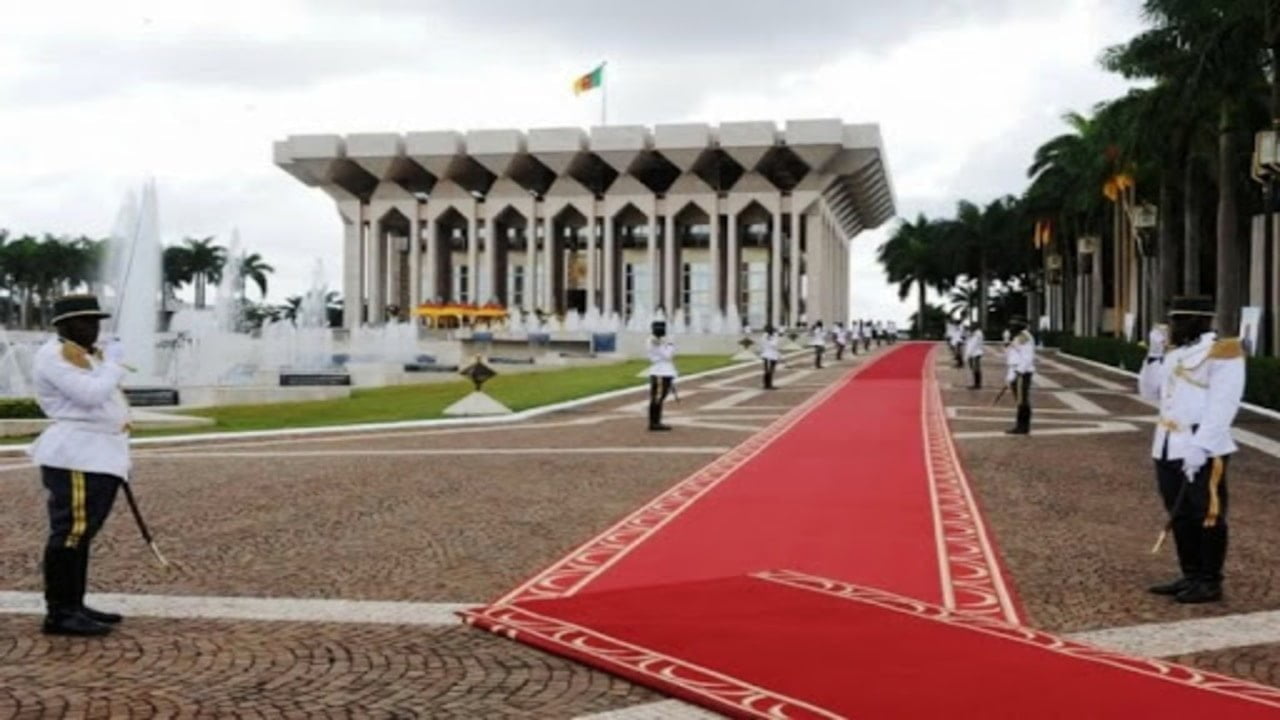
Cameroon faces institutional questions as president’s prolonged absence sparks debate
Since departing Cameroon on June 7, 2026, for what was announced as a brief private visit to Europe, President Paul Biya has yet to return to the Palais de l’Unité. The official communication from the Civil Cabinet confirmed his departure from Yaoundé but provided no further details, only mentioning the accompanying delegation. Reliable sources indicate the president traveled to Switzerland, citing undisclosed personal reasons. Now, more than 40 days later, there remains no official word from the head of state, and the press has struggled to verify details of his private European stay.
Back in Cameroon, concerns are growing over what some are calling an ‘extended absence’ from the presidency. Among those voicing questions is Patricia Tomaino Ndam Njoya, leader of the Union démocratique du Cameroun (UDC), whose party members have also raised concerns. In a public statement, Njoya criticized the lack of transparency surrounding the president’s absence from the seat of government for over a month.
Institutional stability demands clear rules for presidential absences
The UDC argues that the current situation highlights the need for stronger mechanisms to ensure the continuity of public action and the proper exercise of presidential duties. The party emphasizes the necessity of appointing a vice-president—a position the revised constitution of April 14, 2026, already provides for. Without such a figure, they warn, the nation risks institutional paralysis.
To address the urgency of the situation, the UDC is calling for several measures: clear, time-bound rules governing extended presidential absences; regular updates to the nation and Parliament; explicit and published delegation of presidential functions when continuity is required; and an impartial procedure to confirm any definitive temporary incapacity. The party urges competent institutions to clarify how the state’s continuity is being maintained in the president’s absence.
Political tensions rise as questions surround presidential return
The prolonged absence comes at a politically sensitive time. Following last year’s presidential election and the start of President Biya’s eighth term, many Cameroonians expected a new government to be formed and key reforms, including the appointment of a vice-president, to move forward. Yet, more than six months into the new mandate, neither has happened. The constitutional revision of April 14, 2026, explicitly calls for the creation of this position, but it remains unfilled.
In the absence of presidential oversight, the situation has already led to unintended consequences. False presidential decrees introduced at the CRTV nearly triggered an institutional crisis, underscoring the risks of a leadership void at the highest level. As July draws to a close, attention is also turning toward the upcoming legislative and municipal elections—a pivotal moment that is already reshaping dynamics within political parties, including the ruling party.
In a further sign of the political climate, the central committee of the Rassemblement Démocratique du Peuple Camerounais (RDPC) has scheduled a statutory meeting for July 21, 2026, while the party’s president remains abroad. The absence of leadership at such a critical juncture raises concerns about the party’s ability to navigate the challenges ahead.
With public scrutiny intensifying and the constitutional framework yet to be fully implemented, the prolonged absence of President Paul Biya is testing the resilience of Cameroon’s institutions. The coming weeks will be decisive in determining whether the country can maintain stability and ensure the continuity of its governance amid uncertainty.