The JNIM strikes again: coordinated assaults rock the Mopti region
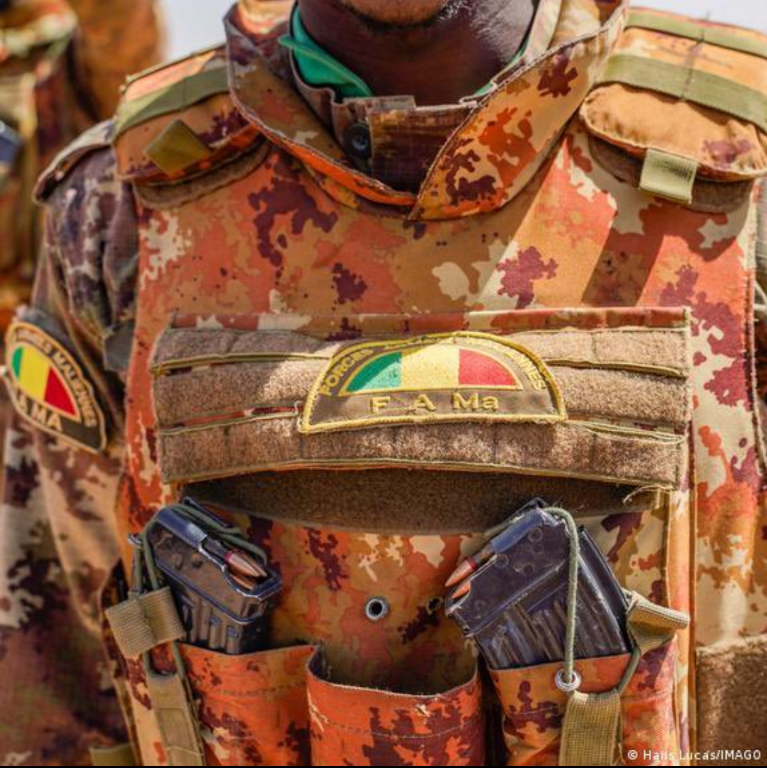
On Sunday, July 19, the Mopti region in Mali became the epicenter of a meticulously planned offensive by the Group for the Support of Islam and Muslims (JNIM). In a bold declaration, the Al-Qaeda-affiliated faction claimed responsibility for four simultaneous strikes targeting Malian Armed Forces (FAMa), their Russian allies in Africa Corps, and local militia groups. This brazen display underscores the group’s unchecked mobility and operational prowess, five years after the coup that brought Colonel Assimi Goïta to power.
Despite the junta’s vow to restore territorial sovereignty, the nation has plunged deeper into a multifaceted crisis. Security failures, a worsening humanitarian emergency, and the ineffectiveness of foreign partners—particularly Africa Corps—have left vast swathes of territory beyond state control. The attacks on July 19 serve as a stark reminder of the regime’s inability to curb the jihadist tide.
A week of terror: how the JNIM paralyzed the Mopti region
Through its established propaganda channels, the JNIM detailed its coordinated assaults, revealing a disturbing level of tactical sophistication. In the Douentza area, three improvised explosive devices (IEDs) detonated in quick succession, targeting a logistics convoy, a military truck, and a motorcycle detachment of soldiers. The strikes were deliberately designed to disrupt the movement of both FAMa troops and their Russian counterparts. Meanwhile, in the outskirts of Kansila, the group launched a direct assault on a Dozo hunters’ militia unit—a local self-defense force often deployed by Bamako to bolster its security efforts. The assault left three Dozo fighters dead, according to the group’s own claims.
Five years of empty promises: the Goïta regime’s security failure
When the junta seized control, its central pledge was to reclaim and stabilize the entire country, a task it argued had eluded democratic governments and Western partners like the Barkhane operation. Yet the numbers tell a different story. Conflict monitoring groups reveal a staggering rise in fatalities, with deaths from political violence and terrorist attacks doubling—or even tripling—in some provinces compared to the pre-coup era. The conflict’s complexity has also deepened, with the emergence of new armed actors like Africa Corps and the systematic targeting of specific communities exacerbating ethnic tensions. This, in turn, has fueled recruitment for jihadist factions. The frequency of attacks has surged, with daily IED detonations and ambushes—such as those on July 19—paralyzing key road networks across the nation.
Losing the ground war: Mali’s shrinking state authority
Official narratives from Bamako often highlight symbolic victories, such as the retaking of Kidal in late 2023. However, the reality on the ground paints a grim picture: the Malian state is losing its grip. The Centre and Nord regions are now characterized by lawlessness, where public administration is virtually nonexistent. The human cost is catastrophic. United Nations agencies report that over 400,000 internally displaced persons now roam the country, fleeing not only jihadist brutality but also the collateral damage of military operations.
The blockade imposed by groups like the JNIM and the Islamic State in the Greater Sahara (EIGS) has plunged entire regions into acute food insecurity. With roads rendered unsafe, humanitarian aid cannot reach those in need, transforming a security crisis into a hidden humanitarian disaster.
Africa Corps: Russia’s mercenary gamble backfires
In a strategic pivot away from France and the UN’s MINUSMA mission, the Malian junta turned to Moscow for security support. Initially under the banner of the Wagner Group and later rebranded as Africa Corps—directly tied to Russia’s Defense Ministry—Moscow deployed hundreds of paramilitaries to Mali. The results have been disastrous. Tactically, Africa Corps has failed to stem the insurgency. Strategically, its reliance on brutal warfare tactics, including alleged civilian massacres such as in Moura, has driven locals into the arms of jihadist groups, who position themselves as protectors. The lack of adequate troop numbers and the group’s inability to conduct effective counterinsurgency operations have further emboldened the enemy.
Air power’s limitations: Mali’s fragile aerial advantage
Facing a shortage of ground troops, the Goïta regime invested heavily in aerial assets, purchasing drones and attack helicopters—primarily from Russia and Turkey, including the Bayraktar TB2 drones and Mi-24 attack helicopters. While these acquisitions initially enabled large-scale strikes, their effectiveness is now waning. Maintenance challenges plague the fleet, with several aircraft lost to technical failures or shot down by rebels. The logistical hurdles of sourcing Russian spare parts have slowed repairs to a crawl. Meanwhile, insurgents have adapted, splitting into smaller units, blending into civilian areas, and exploiting vegetation to evade airstrikes. This has rendered air power not only ineffective but also prone to tragic collateral damage.
No way out: the dead end of a militarized approach
The July 19 attacks in Mopti are not isolated incidents but symptoms of a systemic failure. The regime’s reliance on a purely military strategy has reached its limits. By cutting off dialogue channels, alienating regional and international partners, and tying its fate to mercenaries more focused on resource extraction than stabilization, Bamako has cornered itself. Without a holistic political strategy that prioritizes governance, the restoration of public services, and civilian protection, Mali risks watching its territory crumble further under the relentless pressure of an expanding Sahelian jihadism.