The northern regions of Togo are facing an escalating terrorist threat, but a growing controversy overshadows the security response: the presence of foreign military and paramilitary forces. In a bold collective statement, opposition groups and civil society organizations are demanding answers from President Faure Gnassingbé’s administration, questioning the opacity surrounding these arrangements.

a united opposition challenges government over foreign military presence
In Lomé, political tensions are reaching a boiling point as opposition coalitions—including the Dynamique Monseigneur Kpodzro (DMK), Dynamique pour la majorité du peuple (DMP), Lumière pour le développement dans la paix (LDP), and the Front « Touche pas à ma Constitution »—have come together to denounce the deployment of foreign personnel in the Savanes region. This northern zone, bordering Burkina Faso, has long been a flashpoint for armed incursions.
The coalition argues that while security cooperation may be necessary, the lack of transparency from the government is unacceptable. They insist on full disclosure regarding the legal framework, operational roles, and chain of command governing these foreign forces, none of which have been officially confirmed by Togolese authorities.
Russia’s africa corps and Turkey’s sadat: shadowy actors sparking debate
The opposition’s scrutiny centers on two controversial entities: the Africa Corps—a restructured Russian security presence—and SADAT, a Turkish military consultancy firm. Reports suggest that up to 350 Russian personnel may be stationed in Togo, while SADAT is suspected of providing tactical training and operational support to local forces. However, no official figures or confirmations have been issued by Lomé, Moscow, or Ankara, fueling speculation about their exact roles.
Critics question whether these forces are merely advisors or if they are actively involved in combat operations. The absence of clarity has intensified public distrust, particularly given the region’s history of foreign military engagements.
sovereignty, legality, and financial secrecy fuel public anger
The opposition coalition does not outright oppose foreign partnerships but highlights glaring gaps in governance and legal oversight. Key concerns include:
- Chain of command: Will foreign personnel operate under Togolese military authority, or will they report to external entities?
- Civil liberties: Will these forces be deployed in domestic policing, surveillance, or arrests, risking political interference?
- Financial transparency: How much is being spent, and has the National Assembly approved these expenditures?
The lack of parliamentary debate on these costs has further fueled suspicions of financial mismanagement, with citizens demanding accountability over taxpayer-funded security contracts.
government’s strategic shift raises eyebrows
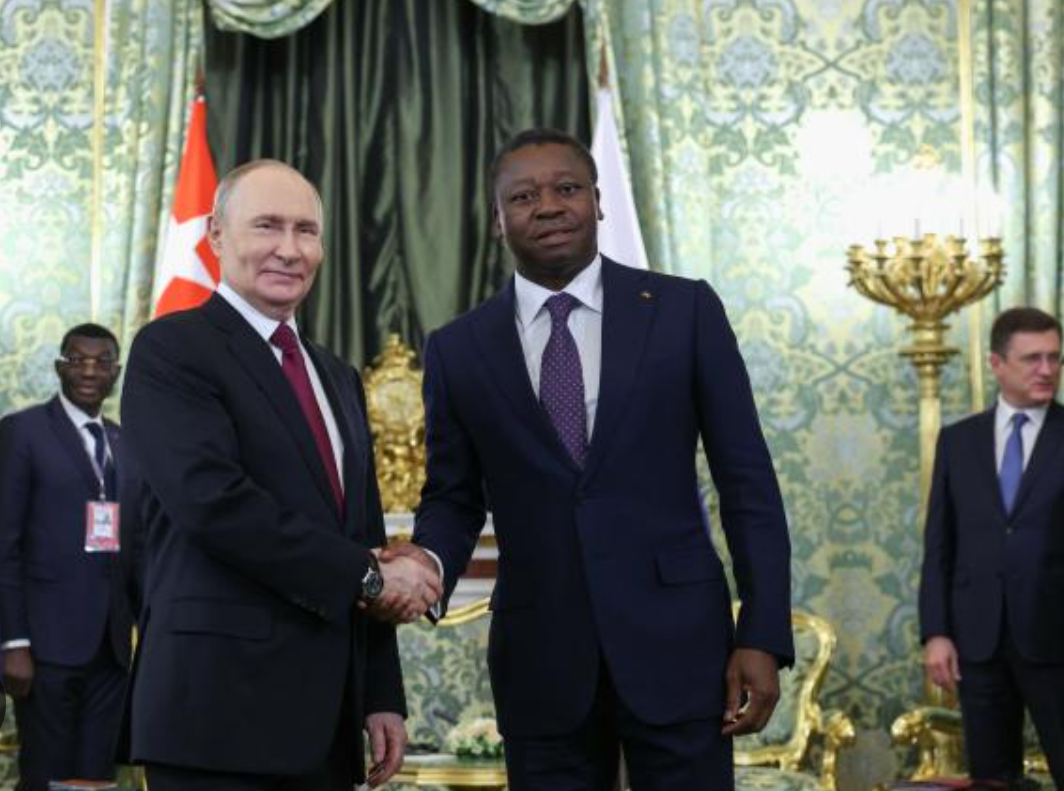
President Faure Gnassingbé’s administration has been quietly diversifying its defense partnerships, moving beyond traditional Western allies. Since 2021, Togo has secured military cooperation agreements with Turkey, including the acquisition of Bayraktar TB2 drones for border surveillance. Concurrently, ties with Russia have expanded, covering military intelligence, officer training, and joint exercises.
These developments align with the Togo-Sahel Strategy 2026-2028, a government roadmap aimed at bolstering regional security cooperation. The stated goal is to counter jihadist advances toward the Atlantic coast. Yet, the absence of public discourse on these alliances has left many questioning the motives behind this pivot.
time for an open national debate?
As Sahelian political landscapes shift and alliances realign, the demand for transparency is no longer a mere political demand—it’s a necessity for stability. Opposition leaders and civil society argue that security policies must not be crafted behind closed doors. A parliamentary or public forum could clarify the legal status of foreign forces, mitigate internal tensions, and prevent security cooperation from becoming a domestic political liability. Until then, the government’s silence continues to fuel uncertainty.