UN commends Togo’s dedication to peace in eastern Democratic Republic of Congo
Lomé, June 9, 2026 — The United Nations has formally recognized the Republic of Togo’s pivotal role in advancing peace initiatives in the eastern Democratic Republic of Congo (DRC), reaffirming its full support for the mediation efforts led by Togolese President Faure Essozimna Gnassingbé under the African Union’s mandate.
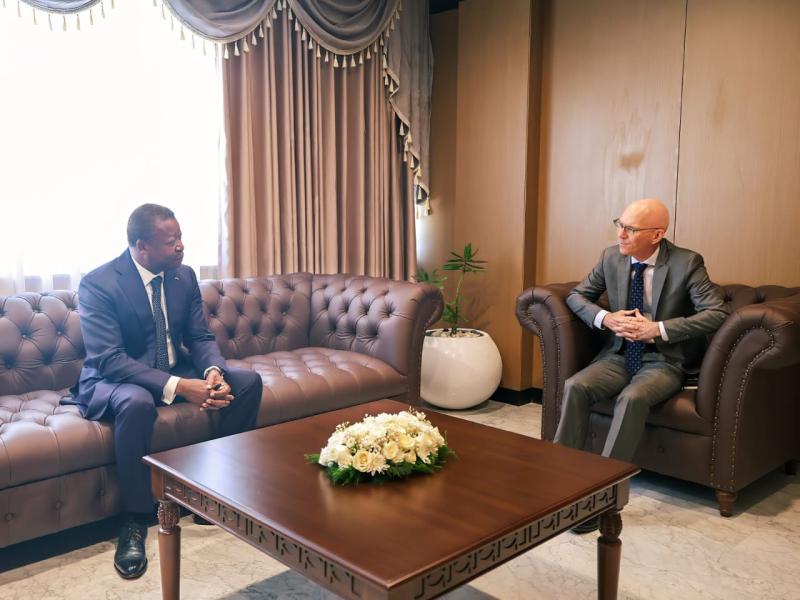
The landmark meeting, held at the Palais de la Présidence in Lomé, brought together high-level envoys from the UN, including James Swan, Special Representative of the UN Secretary-General in the DRC and head of MONUSCO, and Huang Xia, UN Special Envoy for the Great Lakes region. The trio assessed the progress of ongoing diplomatic engagements and explored strengthened collaboration between the UN and the African Union’s peace framework for eastern DRC.
The Togolese presidency issued a statement emphasizing the significance of the discussions: “The UN representatives commended Togo’s unwavering commitment to fostering peace, stability, and peaceful conflict resolution across the African continent. They underscored the UN’s readiness to support President Gnassingbé’s mandate as AU mediator, aiming for a just and lasting resolution to the crisis in eastern DRC.”
Peace efforts under scrutiny amid regional instability
The UN envoys’ visit to Lomé coincides with a critical phase in the peace process for eastern DRC, where persistent insecurity and humanitarian crises continue to escalate despite multiple diplomatic frameworks, including the Washington Agreement. While regional and international actors have intensified mediation efforts, challenges persist in translating agreements into tangible outcomes on the ground.
Key obstacles remain: lack of trust among parties, inconsistent political will, and geopolitical tensions—notably the unresolved allegations against Rwanda regarding its alleged support for the M23 rebel group. These factors have hindered the effective implementation of peace accords, leaving civilians in eastern DRC vulnerable to ongoing violence and displacement.
A coordinated approach to a complex crisis
Since assuming the AU mediator role in early 2026, following the transition from Angolan President João Lourenço, Faure Gnassingbé has prioritized high-level consultations with UN officials and regional stakeholders. The goal: to align diplomatic initiatives with the realities of eastern DRC’s security landscape. His leadership has been instrumental in rallying support for a unified peace strategy across the Great Lakes region.
James Swan’s participation in Lomé marks his first attendance at the AU’s semi-annual peace review in his capacity as head of MONUSCO. His presence signals a renewed push for coordinated international action to address the deteriorating situation, particularly in provinces like North Kivu and Ituri, where armed groups and intercommunal clashes have exacerbated the crisis.
Challenges and the path forward
The international community faces mounting pressure to bridge the gap between diplomatic progress and ground-level realities. While frameworks like the Doha Process (mediated by Qatar) have seen multiple negotiation cycles, fundamental disagreements between Kinshasa and the M23 rebels persist. The stalled Montreux talks in Switzerland, intended to inject momentum, have yet to yield the expected breakthroughs, compounded by broader geopolitical distractions.
As the UN and AU double down on their support for Gnassingbé’s mediation, calls grow louder for all parties to honor their commitments. Yet, the persistence of violence and humanitarian suffering underscores the urgent need for a more robust, inclusive, and actionable peace agenda—one that addresses the root causes of conflict and ensures the protection of civilian populations.
With the Great Lakes region at a crossroads, the coming months will test the resolve of mediators and regional leaders alike to translate words into deeds, and pledges into peace.