This session is hosted by the Africa: Citizenship, Violence and Politics research group at CERI in collaboration with the Africa Programme.
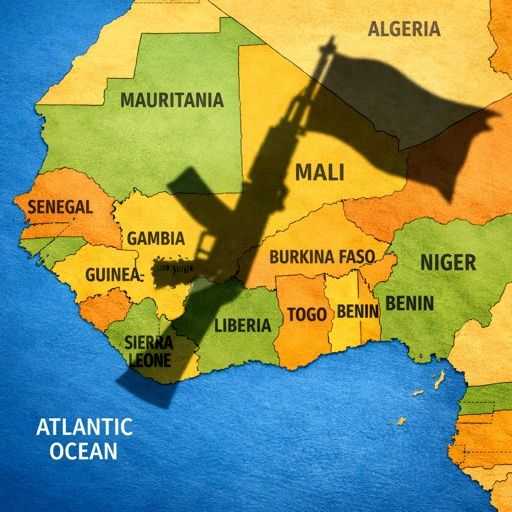
Since its inception in 2017, the Al-Qaeda affiliate known as Jama’at Nusrat al-Islam wal-Muslimin (JNIM) has established itself as a dominant power in the central Sahel. Operating through multiple katibas, the group actively challenges state sovereignty to manage and govern territories across Mali, Niger, and Burkina Faso.
However, since 2019, the group’s reach has extended toward the Gulf of Guinea. This southward push has manifested in significant operations in northern Benin, Togo, and Côte d’Ivoire. This Sahel Insider report notes that the expansion follows an irregular pattern: Ghana has not yet been targeted; Côte d’Ivoire saw attacks between 2020 and 2022 before a sudden lull; and Benin experienced a sharp security downturn in 2025.
A recent study by Crisis Group examines this Sahel analysis English, focusing on how JNIM leaders conceptualize their territorial growth. The findings suggest that expansion is not a simple choice but a strategic dilemma. While failing to expand might allow rivals to seize territory, moving too quickly risks overextending resources and causing internal fragmentation within the organization.
In the current geopolitical climate, characterized by the formation of the Alliance of Sahel States (AES) and their exit from ECOWAS, this Mali Burkina Niger analysis is crucial. Gaining a deep understanding of JNIM’s internal logic is essential for developing robust security frameworks in West Africa. This Sahel politics discussion aims to provide the necessary context for countries facing the threat of armed jihadist movements.
Event details
- Date: February 24, 2026, from 6:00 PM to 7:30 PM
- Location: Room K011, 1 pl. Saint-Thomas-d’Aquin, 75007, Paris
- Organizers: CERI, Africa Programme
Featured speakers
Jean-Hervé Jézéquel (International Crisis Group)
As the Sahel Project Director for the International Crisis Group, Jean-Hervé Jézéquel specializes in the security and political dynamics of the region. He earned his doctorate from the École des hautes études en sciences sociales (EHESS) in 2002.
Marte Beldé (Sciences Po Bordeaux)
Marte Beldé is a postdoctoral researcher involved in the GOVJIHAD project. Her work focuses on the spatial growth and political economy of jihadist groups in West Africa. She completed her PhD at Ghent University in 2025, specializing in ethnographic studies of militant expansion.
Beatriz de León Cobo (GEMASS – Sorbonne Université)
Beatriz de León Cobo is a doctoral candidate researching radicalization. She serves as an Associate Fellow at the Royal United Service Institute (RUSI) and leads the Europe-Sahel Dialogue Forum at the Francisco de Vitoria University in Madrid.
Moderator: Dan Sanaren (CERI–Sciences Po / CNRS)