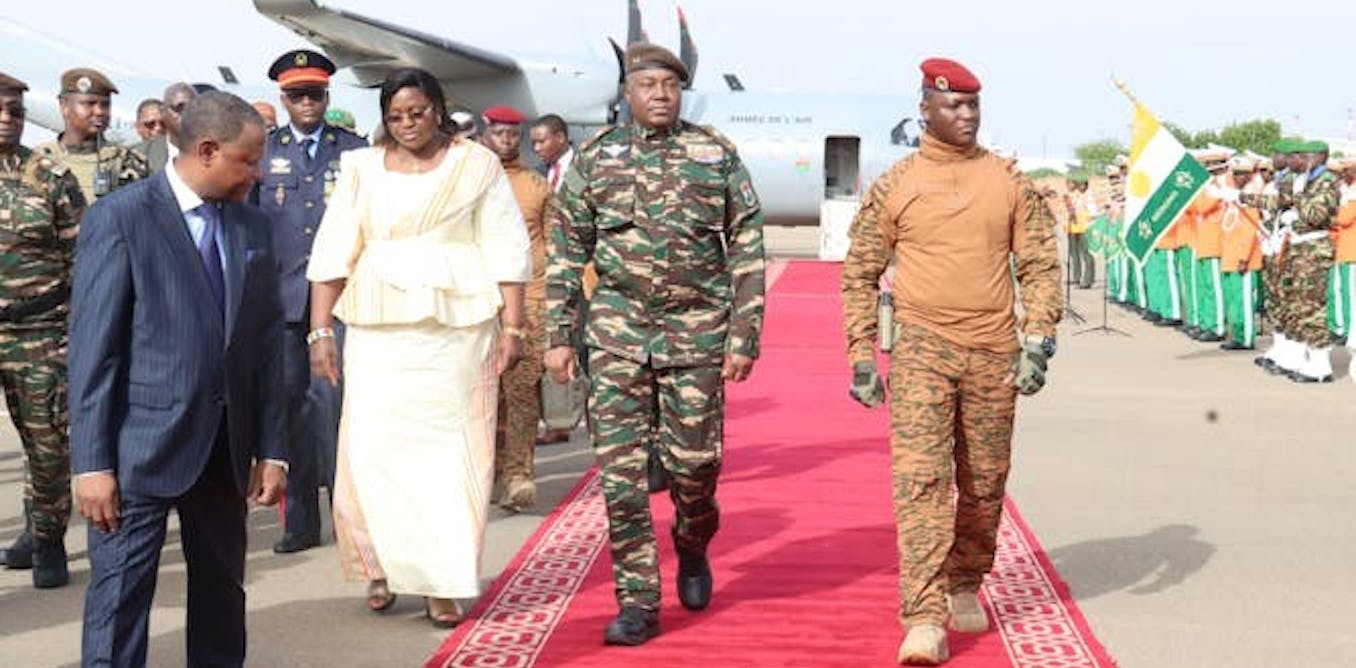
By late January 2026, Burkina Faso had entered a new political era—one where partisan politics no longer existed. On January 29, Captain Ibrahim Traoré’s government officially dissolved all political parties, including those that had once backed his 2022 coup d’état. While these parties had already been banned from operating since his rise to power, the latest move was framed as part of a broader state restructuring meant to heal social divisions.
The reality, however, is far less reassuring: the move strips away the last remnants of independent civic participation and consolidates power firmly in Traoré’s hands. Party assets have been seized by the state, leaving no legal framework for opposition or dissent.
Though the junta initially rode a wave of popular support, this decision starkly contradicts its revolutionary rhetoric. Yet such shifts are hardly unprecedented. Across the Sahel and beyond, military leaders who once relied on civilian backing quickly abandon or suppress the very groups that helped prop them up. This pattern has repeated itself for decades, from the first wave of post-colonial coups to today’s Sahelian upheavals.
Having spent years studying military takeovers in Africa—especially the recent surge in West and Sahelian states—I’ve observed a consistent truth: once in power, juntas rarely share authority willingly. Civilian allies serve a purpose in the early days, providing crowds, legitimacy, and the illusion that a coup reflects popular will. But as time passes, these allies develop their own agendas, leaders, and constituencies—things that juntas view as threats to their dominance.
This is not a flaw in the system; it’s a feature of military rule. The initial enthusiasm of civilians should not be mistaken for a lasting mandate or proof of an inclusive transition. Burkina Faso’s recent ban on political parties is a stark reminder: external support may help launch a coup, but it rarely secures long-term influence.
Why civilian backing rarely translates into lasting power
Contrary to popular belief, many military coups in Africa—including recent ones—have enjoyed significant civilian support. In the Sahel alone, from Mali to Niger, civil society groups, opposition parties, and religious leaders have openly cheered coups, seeing them as corrective measures against unpopular leaders. For coup leaders, such alliances offer instant legitimacy and a ready-made base of support.
Yet history shows that this alliance is often temporary. As juntas consolidate control, they systematically sideline, marginalize, or even repress former allies who dare to demand a voice in governance. This pattern transcends borders, ideologies, and eras.
Take the 1969 coup in Sudan: the Communist Party initially backed Colonel Jaafar Nimeiri’s military government, providing crucial political support. Within months, Nimeiri began purging communists from government. By 1971, he launched a brutal crackdown that crushed the party entirely.
A similar fate befell Egypt’s Tamarod movement after supporting General Abdel Fattah el-Sisi’s 2013 coup. What began as a powerful protest coalition saw its influence evaporate as the military regime tightened its grip, shrinking civic space and silencing dissent.
Regrets of Sahel coup supporters: from allies to adversaries
Today’s Sahel is no exception. In Mali, the June 5 Movement – Rally of Patriotic Forces (M5-RFP), a broad coalition of opposition parties, religious leaders, and activists tied to imam Mahmoud Dicko, once hailed the 2020 coup that ousted President Ibrahim Boubacar Keïta. The movement celebrated the army’s intervention and expected to help shape the transition.
But that expectation faded fast. The junta sidelined M5-RFP during the transition government, excluding its leaders from key roles. When Colonel Assimi Goïta staged a second coup in May 2021, consolidating military control, the movement’s influence collapsed. What began as a tactical alliance ended in marginalization and frustration.
Guinea’s 2021 coup followed a parallel path. Opposition leaders initially welcomed General Mamady Doumbouya’s takeover, hoping to influence the transition. They even urged the Economic Community of West African States (ECOWAS) to refrain from sanctions and publicly legitimized the coup as necessary.Yet just as in Mali, the junta disregarded civilian allies. Within a year, party members were arrested for criticizing their exclusion from the transition process. The pattern is clear: early civilian support buys a coup legitimacy, but rarely guarantees ongoing access or influence once the military is entrenched.
Against this backdrop, Burkina Faso’s ban on political parties is not an isolated act—it’s the latest chapter in a recurring story. It serves as a warning: those who back military takeovers should not expect their voices to endure in the new order.