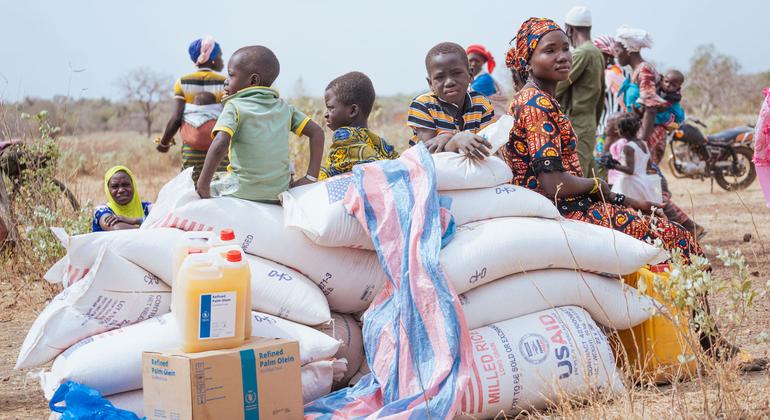
unhcr urges global support for four million displaced in the Sahel
The United Nations High Commissioner for Refugees (UNHCR) has issued an urgent appeal for robust international assistance to bolster its operations across the Sahel. Currently, close to four million individuals are displaced within Burkina Faso, Mali, Niger, and neighboring states. This represents a staggering two-thirds increase over the past five years, driven by persistent insecurity, limited access to essential services, and the escalating impacts of climate change.
Abdouraouf Gnon-Konde, the UNHCR’s Regional Director for West and Central Africa, highlighted during a press briefing that while most displaced individuals remain within their home countries, cross-border movements are becoming increasingly common. This trend places significant strain on host communities and existing national infrastructure.
These ongoing population shifts coincide with severe challenges in both humanitarian access and funding. The Sahel region has witnessed a dramatic surge in humanitarian requirements, yet resources have sharply declined since 2022.
Budgetary Shortfalls Impact Vital Services
The UNHCR is advocating for a renewed and strengthened global commitment to address the profound crisis unfolding in the central Sahel. The nations within the region are simply unable to tackle these immense challenges alone. Alarmingly, the agency has received less than one-third of its requested $409 million funding appeal for the current year.
Crucial activities such as registration, documentation, educational programs, healthcare provisions, and shelter initiatives have been severely compromised. Mr. Gnon-Konde further elaborated that over 212,000 refugees and asylum seekers in Burkina Faso, Mali, and Niger remain unregistered. This lack of official status severely restricts their access to vital services and heightens their vulnerability to arbitrary detention and harassment.
These significant budgetary cuts are occurring amidst relentless violence perpetrated by jihadist groups. The pervasive insecurity throughout the region leaves populations exposed to ongoing violence, forced recruitment, restrictions on movement, and arbitrary detention.
Women and children constitute a staggering 80% of those forcibly displaced in the area, and gender-based violence continues to be a severe and widespread concern. Data from the inter-agency protection monitoring system for West and Central Africa indicates a substantial rise in incidents impacting individuals this year.
Widespread Closures of Schools and Health Facilities
Amidst this volatile security environment, over 900 health facilities have also been forced to cease operations, denying millions access to essential medical care. Region-wide, more than 14,800 schools had closed their doors by mid-2025, effectively depriving three million children of education and safe learning environments. This dire situation further exposes forcibly displaced youth to the grave risks of forced recruitment and human trafficking.
Furthermore, food insecurity has emerged as an escalating driver of displacement. The proportion of displaced individuals and members of host communities citing food scarcity as a reason for their relocation has doubled in recent years.
According to the UNHCR, climate-related shocks are intensifying these risks, exacerbating competition for scarce natural resources like land and water. This, in turn, creates additional obstacles to peaceful coexistence and social cohesion with host communities.