Mali’s healthcare system: progress, gaps, and citizen expectations
The Mali health sector has achieved notable advancements in recent years, with improvements in child mortality rates, under-five mortality, maternal health, and life expectancy (World Health Organization, 2025; UNICEF, 2025). In 2018, the country launched a bold universal health coverage (UHC) initiative, aiming to ensure all citizens have access to essential medical services (Mathauer et al., 2019).
Yet, significant hurdles persist. Mali faces shortages of skilled healthcare personnel, inadequate funding, and the lingering effects of political instability, which have disproportionately impacted rural areas. Over half of the nation’s doctors are concentrated in the capital, Bamako (Sangare et al., 2021), leaving vast regions underserved. These challenges are compounded by financial constraints and supply chain inefficiencies, particularly in public clinics and hospitals.
Universal health coverage in Mali: a work in progress
The World Health Organization’s 2024 Universal Health Coverage Service Coverage Index places Mali at 41 out of 100, below both the African average (44) and the global benchmark (68). This score reflects the ongoing struggle to expand healthcare access, affordability, and quality nationwide. While Mali has made strides in certain health indicators, the system still grapples with systemic inefficiencies.
Citizens prioritize healthcare reform
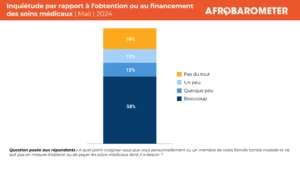
According to Afrobarometer’s Round 10 special health module, Mali’s citizens overwhelmingly view healthcare as the top priority for government action. Only about one in seven adults currently has medical coverage, and many express concerns about the affordability and accessibility of essential treatments. A vast majority believe the government must guarantee universal access to quality healthcare—even if it requires higher taxes.
Experiences with public healthcare facilities reveal a mixed picture. While most who sought care reported receiving necessary treatments, many encountered barriers such as high costs, long wait times, and shortages of medicines or equipment. Nearly half of Malians reported a family member being unable to access needed care in the past year.
Despite these frustrations, public confidence in the government’s efforts to improve basic healthcare remains relatively high. Two-thirds of citizens approve of the Ministry of Health’s performance, indicating cautious optimism amid persistent challenges.
Key takeaways for healthcare reform in Mali
- Strengthen rural healthcare infrastructure: Address the urban-rural divide by redistributing resources and recruiting doctors to underserved areas.
- Enhance funding and supply chains: Increase investment in healthcare facilities, medicines, and medical equipment to prevent shortages.
- Expand coverage and affordability: Scale up universal health insurance programs to protect more citizens from catastrophic health expenses.
- Improve service delivery: Reduce wait times and ensure consistent availability of essential medications in public clinics.