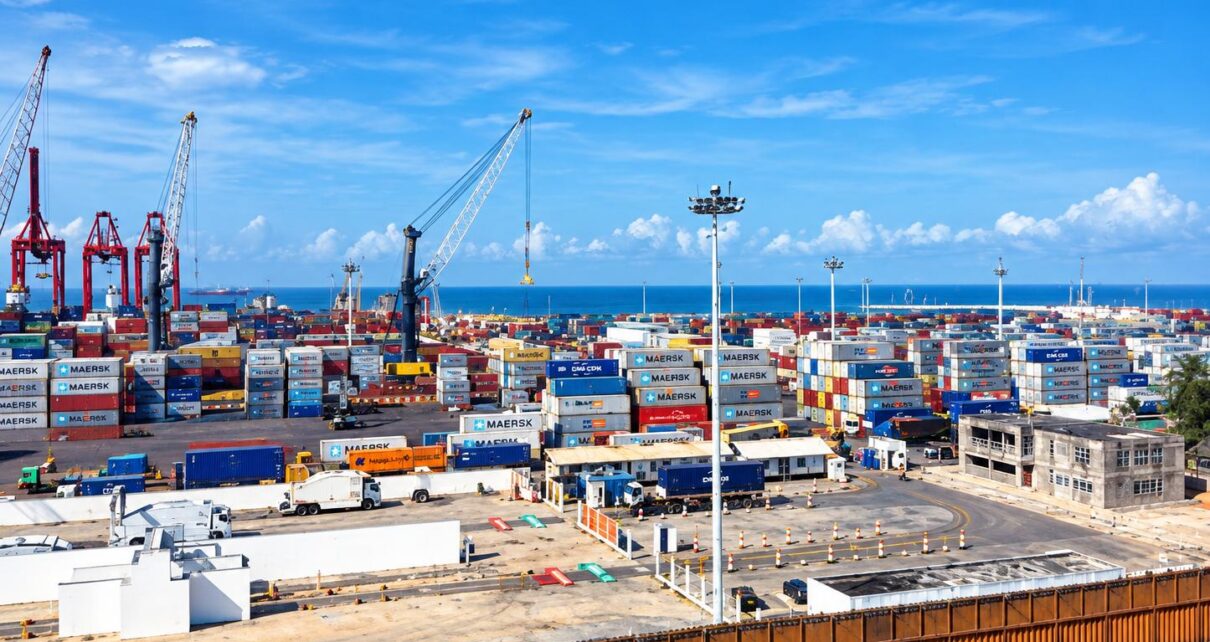
Behind the headlines of Benin’s export boom into China lies a carefully calibrated customs accord that rewires how goods cross borders. The mutual recognition of the Authorized Economic Operator (AEO) program between Benin and Chinese authorities isn’t merely paperwork—it’s a strategic lever that converts regulatory red tape into streamlined corridors for certified Beninese producers. In an era where ports often act as chokepoints rather than gateways, this deal strips away layers of inspection friction, giving AEO-certified firms an unprecedented runway to penetrate the world’s second-largest market. What started as a compliance badge in Cotonou now translates into measurable cost savings and shipment speed that can tilt purchasing decisions in Beijing boardrooms.
From inspection burden to strategic advantage
The AEO label—issued by Benin’s Customs after rigorous checks on tax conformity, financial health, and supply-chain security—serves as a passport of trust for exporters venturing into China. Historically, Benin-based companies faced double inspection waves: first by Beninese Customs, then by Chinese counterparts. Under the new arrangement, shipments from AEO-certified firms sail through simplified clearance lanes, bypassing up to 80 % of physical checks and skipping routine document reviews at Chinese egress points.
This invisible hand of customs efficiency slashes demurrage fees by shortening container dwell time in ports such as Shanghai, Ningbo, and Guangzhou. Quicker turnaround at berths doesn’t just cut logistics bills; it also unlocks just-in-time delivery slots that Asian buyers increasingly demand. For small and medium Beninese manufacturers—whose margins hinge on razor-thin pricing—the savings flow directly to the bottom line, enabling them to undercut competitors still tangled in procedural delays.
Border bottlenecks melt away
Chinese Customs now classifies AEO-origin consignments under ‘Green Channel’ status, granting three immediate operational benefits:
- Priority clearance: Containers move to the front of inspection queues, reducing average clearance time from days to hours during peak seasons.
- Documentary minimalism: Only random sampling applies; full documentation is no longer mandatory for routine releases.
- Low-risk profile: AEO cargo is automatically flagged as low risk, virtually eliminating secondary inspections triggered by profiling algorithms.
These concessions weren’t handed out; they were negotiated after Benin demonstrated consistent compliance in customs data reporting and risk-management protocols, proving itself a reliable partner in global supply chains.
The GDIZ catalyst: turning policy into production
The timing couldn’t be better. At the heart of Benin’s industrial push—the Glo-Djigbé Industrial Zone (GDIZ)—clusters of factories transform raw commodities into higher-value derivatives: soya meal, cashew kernels, cotton lint, and shea butter. Many of these units have already earned AEO certification, transforming them into pre-qualified gateways for Chinese buyers seeking traceable, compliant, and competitively priced African goods.
By aligning GDIZ’s processing calendar with China’s import windows, Beninese exporters now offer buyers shortened lead times and predictable pricing—two decisive factors in a market notorious for volatility. An exporter of shea butter, previously forced to absorb three weeks of warehouse fees in transit ports, can now compress that cycle to under five days, translating into cost reductions north of 15 %. For a sector where price swings of a few cents per kilogram sway purchasing orders, such margins shift the balance in favor of Benin.
Economic spillovers beyond the docks
Reduced logistic friction also ripples inland. With fewer containers marooned at seaports, road haulers experience higher asset utilization and lower idle charges. Warehouse operators in Parakou and Kandi report upticks in pallet volume as cargo flows accelerate from coastal gateways to cross-border railheads. Meanwhile, financial institutions eye lower collateral risks for export loans collateralized by faster-revenue cargoes—potentially unlocking additional liquidity for SMEs scaling up production.
The AEO recognition thus does more than lubricate one trade lane; it reconfigures the entire logistics ecosystem, turning Benin’s hinterland into a more attractive hinter-port. Economists tracking African supply chains note that every additional day saved in transit adds approximately 0.8 % to GDP growth, a multiplier effect that could add tens of millions to Benin’s annual trade surplus.
A template for regional expansion
What Benin has achieved with China is quietly reverberating across West Africa. Customs administrations from Senegal to Togo are observing the AEO metrics—clearance times, compliance records, and cost curves—and contemplating similar accords. The Benin-China playbook illustrates a counterintuitive thesis: that smaller, less industrialized economies can punch above their weight by building trust with customs authorities in mega-markets before competitors catch on.
Still, success isn’t automatic. AEO certification remains voluntary, and the upfront investment in compliance infrastructure—training staff, upgrading IT systems, tightening internal audits—can daunt smaller firms. Yet the early adopters who have cleared these hurdles report that the initial hurdles are dwarfed by the sustained export gains they harvest downstream. In an era where global trade feels increasingly congested, Benin’s AEO strategy shows one path toward frictionless commerce.