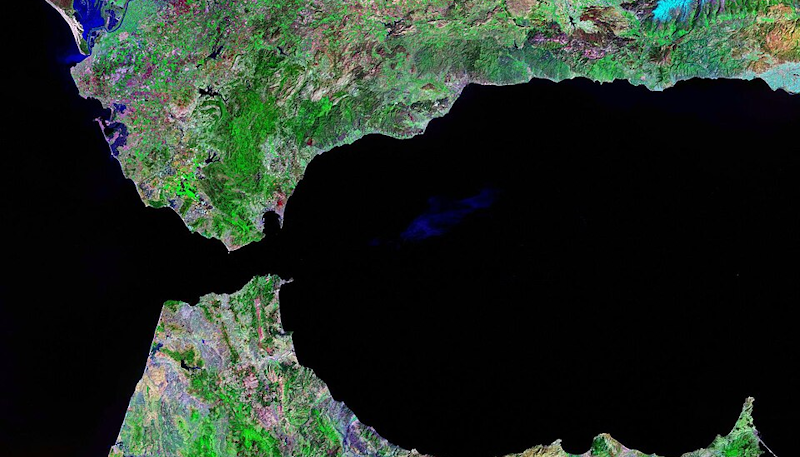
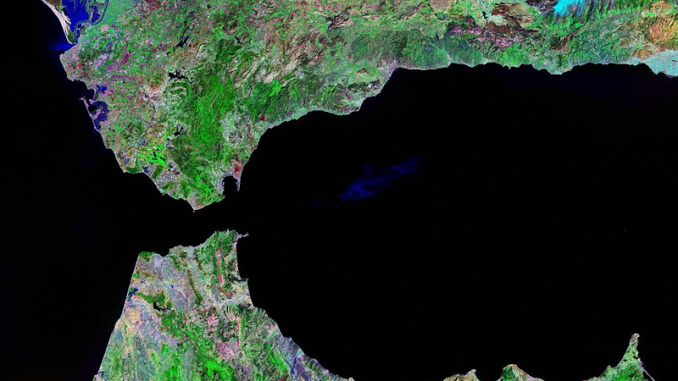
The evolving relationship between the United States and Morocco is reshaping geopolitical dynamics in the Western Mediterranean. While Washington’s 2020 recognition of Morocco’s autonomy plan for Western Sahara set a precedent, recent shifts suggest the U.S. may be reconsidering its stance on Ceuta and Melilla—Spanish enclaves long claimed by Rabat.
Since late July, Washington has signaled a deeper alignment with Morocco across multiple fronts, including Western Sahara, economic cooperation, regional security, and now the status of Ceuta and Melilla. This strategic partnership, built on shared interests, could fundamentally alter the balance of power in North Africa.
The recent migration crisis in Ceuta, where tens of thousands crossed into the Spanish enclave within 24 hours, has intensified tensions between Rabat and Madrid. The influx placed Spain’s government under unprecedented pressure and exposed vulnerabilities in its border security.
Western Sahara remains a cornerstone of Moroccan diplomacy
Morocco’s diplomatic efforts have centered on securing U.S. backing for its Western Sahara autonomy plan, a stance cemented in 2020 when the U.S. recognized Rabat’s sovereignty over the territory in exchange for Morocco’s normalization with Israel. The naming of a highway in Western Sahara after Donald Trump underscores Rabat’s strategy to maintain American support amid delicate international negotiations.
Analysts note that Morocco is prioritizing U.S. backing to ensure its position prevails in any future resolution of the Western Sahara conflict. The kingdom’s approach combines political lobbying with tangible economic incentives to strengthen ties with Washington.
Economic incentives drive U.S.-Morocco cooperation
Beyond politics, economic cooperation has become a key pillar of the alliance. In late July, the U.S. Ambassador to Morocco attended a signing ceremony in Laâyoune for an agreement funding a new hydrogen and ammonia production unit in Western Sahara. This project reflects Washington’s growing focus on investments that benefit American enterprises while aligning with Morocco’s development goals.
The partnership now spans multiple domains: political endorsement of Morocco’s positions, economic collaboration, security cooperation, and strategic alignment on regional issues, including Israel.
Geopolitical tensions over the Polisario Front
A concerning development for Western Sahara’s independence movement is a U.S. congressional proposal to designate the Polisario Front as a foreign terrorist organization. Legislators also seek to investigate alleged ties between the movement and Iran, a claim analysts dismiss as unfounded.
Morocco appears to be capitalizing on Washington’s anti-Iran stance to reframe the Western Sahara conflict in a way that aligns with U.S. priorities. By linking regional conflicts involving Israel to its own dispute with the Polisario, Rabat aims to secure broader American support.
Ceuta and Melilla: the next frontier in U.S.-Morocco relations
The most significant shift involves Ceuta and Melilla, territories Spain considers integral to its national sovereignty. Recent U.S. statements suggest a subtle but meaningful departure from Madrid’s position, with Washington reportedly distancing itself from Spain’s claim over the enclaves.
For decades, Morocco has asserted sovereignty over Ceuta and Melilla, while Spain maintains their status as undisputed Spanish territory. A stronger U.S. alignment with Morocco on this issue could strain relations between Washington and Madrid, introducing new uncertainties into Spain’s strategic alliances.
The Ceuta migration crisis: a deliberate move?
The timing of the migration surge in Ceuta has raised questions about its origins. While some speculate it was a deliberate maneuver by Morocco, analysts suggest the influx was largely spontaneous before being exploited politically to pressure Spain. The crisis served as a reminder to Madrid of Morocco’s unresolved territorial claims.
Spain’s Prime Minister Pedro Sánchez responded by strengthening ties with Algeria, a key Polisario ally, particularly in energy cooperation. However, analysts view this move as complementary rather than contradictory to Spain’s broader Morocco policy, which remains supportive of Rabat’s autonomy plan for Western Sahara.
Madrid’s strategic dilemma in a shifting landscape
Spain faces a growing challenge as its traditional alliances come under scrutiny. The U.S., long a guarantor of Spain’s security through NATO and bilateral agreements, may now adopt a more flexible stance on Ceuta and Melilla. This shift could undermine the foundations of Spain’s strategic environment.
While an immediate crisis is unlikely, the evolving U.S.-Morocco dynamic could lay the groundwork for future negotiations on the status of the enclaves. The coming years may see Ceuta and Melilla re-emerge as a focal point in transatlantic relations.
A new power equation in North Africa
The U.S.-Morocco partnership is reshaping regional alliances, with Rabat positioning itself to gain sustained U.S. support for its positions on Western Sahara and the Spanish enclaves. Washington’s approach appears driven by strategic and economic interests, while Spain grapples with an increasingly unpredictable transatlantic relationship.
For Morocco, the current moment presents an opportunity to solidify its diplomatic gains. For Spain, it represents an unprecedented strategic challenge. The convergence of Western Sahara and Ceuta into a single diplomatic battleground highlights the broader struggle for influence in the Maghreb and Western Mediterranean.