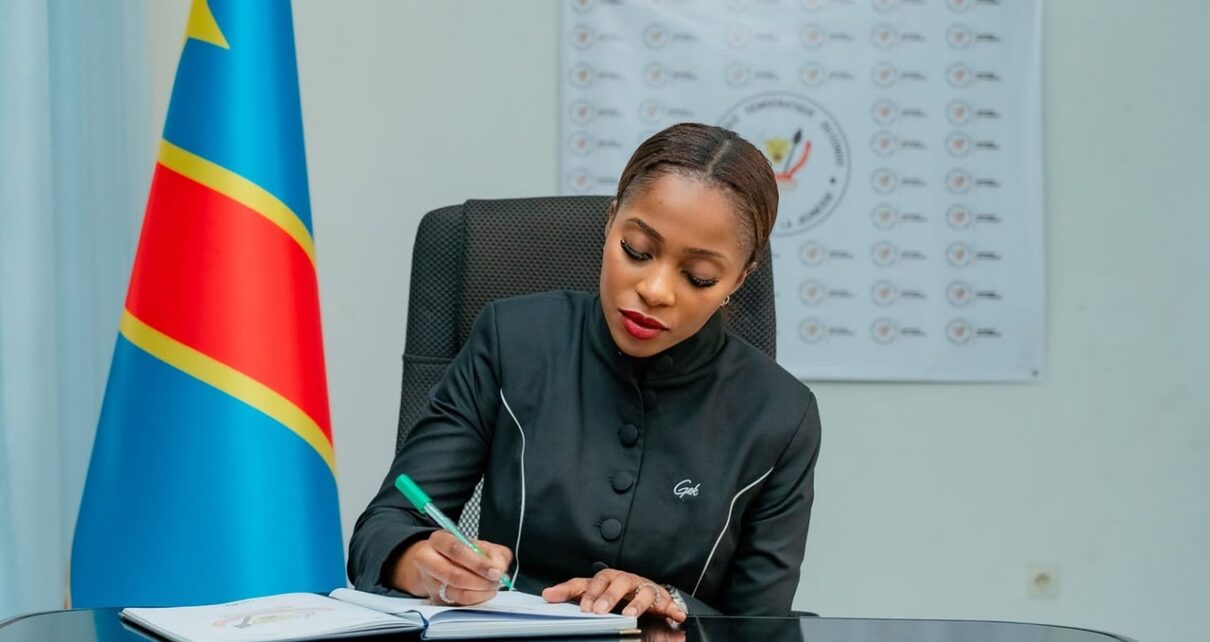
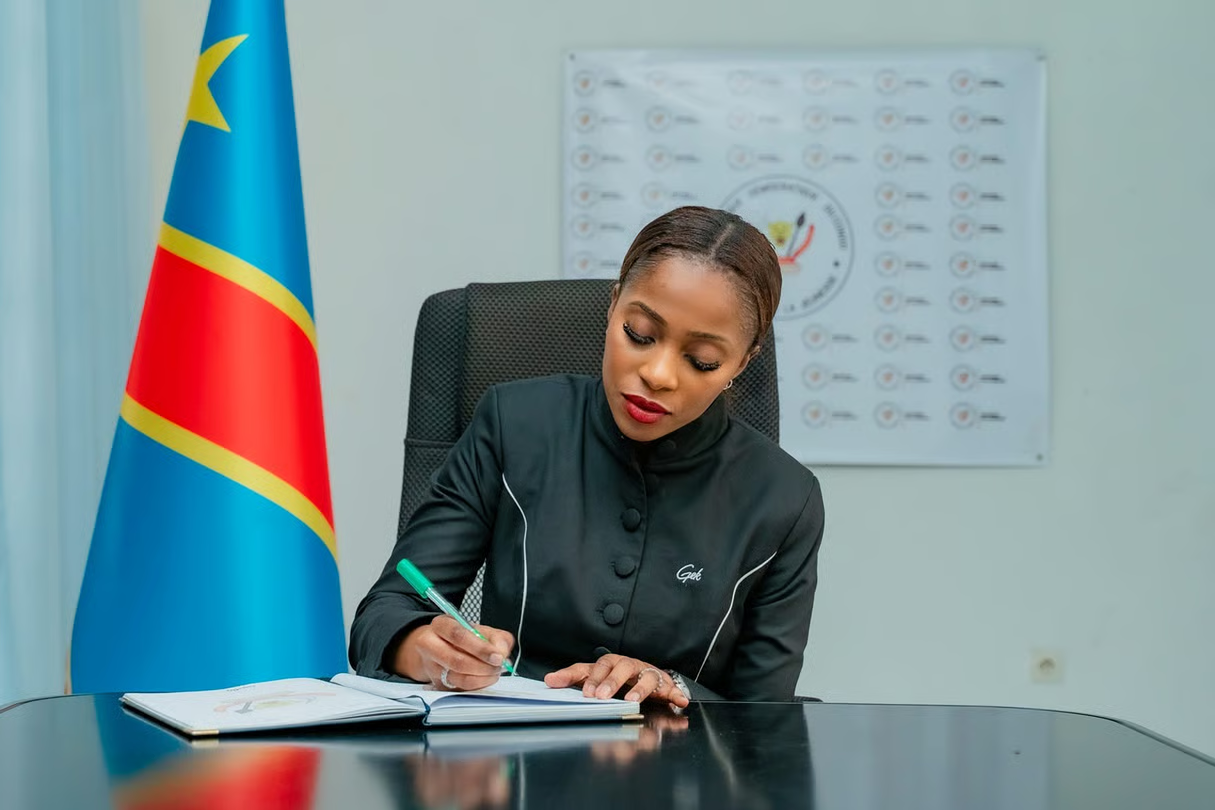
The Minister of Youth and Patriotic Awakening, Grâce Kutino, has ignited conversations across political circles with her recent declarations regarding the ongoing constitutional reform debate in the Democratic Republic of Congo. Her statements, delivered with conviction, have led many to question whether she is echoing the official stance of the government or articulating her own perspective.
The timing of Kutino’s remarks could not be more critical. As the National Assembly deliberates over potential amendments to the constitution, her words carry significant weight. While some interpret her position as a direct reflection of the administration’s intentions, others argue that it represents an independent viewpoint from a key figure within the cabinet.
Minister Kutino’s words resonate in a charged political climate
The Minister’s choice of phrasing, including the phrase “Yes, I do”, has drawn particular attention. This deliberate language has fueled speculation about the government’s ultimate objectives in the constitutional process. Observers are dissecting every nuance, searching for clues about the administration’s long-term strategy.
The debate itself is complex, touching on issues of governance, term limits, and institutional stability. Kutino’s intervention has added another layer of intrigue to an already tense situation, prompting analysts to reconsider the implications of the proposed changes.
Diverse reactions to Kutino’s constitutional reform stance
Political figures and civil society groups have responded to Kutino’s statements with a mix of approval and skepticism. Supporters of the government see her words as a confirmation of its commitment to reform, while critics view them as an attempt to justify controversial measures.
The opposition, in particular, has seized upon Kutino’s remarks as evidence of the administration’s hidden agenda. Meanwhile, proponents argue that her clarity is a welcome departure from ambiguity, providing much-needed transparency in the reform process.
The Minister’s role in the debate raises important questions about the balance of power within the executive branch. Is she acting on behalf of the President, or is she staking out an independent position? The answer remains unclear, but her influence is undeniable.
Constitutional reform: a balancing act for the government
The proposed reforms have already sparked heated discussions in legislative chambers and public forums. Kutino’s participation in this debate underscores the high stakes involved. Whether her statements align with the government’s official position or not, they have undeniably shaped the conversation.
As the process unfolds, all eyes remain on the Minister of Youth and Patriotic Awakening. Her next moves could either clarify the government’s intentions or deepen the uncertainty surrounding the constitutional reform.
The outcome of this debate will have far-reaching consequences for the Democratic Republic of Congo’s political landscape. With so much riding on the decisions being made, Kutino’s role—and the reactions to her words—will continue to dominate headlines.