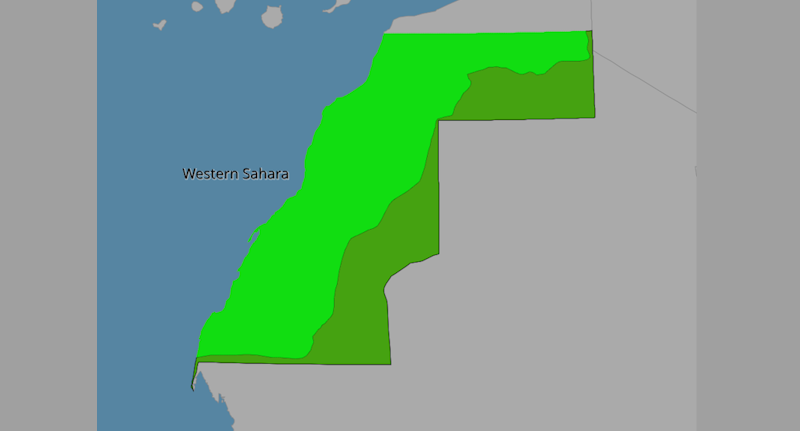

The Western Sahara remains Africa’s last unresolved decolonization dispute. Designated by the United Nations as a non-self-governing territory, this region has become a flashpoint where international law, regional rivalries, and energy security intersect.
While military positions have barely shifted since the 1991 UN-brokered ceasefire, diplomatic activity has reached unprecedented levels. Morocco maintains de facto control over most of the territory, while the Polisario Front oversees a sparsely populated desert strip east of the Moroccan-built Berm.
Why military stalemate contrasts with shifting diplomacy
Despite the frozen battlefield, global powers are recalibrating their strategies around this conflict. Migration flows, energy supply chains, and geopolitical alliances are all being reshaped by the unresolved status of Western Sahara.
In October 2025, the UN Security Council adopted Resolution 2797, marking a turning point:
- Divided votes: The resolution passed, but China, Russia, and Pakistan abstained. Algeria, a long-time Polisario ally, boycotted the vote in protest.
- Morocco’s autonomy plan gains ground: The resolution extends the MINURSO mandate until October 2026 while establishing Morocco’s autonomy proposal as the starting point for negotiations.
- Strategic ambiguity: The UN neither endorses Moroccan sovereignty nor abandons self-determination. However, by prioritizing the autonomy plan, it subtly marginalizes independence as an option.
In Rabat, the resolution was hailed as a diplomatic triumph, reinforcing the perception that international momentum now favors Morocco’s position.
How historical decisions shaped today’s deadlock
The roots of this conflict trace back to 1884, when Spain colonized the territory. Key moments defined the impasse:
- ICJ advisory opinion (1975): The International Court of Justice ruled that historical ties between Sahrawi tribes and Morocco did not constitute territorial sovereignty, affirming the right to self-determination.
- Green March and Madrid Accords (1975): Morocco organized a mass civilian march into the territory, leading Spain to sign accords transferring administrative control to Morocco and Mauritania—without UN approval.
- Mauritania’s withdrawal (1979): Facing economic collapse, Mauritania renounced its claims, allowing Morocco to consolidate control. The Polisario Front, which had declared the Sahrawi Arab Democratic Republic (SADR), responded with armed resistance.
- MINURSO’s stalled mission (1991): A UN ceasefire took hold, but plans for a referendum collapsed over disputes about voter eligibility and electoral rolls.
What drives today’s international inaction?
The conflict’s durability stems not from legal clarity but from geopolitical pragmatism. Major powers and regional actors prioritize stability, predictability, and strategic alliances over decisive resolutions. For now, Western Sahara remains suspended in a fragile balance—where definitive solutions exist on paper but remain politically untenable.