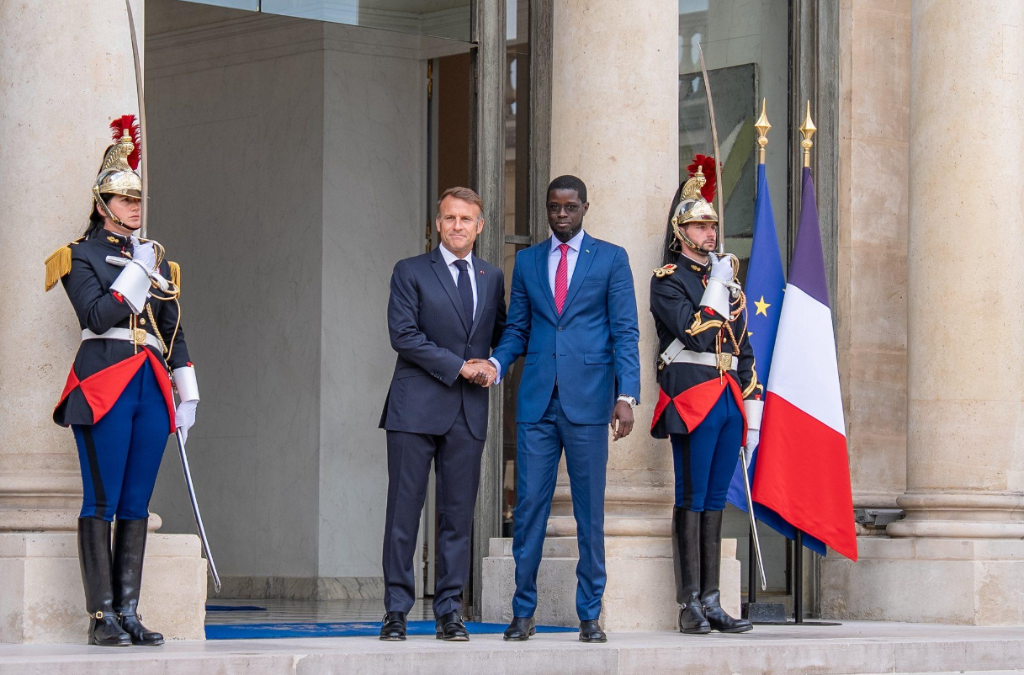
As global powers clash over security, technology, and governance, can Africa’s rising leaders reshape the world’s most critical conversations? The 2026 edition of the Paris Peace Forum, taking place on November 10-11, will test whether African nations like Senegal and Benin can move beyond symbolic participation to shape sustainable solutions on the world stage.
Why 2026’s Paris Peace Forum is Africa’s moment to rewrite global rules
For two days, Paris transforms into a hub where presidents, innovators, and policymakers converge to tackle the fractures destabilizing global order. This year’s edition arrives at a crossroads: while conflicts rage in multiple regions, geopolitical rivalries intensify, and emerging technologies redefine power, Africa stands at a pivotal juncture. The continent’s growing influence isn’t just about demand—it’s about asserting its vision for peace, sovereignty, and shared prosperity.
Among the high-profile attendees is Senegal’s President Bassirou Diomaye Faye, arriving after a meeting with France’s President Emmanuel Macron at the Élysée Palace. His presence underscores Dakar’s ambition to anchor its foreign policy in two pillars: defending sovereign equality and advancing Africa’s strategic interests in international forums.
Can Senegal turn dialogue into decisive action on global security?
Bassirou Diomaye Faye’s participation comes at a time when traditional alliances are being reassessed. Senegal, long known for its diplomatic finesse, is leveraging this moment to push for a rebalancing of power within global decision-making bodies. The stakes are clear: whether through counter-terrorism cooperation in the Sahel, reforms of international financial systems, or leadership in crisis mediation, Africa must be heard—not just consulted.
His discussions with European leaders signal a broader shift: from aid-dependent relationships to partnerships based on mutual respect and shared goals. For Senegal, the Paris Peace Forum offers a platform to advocate for policies that prioritize African security over external agendas. The challenge now lies in turning rhetoric into binding commitments that benefit the continent’s 1.4 billion people.
Benin’s digital diplomacy: the quiet revolution reshaping Africa’s future
While global forums often focus on military or economic power, Benin is carving out a new front in international diplomacy: the digital frontier. Represented by Mahuna Akplogan, Minister of Digital Transformation and Innovation—and architect of Benin’s National AI Strategy—the country brings a critical perspective to the table: technology isn’t just infrastructure, it’s sovereignty.
The rise of artificial intelligence, data colonialism, and emerging tech platforms has exposed a harsh reality: nations that fail to control their digital ecosystems risk losing strategic autonomy. Benin’s delegation is poised to argue that Africa’s future cannot be outsourced to Silicon Valley or Brussels. Instead, the continent must invest in homegrown innovation, digital education, and regulatory frameworks that protect its citizens and economies from exploitation.
This isn’t mere posturing. Benin’s National AI Strategy is a blueprint for others to follow: a clear declaration that Africa will not be a passive recipient of global tech trends, but an active architect of its digital destiny. The forum provides an opportunity to showcase how small nations can lead by example in a sector dominated by tech giants.
From Paris to the world: is the global stage ready for Africa’s demands?
The Paris Peace Forum isn’t just another diplomatic gathering—it’s a test of the international community’s willingness to adapt. Representation alone won’t shift power dynamics. Lasting change hinges on three pillars:
- Influence over outcomes: Will African voices help draft the policies guiding global security, trade, and climate action?
- Sovereignty in decision-making: Can the continent negotiate partnerships that prioritize African solutions to African problems?
- Technological emancipation: Is there political will to fund African-led innovation instead of importing foreign models?
The world stage has long been dominated by a handful of powers. But the presence of leaders like Bassirou Diomaye Faye and Mahuna Akplogan signals a shift. This is no longer about Africa pleading for a seat at the table—it’s about the continent demanding a new set of rules, designed by and for its people.
What’s next? Turning opportunities into tangible victories
History shows that forums produce declarations, but real progress hinges on follow-through. The Paris Peace Forum offers Senegal and Benin a rare chance to:
- Secure concrete commitments from global partners on debt relief and sustainable investment.
- Advocate for permanent African representation in institutions like the UN Security Council and World Bank.
- Launch joint initiatives with tech hubs in Africa to develop ethical AI frameworks.
The question now is simple: After years of being at the mercy of global crises, can Africa finally translate its growing influence into lasting change?
As the world watches, the answer may well be written in Paris—by leaders who are redefining what power looks like on the global stage.