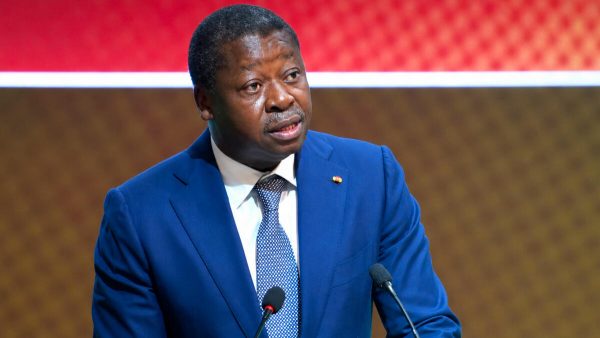
Leaders across Africa were urged to shift from political rhetoric to tangible economic outcomes as Togolese President Faure Gnassingbé opened the third edition of the Biashara Afrika forum in Lomé.
Lomé emerged as the epicenter of African trade pragmatism on that day, drawing continent-wide decision-makers to the Biashara Afrika 2026 event. Organized jointly by the African Continental Free Trade Area (AfCFTA) Secretariat and the Togolese government, this high-level forum focused on intra-African commerce and investment, signaling a decisive push toward continental economic integration.
In his keynote address, President Gnassingbé emphasized the urgency of moving beyond visionary declarations: “The era of vision must give way to the era of results.” He underscored Africa’s historical opportunity to convert political ambition into economic reality, declaring that hesitation has no place in the continent’s journey forward.
Togo leads by example in AfCFTA implementation
The Togolese leader outlined his country’s strategic roadmap, positioning Lomé as a living laboratory for the AfCFTA. With its deep-water port and reinforced regional connectivity, Togo is positioning itself as a critical link in the continental trade network. Key pillars of its strategy include:
- Strengthening cross-border transport corridors to streamline trade flows.
- Developing a world-class logistics hub anchored by its deep-water port—the only one of its kind in West Africa.
- Implementing bold structural reforms to enhance the business climate, earning recognition across the continent.
Through this model, Togo aims to demonstrate how political will, when aligned with economic needs, can yield immediate and measurable benefits for African businesses and consumers alike.
AfCFTA: a continent of opportunity facing structural hurdles
The AfCFTA represents a monumental economic project, uniting 55 member states into a single market of 1.4 billion consumers with a combined GDP approaching $3.4 trillion. Yet, despite its vast potential, the initiative still grapples with entrenched barriers that stifle intra-African trade.
Participants at Biashara Afrika identified critical priorities to unlock the AfCFTA’s promise:
- Removing non-tariff trade barriers that fragment markets.
- Addressing chronic infrastructure deficits that slow the movement of goods.
- Expanding access to financing for Small and Medium Enterprises (SMEs), which remain largely excluded from cross-border value chains.
- Rethinking fragmented supply chains to enhance efficiency and competitiveness.
These challenges are not merely technical—they are existential for the AfCFTA’s credibility and long-term success.
From vision to implementation: the moment for decisive action
The call for results resonated strongly among attendees. A Kenyan entrepreneur stressed, “We must move from intentions to tangible outcomes.” A Nigerian economist echoed this sentiment, noting that the AfCFTA’s success hinges on the inclusion of SMEs, which form the backbone of Africa’s economy but are often sidelined in formal trade systems.
Beyond economic considerations, Biashara Afrika reflects a broader geopolitical ambition: Africa’s desire to assert itself in global trade dynamics. The AfCFTA is seen as a strategic response to the volatility of international markets and escalating trade tensions.
The message from Lomé is unambiguous: Africa possesses the legal frameworks, natural resources, and human capital needed to thrive. The time for execution is now—procrastination is no longer an option.