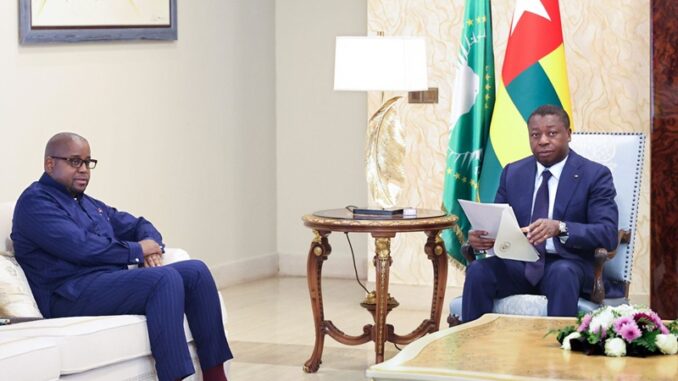
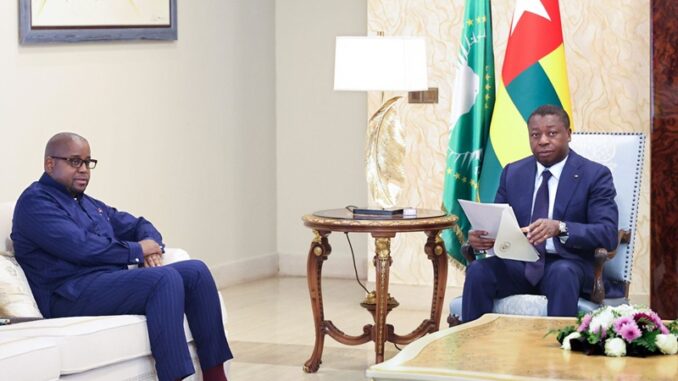
The dynamics of African Union-led peace negotiations in the Democratic Republic of Congo have taken a subtle yet significant turn, marked by a discreet but high-stakes diplomatic maneuver. A senior official from the Democratic Republic of Congo recently delivered a confidential written message from President Félix-Antoine Tshisekedi Tshilombo to his Togolese counterpart, President Faure Essozimna Gnassingbé, during a closed-door meeting in Lomé on September 29. This unpublicized exchange, though operating outside the spotlight, reflects deeper strategic recalculations shaping the future of eastern DRC’s fragile peace process.
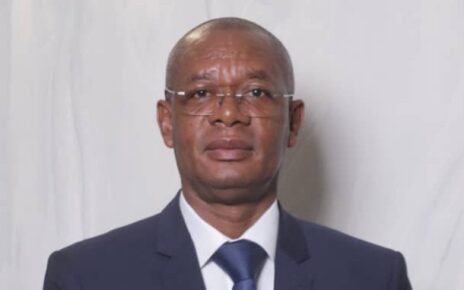
The Congolese delegation, led by the Minister of Regional Integration, Floribert Anzuluni, presented the message not merely as a protocol courtesy, but as a strategic intervention intended to reframe the mediation role of President Gnassingbé—a role he assumed in April 2025 following the conclusion of Angola’s earlier mediation engagement. The written note underscored the Congolese government’s urgent appeal for accelerated progress in stabilizing the eastern provinces, where renewed conflict seit late 2021 has eroded trust in earlier negotiation frameworks.
During the confidential session, Anzuluni briefed President Gnassingbé on the DRC’s ongoing efforts to address security through localized disarmament and demobilization initiatives. These measures, while national in scope, are positioned as complementary to the broader regional stabilization agenda under AU auspices. The Congolese delegation emphasized the need for a durable ceasefire and long-term security guarantees—a challenge that has frustrated peacebuilders despite parallel initiatives in Doha and Washington.
Why this behind-the-scenes push matters now
The timing of this diplomatic overture is revealing. It arrives at a critical juncture in the peace process, after years of stalled negotiations and recurring violence that have displaced millions in eastern DRC. While international mediators have historically played crucial roles, the shift to Togolese leadership under the African Union banner introduces a new variable. Gnassingbé’s involvement is framed not just as continuity, but as a recalibration of approach—one potentially better aligned with regional geopolitical realities.
Analysts suggest that the Congolese leadership may be seeking to reinforce Togo’s mediation with stronger political backing from Kinshasa, thereby creating a more unified front within the AU’s decision-making process. This subtle alignment of interests behind closed doors points to a growing recognition that peace in eastern DRC cannot be brokered through isolated initiatives, but requires sustained, coordinated commitment from key regional actors.
What’s at stake: beyond ceasefires to sustainable stability
The stakes are higher than ever. Eastern DRC remains trapped in a cycle of recurring violence despite multiple mediation tracks. The Congolese government’s latest outreach signals a shift in strategy: moving from reactive crisis management to proactive engagement with African Union institutions. The written communication from President Tshisekedi is not just symbolic; it’s a tactical move to synchronize national disarmament efforts with AU-led mediation architecture.
Key objectives include securing a durable ceasefire that withstands localized spoilers and strengthening coordination between Kinshasa and Lomé. This behind-the-scenes coordination aims to reinforce trust among conflicting parties and prevent the kind of fragmentation seen in earlier peace efforts.
The regional mediation paradox
Meditation fatigue has set in across the Great Lakes region. Despite the involvement of Qatar and the United States in parallel tracks, violence has intensified in eastern DRC. This paradox highlights a critical insight: international mediation, while necessary, is not sufficient without robust regional ownership and alignment. Togo’s role under AU leadership is positioned as a bridge between international support and African-led solutions.
By sending a direct message to Gnassingbé, President Tshisekedi is effectively reframing the peace process—not as a foreign-imposed solution, but as a distinctly African-led initiative with strong political backing from the DRC itself.
Looking forward: what’s next in the DRC peace puzzle
As the Congolese delegation returns from Lomé, the broader peace architecture faces a test of credibility. The next phase will likely focus on translating the AU’s mediation mandate into tangible outcomes: verifiable ceasefire commitments, inclusive dialogue platforms, and measurable disarmament progress. Success will depend not only on Gnassingbé’s diplomatic finesse, but on the DRC government’s ability to sustain political will and coordinate with other regional players.
For communities in eastern DRC, where insecurity has become a way of life, the stakes are deeply personal. A lasting peace will require more than letters and closed-door meetings—it will demand real concessions, sustained political courage, and a shared vision across a fractured regional landscape.