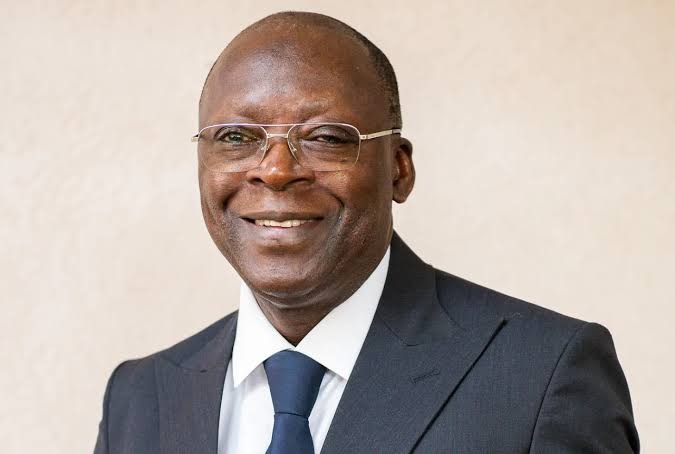
When the gavel came down on the final day of the UCESIF general assembly in Bucharest, few outside the conference halls noticed what had just happened. But behind the polished speeches and official communiqués, a quieter power play was taking shape: Benin had quietly steered the entire francophone dialogue toward new priorities. This is the untold story of how a three-day conference in Romania’s capital became a turning point for West Africa’s most dynamic consultative democracy.
Inside the unscripted maneuvers: what really moved the assembly
No one expected the UCESIF gathering—scheduled as a routine review of budgets and minutes—to erupt into strategic decisions. Yet, anchored by Benin’s delegation under Abdoulaye Bio Tchané, the proceedings shifted from administrative audits to core questions of economic resilience. The shift began in closed-door sessions where the Beninese leadership argued that traditional social dialogue had failed to address the urgent crisis of youth unemployment sweeping francophone Africa.
‘We came to Bucharest not to rubber-stamp reports, but to rewrite the agenda,’ recalled a delegation member who requested anonymity. ‘The numbers don’t lie: nearly one in three young people in West Africa faces chronic underemployment. Our institutions must respond—not with platitudes, but with binding mechanisms.’
By the second morning, the assembly had adopted a resolution introduced by Benin: mandating annual youth employment audits across all member states. The motion, initially dismissed as ‘too bold’ by some European delegations, was embraced after Benin paired it with a concrete proposal to pool technical support from Tunisia and Morocco—both UCESIF members with successful youth programs. Diplomacy, as it turned out, was less about grand declarations and more about calibrated coalitions built in the margins of plenaries.
Where consensus hides: the invisible work of alignment
When data persuades better than votes
Benin’s most effective lever was not persuasion—it was data. During a lunch break on the first day, Bio Tchané sidestepped the scheduled bilateral meetings and cornered his counterpart from Ivory Coast under the ornate chandeliers of the Romanian Parliament’s lobby. Instead of discussing regional trade (the expected agenda), he presented fresh World Bank statistics showing that 72% of Ivorian youth employed in the informal sector earned less than $50 per month. The numbers broke through Ivory Coast’s initial resistance to structural reforms, opening the door to a tripartite working group including Senegal and Burkina Faso.
‘Facts don’t have accents,’ he would later comment. ‘They speak a language every economy understands.’ The approach mirrored Benin’s domestic strategy: rely on verifiable indicators, not political pressure, to shift institutional priorities. It worked. By day three, two resolutions on data-sharing and vocational training standards had gained unanimous support.
The art of influencing beyond plenary: leveraging parallel corridors
While official sessions unfolded in stately halls, the real negotiations occurred in three discreet spaces: the hotel bars, the quick coffee breaks, and the elevator rides between floors. Benin’s delegation, led by Bio Tchané, treated these 15-minute interactions as high-stakes diplomacy.
‘Institutions listen when their counterparts speak from a position of strength,’ explained a close aide. ‘Bio Tchané didn’t just represent Benin’s CES. He embodied a model: a consultative body that actually shapes policy, not just endorses it. That credibility gave us the moral authority to push for institutional reforms.’
This behind-the-scenes influence bore fruit in two informal agreements: one between France and Tunisia to fund a pan-francophone youth entrepreneurship fund, and another between Rwanda and Benin to pilot a cross-border apprenticeship exchange. Neither made the final communiqué, yet both carry the weight of tacit commitment—often more durable than signed declarations.
What comes next: from Bucharest to policy laboratories
The true legacy of the Bucharest assembly may not be in the resolutions passed, but in the mechanisms activated. Benin leaves Romania with three deliverables: a signed memorandum with Senegal to develop a common youth employment dashboard, an invitation to Morocco to host a regional training session on social dialogue reforms, and a commitment from Ivory Coast to revise its vocational training curriculum by 2027—all outcomes traceable directly to the quiet negotiations in the Romanian capital.
But the journey is only beginning. The UCESIF’s steering committee, where Benin now holds a rotating seat, will reconvene in six months to assess implementation. Success hinges not on one-off votes, but on the ability to convert diplomatic momentum into institutional routines. For a consultative institution often dismissed as talk-shops, Bucharest 2026 may have just redefined what ‘talk’ can accomplish.
Key takeaways for the future of francophone governance
- Substance over symbolism: Benin’s strategy proved that data-driven proposals outperform ideological positions in multilateral forums.
- Parallel diplomacy: Influencing corridors—beyond plenaries—has become a necessity for small nations seeking disproportionate impact.
- From declarations to dashboards: The next frontier is embedding accountability into social dialogue through measurable indicators and peer reviews.