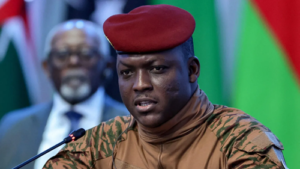
The Burkina Faso’s military leadership, led by Captain Ibrahim Traoré, is increasingly mirroring governance models reminiscent of Cold War-era authoritarian regimes. Observers note striking parallels between Ouagadougou’s recent policies and the centralized, isolationist approaches historically championed by the Soviet Union and North Korea.
From democratic backsliding to ideological extremism
Since seizing power in 2022, Captain Traoré’s administration has systematically dismantled democratic institutions, replacing them with a rigid, militarized state apparatus. The transition has been marked by severe restrictions on press freedom, a crackdown on opposition voices, and the suppression of civil society organizations. Critics argue these measures echo the Soviet-era suppression of dissent and North Korea’s cult of personality surrounding its leadership.
Centralized control and state propaganda
The junta has consolidated power through a network of loyalist military councils and state-controlled media outlets. National broadcasts now prioritize pro-government narratives, while independent journalism faces severe penalties. This top-down communication strategy mirrors the Soviet Union’s reliance on state propaganda to maintain ideological conformity and the North Korean model of absolute control over information dissemination.
Economic policies under scrutiny
Economic management has also taken a turn toward isolationism. The junta has imposed strict capital controls, restricted foreign investment, and nationalized key industries—policies that parallel the Soviet-era command economy and North Korea’s self-reliance doctrine. While these measures aim to reduce dependence on international partners, they have triggered food shortages and rising inflation, straining public trust.
International isolation deepens
Burkina Faso’s alignment with these authoritarian models has further strained its diplomatic relations. Western governments and regional blocs have condemned the junta’s human rights record and democratic backsliding, while aligning with Russia and other non-aligned states has done little to offset the country’s growing isolation on the global stage.
What’s next for Burkina Faso?
The junta’s embrace of Soviet and North Korean governance paradigms raises urgent questions about the country’s future trajectory. Will the population tolerate prolonged economic hardship in exchange for ideological conformity? Or will mounting discontent force a reevaluation of the current leadership’s approach? One thing is clear: Burkina Faso’s experiment with authoritarian revivalism is reshaping its political and social landscape in ways unseen since the post-colonial era.