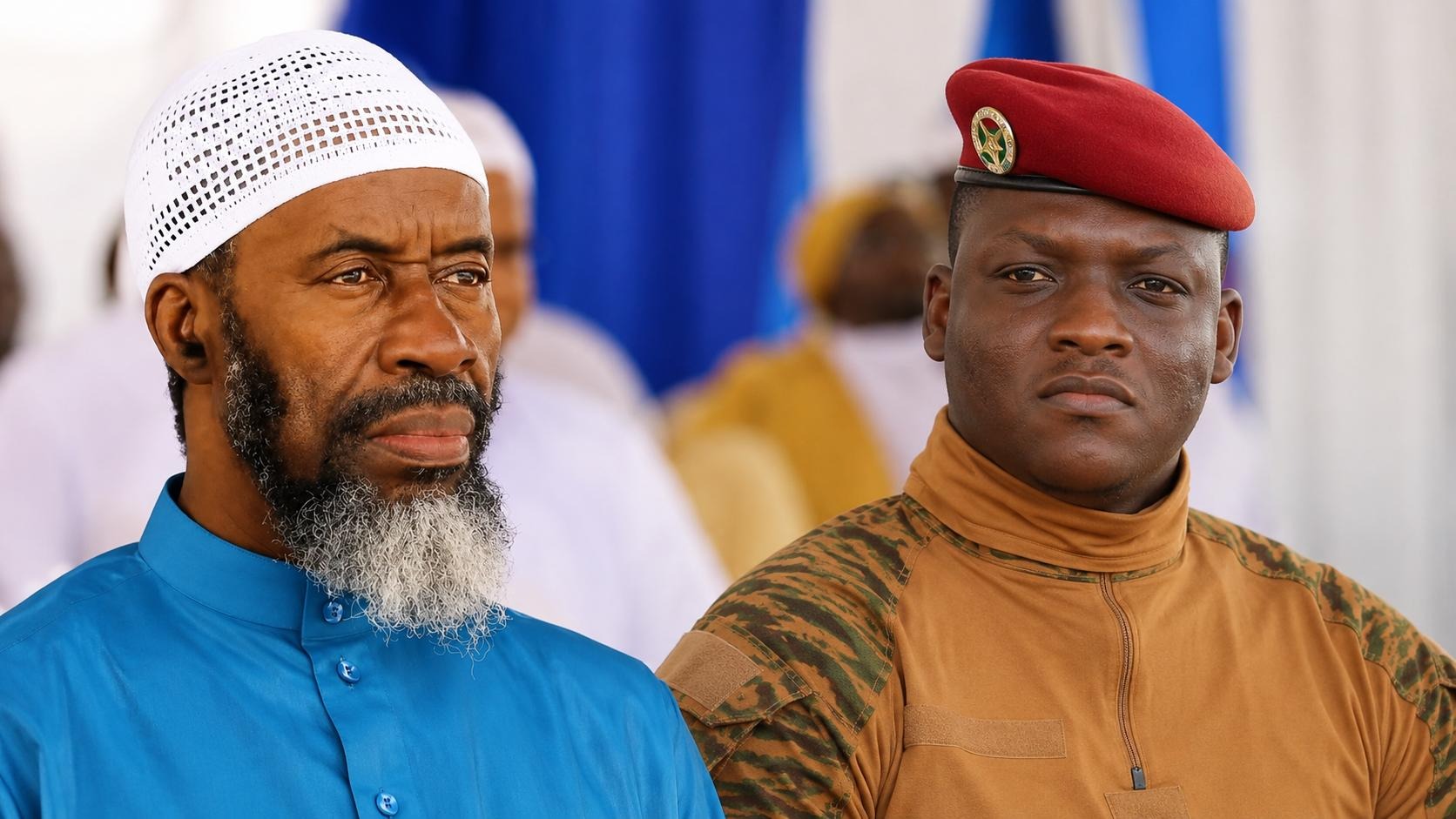
The recent decision by authorities in Burkina Faso to shut down a prominent Sunni mosque in Ouagadougou has sent shockwaves through the nation, raising serious questions about political strategy and social cohesion. While officials cite concerns over public order, the timing and nature of this move have left many wondering if the government is turning its back on the very communities that once bolstered its legitimacy.
From pillar to pariah: the mosque’s unexpected fall from grace
On May 28, 2026, regional leaders issued an order sealing the doors of a major Sunni mosque in the capital, citing “risks to public order.” Yet this abrupt measure comes at a moment when Burkina Faso’s stability remains precarious, and the government’s reliance on religious and community support has played a pivotal role in its rise. The mosque, long seen as a bastion of faith and unity, now finds itself at the center of a bitter political paradox—once a symbol of popular fervor, it has become a casualty of shifting allegiances.
A history of political leverage, now turned against its architects
To understand the full weight of this decision, one must revisit the recent political landscape of Burkina Faso. During turbulent transitions and power struggles, leaders have repeatedly tapped into religious networks, framing faith as a unifying force for national pride. The Sunni community, with its disciplined following and ability to mobilize, became a cornerstone of political messaging—its mosques transformed into platforms where leaders could amplify their narratives and rally support.
But today, those very mosques stand shuttered, their congregations left to grapple with a harsh reality: the spaces they helped legitimize are now being closed by the same hands they once lifted to power. The irony is hard to miss—using faith as a tool for governance, only to discard it when inconvenient, risks eroding trust in ways that may prove irreversible.
Why coercion could backfire in a fragile nation
Burkina Faso’s challenges extend far beyond security—they strike at the heart of social harmony. In a country where communal ties are already frayed, alienating a major religious group is a gamble with unpredictable consequences. Rather than diffusing tensions, the mosque’s closure risks deepening grievances, fueling resentment, and pushing disillusioned faithful toward more radical paths of resistance.
The government’s haste in enforcing this measure, without broader consultation or due process, underscores a troubling disregard for the delicate balance required to maintain national cohesion. When authorities silence voices of faith under vague pretexts, they risk creating a chasm between the state and its people—one that grows harder to bridge with each passing day.
Reconciliation over repression: a path to stability
If Burkina Faso is to navigate its current crises, it cannot afford to rely solely on force. The law must be applied fairly, but fairness demands more than punitive actions—it requires dialogue, transparency, and a willingness to address the root causes of dissent. Leaders must recognize that the stability they seek cannot be built on the backs of religious communities they once courted.
Suspending the mosque’s closure and engaging in meaningful discussions with faith leaders could signal a commitment to inclusivity. However, continuing down this path of repression risks cementing the perception of an opportunistic government—one that exploits faith for power, then discards it when no longer useful. The time for reflection is now, before the rift between state and society becomes too wide to mend.