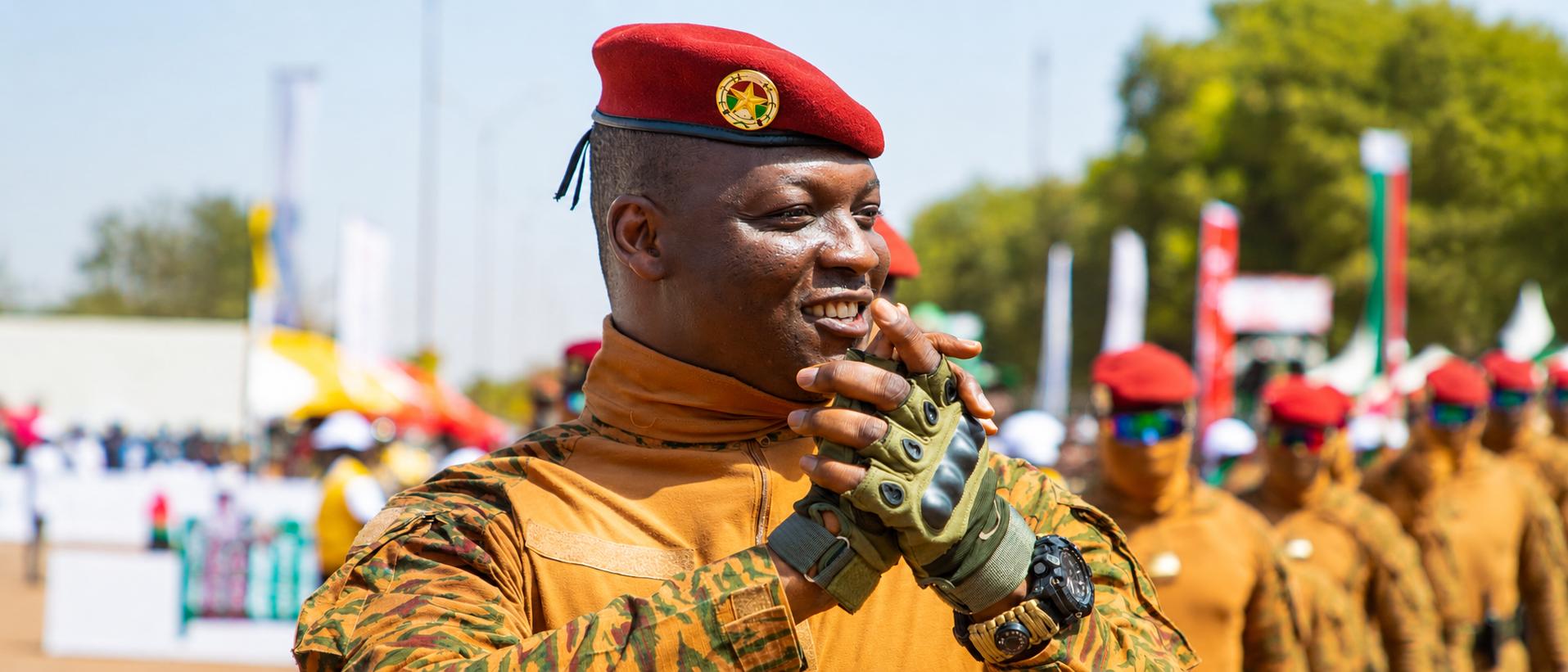
The transitional government in Burkina Faso asserts control over nearly 75% of the national territory, citing official figures of 74.53%. This narrative aims to project an image of successful reconquest and military triumph. However, when juxtaposed with independent data, humanitarian assessments, and the lived experiences of citizens, this official rhetoric appears more akin to a political communication strategy than a verifiable military achievement.
A strategic blurring of “occasional presence” and “effective control”
To present such a high figure for Burkina Faso territorial control, the state employs an exceptionally broad definition of “control.” The mere presence of military detachments, the passage of escorted convoys, or patrols by mobile volunteer units (VDP) are deemed sufficient to classify a zone as “under control.”
In reality, genuine territorial control necessitates the continuous exercise of state functions: public administration, judicial oversight, unrestricted civilian movement free from ambush threats, and permanent security for residents. On the ground, armed terrorist groups, particularly the Jama’at Nusrat al-Islam wal-Muslimin (JNIM), persist in asymmetric warfare, blocking major roads and imposing sieges on several strategic localities as soon as military convoys withdraw.
Information suppression and statistical denial
The stark disparity between official pronouncements and the situation on the ground is largely attributable to a stringent media lockdown:
- Prohibition of independent data: Security observers, local non-governmental organizations, and independent media face surveillance or outright bans on publishing contradictory security assessments. They risk accusations of “demoralizing the troops” if they do.
- Absence of counter-evaluations: No independent third-party or international body has been able to verify the mapping presented by the Ministry of Defense. Conversely, think tanks and organizations specializing in Sahel analysis English, along with conflict monitoring data sources like ACLED, continue to report a high concentration of violent incidents across a significant portion of the country.
Social and humanitarian indicators refute the reconquest claims
If 75% of the territory were genuinely secured and reintegrated into state administration, a dramatic decline in crisis indicators would naturally follow. Yet, socio-economic and humanitarian data reveal the opposite:
- The Internal Displacement (IDP) crisis: Movements of people returning to their villages of origin remain marginal and fraught with extreme risks. The number of individuals dependent on urgent humanitarian aid continues to be critically high.
- Stalled public services: In areas ostensibly “under control,” thousands of schools remain shuttered. Health personnel refuse to return without guarantees of permanent security, and civil administration struggles to establish a foothold outside protected provincial capitals.
This triumphalist narrative primarily serves domestic political imperatives:
- Legitimizing the transition: Presenting territorial victories is crucial for justifying the extension of the transitional period and the war efforts (such as taxes and mobilizations) imposed on the populace.
- Masking tactical setbacks: Emphasizing overall percentages allows for diverting attention from recurrent attacks suffered by isolated detachments and local militias (VDP) in the North, East, and the Boucle du Mouhoun region. This West Africa insider news highlights the complex security landscape.