The message, though concise, carries significant weight: Cameroon‘s President, Paul Biya, is expected to return to Yaoundé soon. This announcement, disseminated by his office, follows another period of the head of state’s absence from national territory. At 91 years old, the continent’s longest-serving leader consistently sparks a wave of inquiries regarding his health and the continuity of the Cameroonian executive whenever he undertakes prolonged stays abroad.
The presidential communication aims to reassure the public and swiftly put an end to persistent rumors circulating on social media and within certain diplomatic circles, where the possibility of a power vacuum periodically arises. The Etoudi Palace seeks to reaffirm that the President remains firmly in charge, despite his geographical distance and the extended silence that often accompanies his private travels.
A distant governance raises questions
Having held power since November 1982, Paul Biya has meticulously constructed a political system characterized by extreme verticality and a strong centralization of decision-making around his person. Consequently, the head of state’s repeated absences present a fundamental institutional challenge: how the governmental apparatus truly functions when its apex is physically removed. Cabinet meetings are infrequent, the President’s public addresses are a rarity each year, and major policy directions are most often conveyed through decrees signed remotely.
This intermittent style of governance fosters growing unease within Cameroon’s political establishment. Several opposition figures, notably Maurice Kamto of the Movement for the Renaissance of Cameroon (MRC), have called for clarification regarding the President’s actual capacity to perform his duties. The ruling Cameroon People’s Democratic Movement (RDPC) presents a united front against these challenges, asserting that the head of state remains fully lucid and actively engaged.
A pre-election context under tension
The news of Paul Biya’s imminent return gains particular significance with the approach of the presidential election scheduled for 2025. This election is poised to be decisive for Cameroon’s political future, and the question of a potential candidacy by the incumbent for an eighth mandate is drawing considerable attention. Neither the RDPC nor President Biya himself has, to date, publicly addressed this possibility, maintaining a strategic ambiguity that effectively restricts the internal political landscape.
Economically, the nation confronts substantial challenges. Cameroonian growth, estimated at around 4% by international financial institutions, remains insufficient to meet the needs of a young and rapidly expanding population. The Anglophone crisis in the North-West and South-West regions, the persistent threat from Boko Haram in the Far North, and communal tensions in various parts of the country all represent issues demanding a present and responsive governance.
International partners await developments
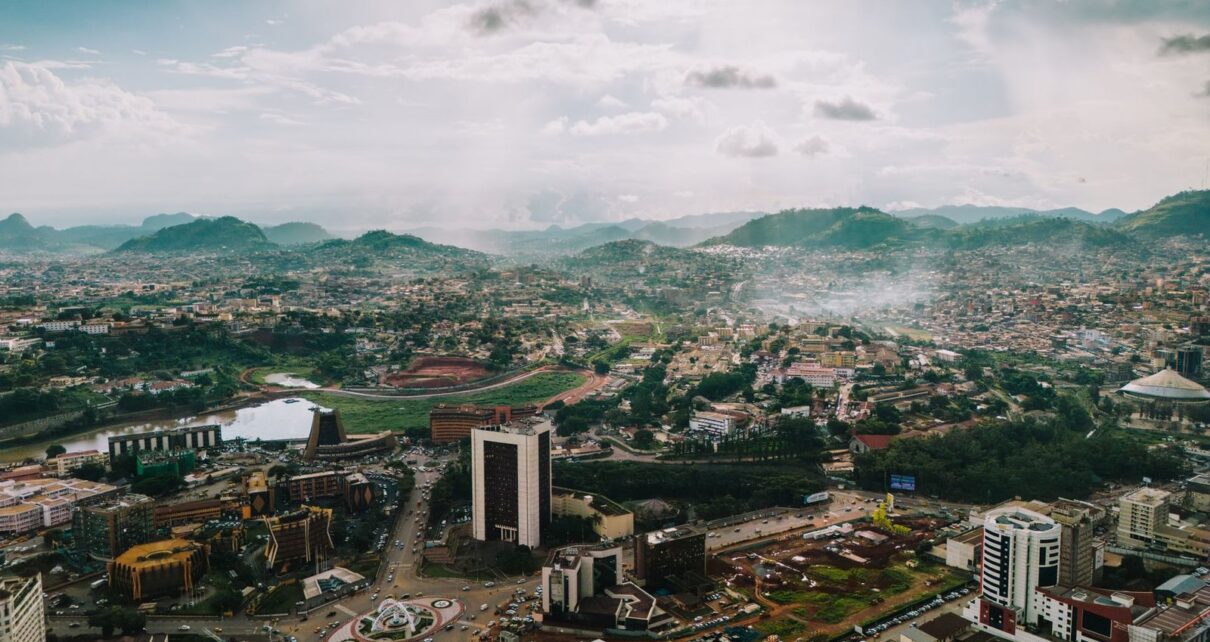
For Cameroon’s international partners, including France, China, and the United States, Yaoundé’s stability remains a strategic imperative. The country occupies a pivotal position between Central Africa and the Gulf of Guinea, possesses a significant oil sector, and plays a crucial logistical role for neighboring landlocked states such as Chad and the Central African Republic. Any prolonged uncertainty regarding the state’s leadership is thus perceived as a factor of regional risk.
Local business communities, for their part, navigate this elliptical management of power as best they can. Key structural decisions, particularly in the telecommunications, infrastructure, and hydrocarbons sectors, are frequently postponed or slowed down while awaiting presidential arbitration. Nevertheless, the administrative apparatus, accustomed to this operational mode for over four decades, continues to function through inertia, without prompting any visible breakdown.
The announcement of Paul Biya’s imminent return therefore serves more as a reaffirmation of the status quo than as the beginning of a new political chapter. In Yaoundé and abroad, all eyes are now on the coming weeks’ calendar to ascertain whether events will confirm the official statement.