
Unresolved tensions fuel federalism discourse in Cameroon
A decade-long conflict in Cameroon’s anglophone regions has reignited debates over the country’s political structure. The ongoing crisis, rooted in longstanding grievances from the 1961 reunification, continues to challenge national cohesion despite government initiatives aimed at reconciliation.
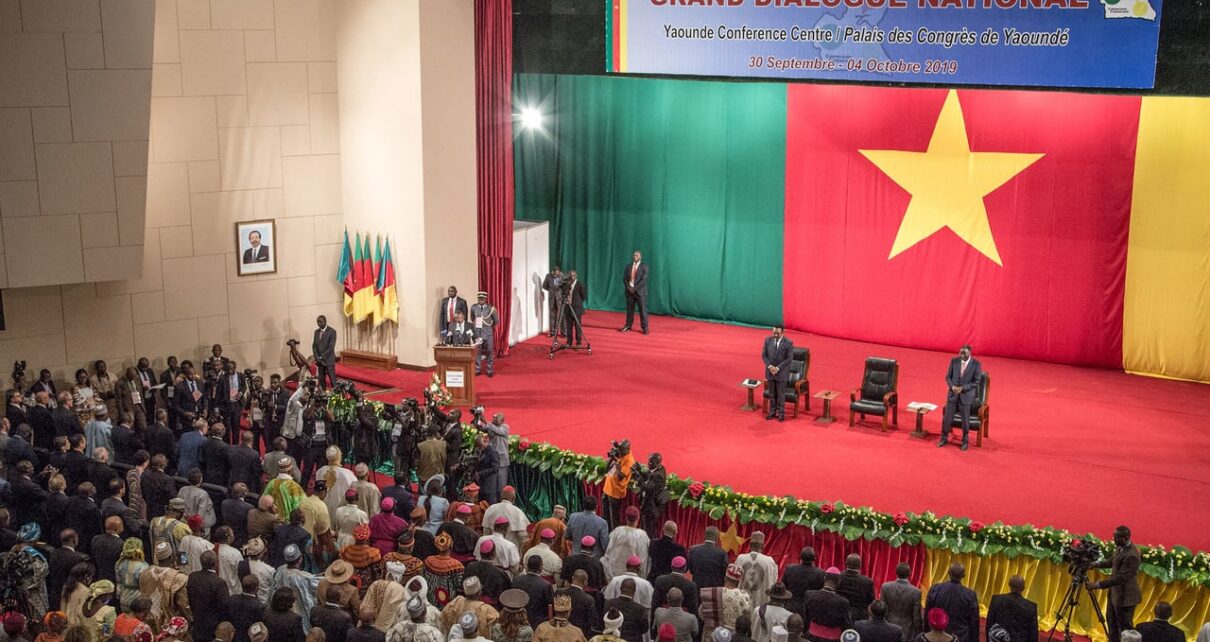
The most recent attempt to address the escalating tensions came in the form of a national dialogue launched in 2019. Chaired by Prime Minister Joseph Dion Ngute, the initiative sought to bridge divides between the predominantly French-speaking government and the English-speaking separatists. However, the absence of key rebel figures at the negotiation table significantly limited its potential impact.
Cameroon’s post-independence history reveals a complex relationship between its two linguistic communities. The 1961 merger of British Southern Cameroons with French-speaking Cameroon created a united nation, but cultural and administrative disparities persisted, fueling regional disparities and demands for greater autonomy.
Key obstacles to federalist aspirations
The path to federalism faces formidable hurdles. While some advocates argue it could provide a framework for resolving the anglophone crisis, others fear it might exacerbate existing divisions or even lead to the country’s fragmentation. The debate encompasses several critical concerns:
- Political will: The government’s commitment to structural reforms remains uncertain, with critics questioning whether federalism is truly a priority or merely a tactical response to international pressure.
- Regional disparities: Decades of centralized governance have left anglophone regions economically disadvantaged, with infrastructure and development lagging behind their francophone counterparts.
- Security concerns: The ongoing separatist insurgency has resulted in thousands of casualties and displaced hundreds of thousands, making any political solution contingent on restoring peace.
- Legal and constitutional challenges: Revising Cameroon’s unitary system would require extensive constitutional amendments, a process fraught with political risks and potential resistance from entrenched interests.
Historical precedents and modern implications
The concept of federalism in Cameroon isn’t new. Early post-independence leaders like Ahmadou Ahidjo initially adopted a federal structure, which was later abandoned in favor of a centralized system under Paul Biya‘s prolonged presidency. This historical shift continues to influence contemporary discussions, with some viewing federalism as a return to a more equitable governance model, while others see it as a step backward that could undermine national unity.
Proponents of federalism argue that it could address the anglophone crisis by granting greater autonomy to the country’s two English-speaking regions—Northwest and Southwest—while preserving Cameroon’s territorial integrity. They point to successful federal models in other African nations, such as Nigeria, as evidence of its potential viability.
Opponents, however, caution against the risks of federalism, citing examples where such systems have exacerbated ethnic or regional tensions. They argue that Cameroon’s diverse and interconnected society requires a unified approach to governance rather than a decentralized one that could deepen existing fractures.
What the future holds for Cameroon’s political structure
The debate over federalism in Cameroon shows no signs of abating. As the government grapples with the anglophone crisis and broader calls for reform, the country stands at a crossroads. The outcome of these discussions will have profound implications not only for Cameroon’s internal stability but also for the broader Central African region.
For federalism to gain traction, several conditions must be met: a genuine commitment to inclusive dialogue, tangible progress in addressing regional disparities, and a clear roadmap for constitutional reform. Without these, the dream of a federal Cameroon may remain just that—a dream.