For 57 consecutive days, President Paul Biya has remained absent from the public eye, deepening uncertainty across Cameroon. During this prolonged absence, a series of controversial military appointments has raised alarms about an impending ethnic-driven power transition and the militarization of the state apparatus.
Yaoundé’s silent crisis: Biya’s prolonged absence and the vacuum at the top
Since June 7, 2026, when President Biya left Yaoundé for what was officially described as a « private stay in Europe, » no public appearance has been recorded. At 93 years old, each passing day without clarity fuels speculation about his health and the stability of the regime. Government officials, including spokesperson René Sadi, have repeatedly assured the public of Biya’s well-being and imminent return, yet skepticism grows.
Rumors swirl. Some suggest a knee surgery in early July, while others warn of post-surgical complications. What remains undeniable is the president’s absence from the national stage—a silence that speaks volumes. Critics demand answers: « Why conceal health concerns behind a prolonged foreign stay? The Cameroonian people deserve transparency, » insists Roger Justin Noah, Secretary-General of the Movement for the Renaissance of Cameroon (MRC).
Military reshuffle: a strategic takeover or a power grab?
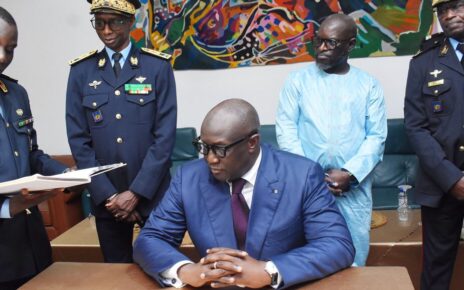
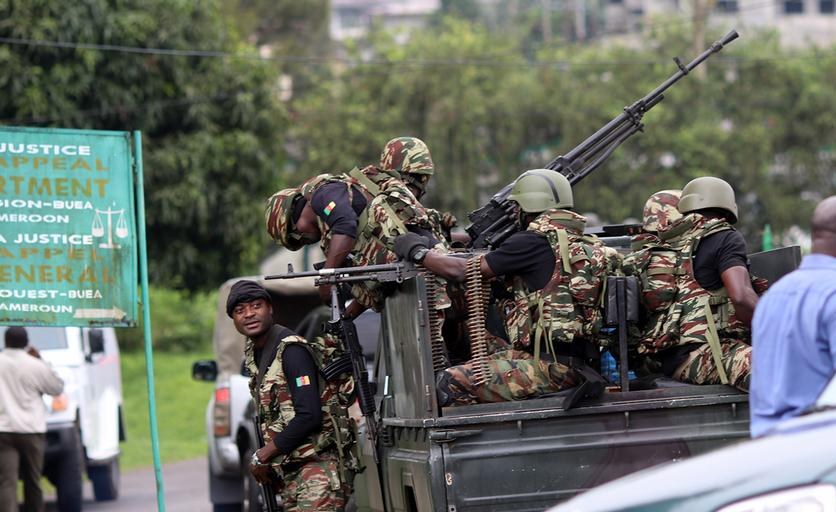
On August 3, 2026, a presidential decree (No. 2026/265) appointed General Beko’o Abondo Raymond Jean Charles as the new commander of the Presidential Guard—a role critical to the safety of the Head of State and the integrity of the presidency. This appointment was not an isolated act. Five new brigade generals, a new Chief of Staff (General Ebaka Hippolyte), and six regional military commanders were also installed across four of Cameroon’s five military zones.
« Such sweeping changes can only be authorized by the Head of State, » notes a retired colonel familiar with the inner workings of the armed forces. The timing—amid Biya’s absence—and the lack of consultation raise troubling questions: Who truly holds authority in Cameroon today? Who commands the security apparatus when the president remains invisible?
Ethnic divisions and the militarization of power
The reshuffle comes at a time when Cameroon’s political landscape is fractured along ethnic and familial lines. Two dominant factions vie for influence:
- The consanguineous clan: centered around Franck Biya, the president’s eldest son, seen as the guarantor of regime continuity.
- The First Lady’s faction: led by Chantal Biya and Ferdinand Ngoh Ngoh, the powerful Secretary-General of the Presidency.
Their rivalry has intensified since April 2026, when a constitutional revision reintroduced the vice-presidency—a position designed to ensure automatic succession in the event of a power vacuum. Yet, despite the reform, the vice-presidential seat remains vacant, leaving the succession mechanism inoperable and the corridors of power in disarray.
Is Cameroon heading toward ethnic militarization?
The specter of Rwanda’s 1994 genocide looms large. At the time, ethnic manipulation within the military played a decisive role in the tragedy. In Cameroon, where ethnic tensions simmer beneath the surface, the fear is that power could become « owned » by a single group, eroding the fragile national compact.
« We are witnessing the militarization and ethnicization of succession—a path with no clear exit, » warns political commentator Jean-Pierre Bekolo. His words reflect a growing consensus: Cameroon is edging closer to a dangerous precipice.
Opposition mobilizes amid institutional paralysis
The political opposition, led by Maurice Kamto’s MRC, has not remained idle. Lawmakers have petitioned the Constitutional Council to declare a power vacuum, with Deputy Jean-Michel Nintcheu stating, « The Council must recognize the vacancy at the summit of the state. » Yet, without a vice-president, the constitutional process cannot proceed, leaving the nation in a state of institutional paralysis.
Why act now? The shadow of unanswered questions
Government officials insist President Biya’s return is imminent. If so, why proceed with such sensitive appointments in his absence? « If he is truly returning soon, why risk destabilizing the state’s fragile balance with these premature decisions? » queries Bekolo.
The doubts extend beyond timing. Reports of « dubious decree formulations and signatures » have sparked rumors that those signing may already know Biya will not return. The government has denied claims of forged documents, but in a climate of opacity, doubt lingers.
Can Cameroon avert disaster?
While the situation is dire, it is not irreversible. Three critical steps could help restore stability:
- Transparency: The government must disclose Biya’s health status and provide a credible timeline for his return—or succession plan.
- National dialogue: A mediated conversation among political forces to address ethnic tensions and prevent further polarization.
- Filling the vice-presidency: Appointing a vice-president would secure the succession process and restore institutional confidence.
History’s judgment: acts and omissions
« History will judge not only the actions taken but also the silences and blind spots, » writes Bekolo. Cameroon stands at a crossroads. The path of continued opacity, ethnicized militarization, and factional infighting leads only to instability. After 43 years under Biya’s rule, the people have tolerated much—but they will not forgive those who gamble with the nation’s future in the shadows.
« Stop playing with fire. Tomorrow, it may be too late to say, ‘We did not know.’ »