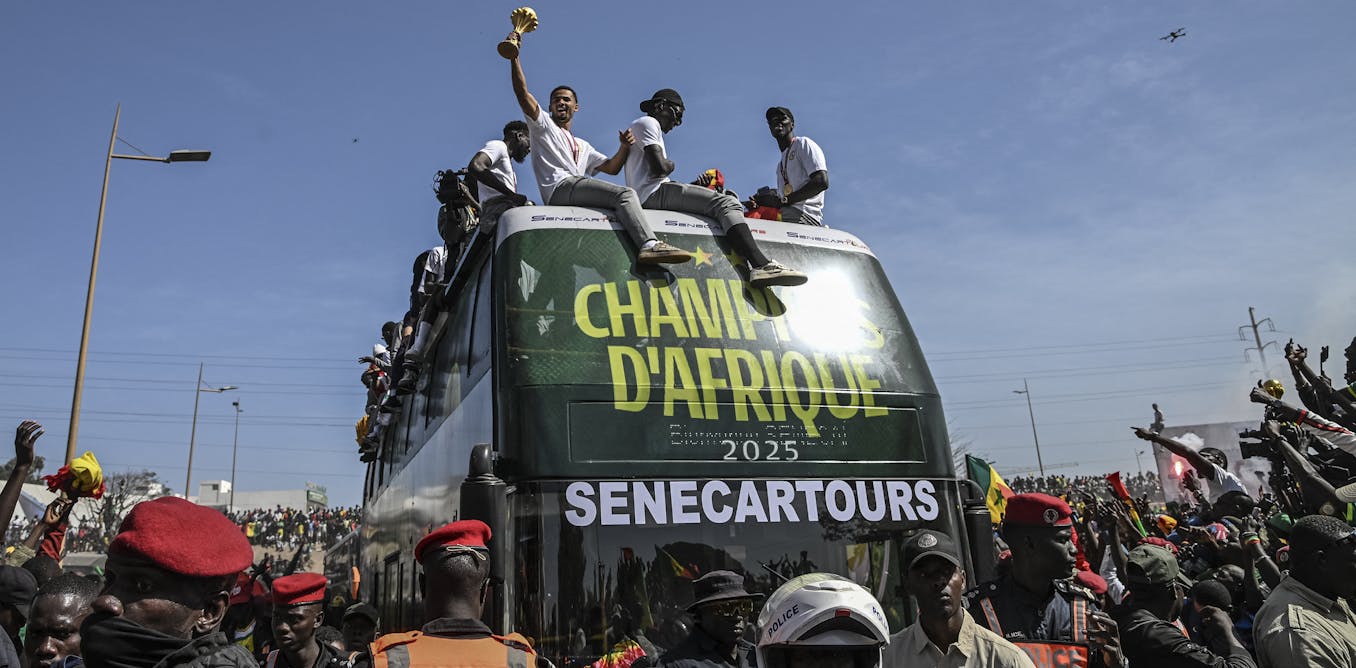
Two months post-final, following a hard-fought TotalEnergies CAF Africa Cup of Nations Morocco 2025 showdown that ended 1-0 on the pitch, the CAF Appeal Jury upheld a controversial forfeit decision against Senegal, awarding Morocco a 3-0 victory. The grounds cited? The Senegalese team’s temporary walkout—just ten minutes long.
The CAF’s ruling, grounded in Articles 82 and 84 of its regulations, clashes sharply with the on-field referee’s decision to resume and complete the match. How does sport law reconcile a ground reality with a post-hoc legal ruling? And what broader implications does this hold for African football governance? Abdoulaye Sakho, a prominent sports law scholar, unpacks these questions in an exclusive analysis.
what legal framework underpins the caf’s controversial decision?
The Appeal Jury’s verdict hinges on Chapter 35 of the CAN regulations, specifically Articles 82 and 84, which govern team withdrawals. The jury formally declared Senegal’s team forfeit under Article 84, retroactively validating a 3-0 victory for Morocco’s football federation (FRMF).
The crux lies in legal qualification. While public discourse frames the incident as a “match abandonment,” the CAF jury adopted the term “withdrawal” as defined in its statutes. In legal—especially sports—contexts, terminology is decisive. A mislabeled infraction can trigger an entirely different disciplinary regime, much like a misdiagnosis can lead to incorrect treatment. This semantic pivot became the fulcrum of the entire dispute.
why did the caf override the referee’s decision to continue play?
The Appeal Jury’s rationale remains undisclosed, but it likely exercised its sovereign discretion as an independent CAF body. It chose to disregard the referee’s decision to resume the match—a decision that carried significant weight under the IFAB Laws of the Game.
Under Law 5, the referee possesses broad authority: to stop, suspend, or terminate a match for rule violations or external interference. Crucially, no fixed time threshold dictates when a match must be deemed abandoned. The referee is the ultimate authority on the field—
« decisions by the referee on matters related to play are final, including the validation of a goal and the result of the match. Decisions made by match officials must be respected by all participants. »
In this instance, the referee chose to suspend play temporarily and restart it, a course of action that, in hindsight, the Appeal Jury did not endorse. This divergence between on-field authority and post-match adjudication lies at the heart of the controversy.
has a similar incident ever occurred in a continental final before?
No documented case exists of a CAN final being overturned due to a team’s brief exit from the pitch. This makes the 2025 incident unprecedented in African football history.
Football governing bodies typically uphold on-field outcomes, as seen in rare exceptions like the controversial South Africa vs. Senegal World Cup qualifier (2017), which was replayed after match-fixing allegations surfaced. Another notable case is the 2019 CAF Champions League final between Wydad Casablanca and Espérance de Tunis, where Moroccan players refused to resume play after a disputed goal and VAR malfunction. The Wydad walked off for good, and the Court of Arbitration for Sport (CAS) upheld the forfeit ruling—though in that case, the match was never resumed.
The Senegalese scenario diverges: their team returned to the pitch, and the match reached its natural conclusion. The Wydad, by contrast, never resumed play, making the 2025 CAN final a uniquely contested legal precedent.
can Senegal still challenge the ruling, and what are the odds?
Yes. Senegal has already lodged an appeal with the Court of Arbitration for Sport (CAS), a standard recourse when a sports body issues a definitive ruling. The process involves written submissions, oral arguments, and a final verdict—expected in the coming months. Senegal must pay a filing fee of 1,000 Swiss francs (approximately $1,279) to initiate proceedings.
In parallel, the Senegalese Football Federation (FSF) has reportedly filed for an injunction to suspend the CAF’s decision, allowing Senegal to retain its title until CAS renders a final judgment. This legal strategy preserves their standing while the appeal unfolds.
This case serves as a pivotal legal case study in sports law, touching on key issues: interpretation of sporting regulations, the scope of referees’ powers, the composition of adjudicatory bodies, the doctrine of estoppel, and the governance challenges facing continental football bodies.