The Democratic Republic of Congo is facing fresh political turbulence as the country’s Catholic leadership, through the National Episcopal Conference of Congo (CENCO), has publicly rejected President Félix Tshisekedi’s reported plans to seek a third term in 2028 by amending the constitution.
In a strong statement, CENCO called on President Tshisekedi to uphold the oath he took «before God and the Nation» and warned that any move to extend his mandate could plunge the country into chaos and civil conflict. The bishops also announced they would soon unveil a detailed protest plan, urging citizens to resist what they describe as a dangerous constitutional overhaul.
Breaking constitutional limits
The current Congolese constitution clearly limits presidents to two terms. President Tshisekedi, in office since January 2019, was re-elected in 2023 for a second and final mandate. However, in early May, during a press briefing, he hinted at the possibility of a third term, suggesting a referendum could be held to revise the constitution. His political allies have since been actively pushing for this constitutional change.
Echoes of past resistance
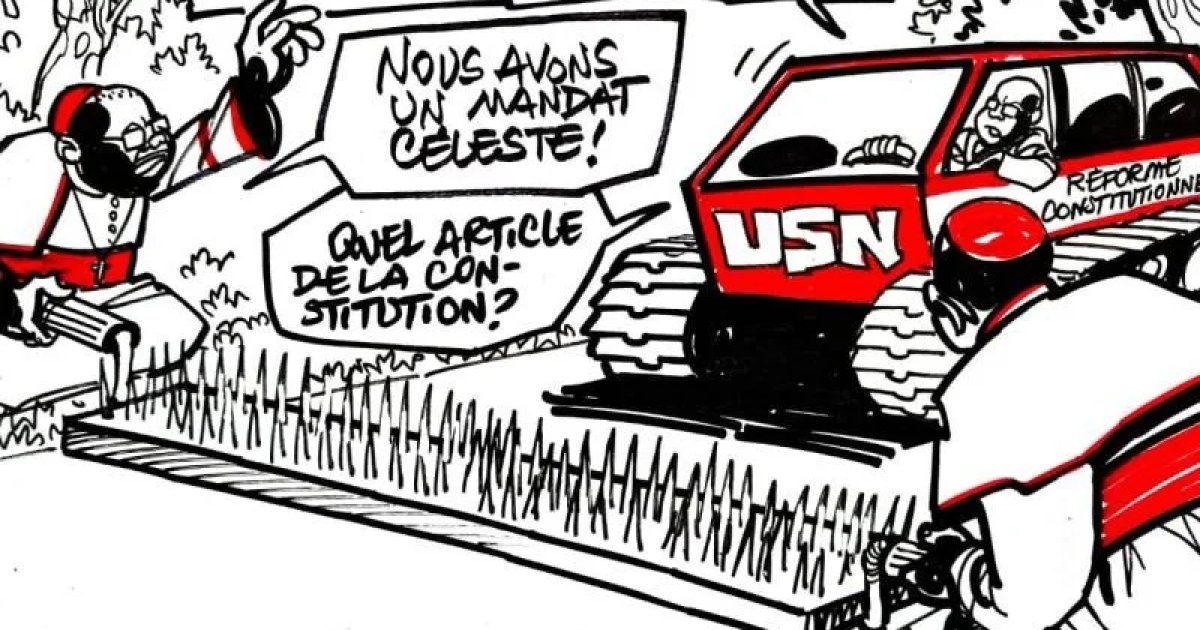
The Catholic Church, which previously opposed former President Joseph Kabila’s attempt to bypass constitutional term limits for a third mandate, has renewed its stance. Alarmed by the latest developments, CENCO convened an extraordinary plenary assembly in Kinshasa from June 18 to 20, 2026. The gathering concluded with a 17-point declaration signed by 37 bishops, cardinals, and priests, declaring that «the Nation is in peril!».
The bishops highlighted ongoing instability in the eastern regions, where the M23 rebel alliance and other armed groups—such as the Allied Democratic Forces (ADF)—continue to control large areas, particularly in North and South Kivu. The humanitarian crisis is further compounded by recurring Ebola outbreaks, raising fears of a broader health emergency.
State-backed pressure and repression
The clergy expressed deep concern over what they describe as a government-led campaign to revise the constitution, using state resources while suppressing dissent. According to the bishops, opposition voices within the ruling coalition are silenced through intimidation, and opposition protests are met with violent crackdowns by police forces, often in coordination with a political militia known as the «Force du Progrès».
CENCO firmly stated that there is «no necessity, urgency, or opportunity» to change the constitution. The bishops emphasized that the country’s immediate priorities must be restoring peace, improving social welfare, and fostering national unity and cohesion.
Government allies condemn Church stance
In response, the Union sacrée pour la Nation (USN), a coalition of over 400 political parties supporting President Tshisekedi, condemned CENCO’s declaration as «subversive» and accused the bishops of attempting to undermine democratic institutions. In a statement released on their platform, the coalition described the bishops’ remarks as «an incitement to popular uprising and the overthrow of the constitutional order».