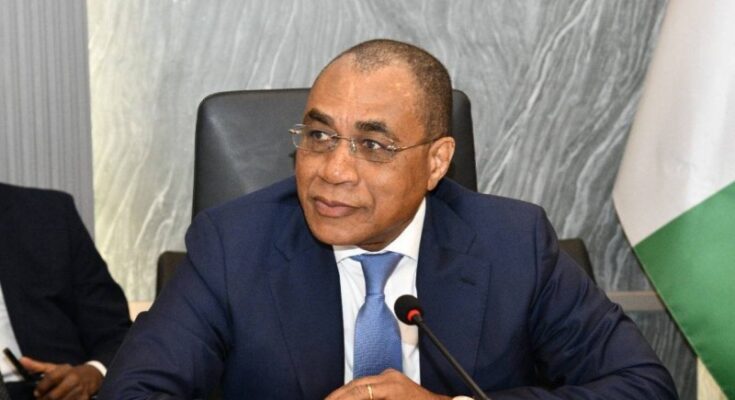
Côte d’Ivoire is stepping up its environmental game with a groundbreaking national carbon pricing strategy, spearheaded by the Ministry of Economy, Finance and Budget. This bold initiative isn’t just about meeting climate targets—it’s about reshaping the nation’s economic trajectory toward sustainability.
Why a carbon tax now?
The urgency comes as Côte d’Ivoire’s post-pandemic economic rebound has brought an unwelcome side effect: a worrying climb in greenhouse gas emissions. Between 1990 and 2024, the country’s carbon intensity rose from 0.15 to 0.18 tonnes per $1,000 of GDP, driven by fossil fuel dependence, booming transport networks, industrial expansion and high-emission agricultural practices.
Climate change isn’t a distant threat—it’s already hitting key sectors hard. Rising temperatures, erratic rainfall and environmental disasters are taking a toll on agriculture, which remains the backbone of employment and GDP. Without decisive action, these challenges could derail decades of development progress.
Aligning with global climate promises
This carbon tax initiative is Côte d’Ivoire’s answer to its international commitments under the updated Nationally Determined Contribution (NDC 3.0). The nation aims to slash greenhouse gas emissions by 33.07% independently—and up to 74% with international support—by 2035.
It also fits into broader reforms tied to the International Monetary Fund’s Resilience and Sustainability Facility (RSF), where environmental fiscal measures play a central role in securing long-term economic stability.
From old tools to new impact
The country already has environmental levies in place: taxes on petroleum products, energy surcharges and fees in forestry and mining sectors. Yet these measures were designed mainly for revenue collection—not for driving real change toward low-carbon practices.
The new carbon pricing strategy aims to flip this script. By putting a price on carbon, Côte d’Ivoire wants to shift both businesses and households toward cleaner choices, making sustainability the smarter economic decision.
A progressive, socially aware carbon tax
The proposed tax will primarily target fossil fuels—excluding butane gas—with simulations showing real potential to cut CO₂ emissions. An initial rate of $8 per tonne could reduce emissions by 200,000 tonnes annually, while scaling up to $50 per tonne could cut 1.2 million tonnes of CO₂ each year.
While this reform may push fuel prices higher and temporarily slow economic growth, the government plans to soften the blow. Revenues from the tax won’t vanish into general coffers—they’ll be reinvested directly into the green transition and social protection.
Where the money goes
- Universal electricity access: A major portion of the funds will expand national electrification, bringing clean power to more communities.
- Clean cooking support: Subsidies will help households switch from charcoal to cleaner gas or solar cookstoves, cutting indoor air pollution and deforestation.
- Vulnerable household relief: Direct cash transfers or energy vouchers will protect low-income families from price shocks.
- Green jobs and retraining: Funds will create employment in renewable energy, reforestation and sustainable agriculture, helping workers transition from high-carbon sectors.
- Low-emission vehicle incentives: Tax breaks, exemptions and expanded charging infrastructure will encourage adoption of electric and hybrid vehicles.
A phased rollout for lasting change
The strategy will roll out in three stages between 2026 and 2035:
- 2026–2027: Building the legal, institutional and technical groundwork.
- 2028–2029: Launching the carbon tax at a modest initial rate.
- 2030–2035: Expanding, refining and evaluating the system to maximize impact.
By weaving together economic growth, social equity and environmental stewardship, Côte d’Ivoire is positioning itself not just as a regional leader in climate action—but as a model for balancing development with planetary health.