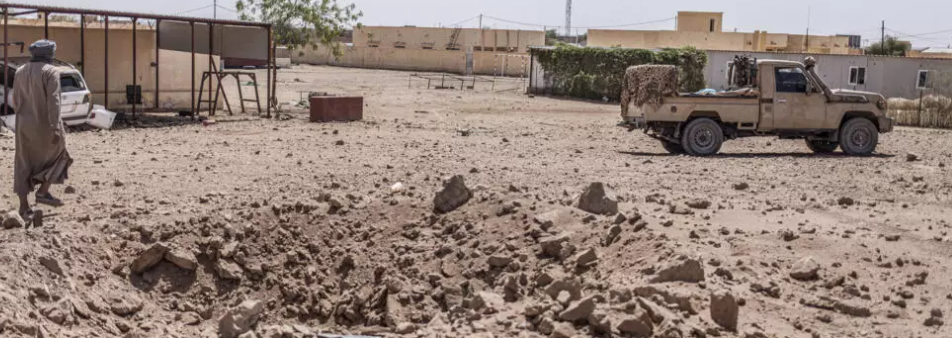
Mali’s efforts to bolster its defense capabilities with advanced weaponry have yielded little success on the battlefield. The ongoing crisis in Kidal highlights a critical flaw: a military command structure crippled by insufficient education and doctrinal weaknesses, rendering even the most sophisticated arsenal ineffective.
Strategic illiteracy undermines military progress
The Malian government’s substantial investments in high-tech military equipment—drones, tactical bombers, and precision-guided munitions—have not translated into tactical dominance. Despite overwhelming air superiority, Bamako struggles to translate technological advantage into battlefield success. The root of the problem lies not in hardware but in human capital: a command chain that lacks the intellectual foundation to leverage these assets effectively.
The Kidal stalemate: a case study in failed doctrine
In the rugged terrain around Kidal, Malian forces have deployed relentless airstrikes and drone surveillance, yet rebel factions maintain a firm grip on key positions. This paradox stems from a fundamental miscalculation: the absence of a cohesive military strategy. Without well-trained ground forces to exploit aerial strikes, or a nuanced understanding of the local landscape, each bombing run becomes an isolated, unproductive expenditure of resources. The result? A perpetual cycle of firepower without progress.
Why advanced weapons can’t compensate for poor leadership
Asymmetric warfare in the Sahel demands adaptability, tactical creativity, and deep operational awareness—qualities that elude a poorly educated command structure. Malian military leadership often reverts to rigid, brute-force tactics, such as repetitive nighttime bombing campaigns, which fail to account for the fluid, decentralized nature of rebel movements. Meanwhile, rebel forces leverage the region’s geography—camouflage, dispersion, and terrain mastery—to outmaneuver conventional troops.
Worse still, the Malian high command shows little capacity for learning from past mistakes. Repeated failures in mission planning, such as the loss of critical equipment and personnel due to avoidable errors, reveal a systemic inability to refine strategy. The misconception persists that advanced weaponry alone can secure victory, overlooking the fact that warfare is as much an intellectual endeavor as a physical one. For Mali, firepower without strategic acumen is little more than a costly illusion.
The path forward: investing in minds, not just machines
The military deadlock in northern Mali serves as a stark reminder: no amount of cutting-edge technology can compensate for a lack of doctrinal competence. Until the Malian command structure undergoes a fundamental overhaul—prioritizing education, tactical training, and adaptive leadership—the stalemate around Kidal will persist. The lesson is clear: in modern warfare, the sharpest weapon is not the one with the most firepower, but the one wielded by the most informed mind.