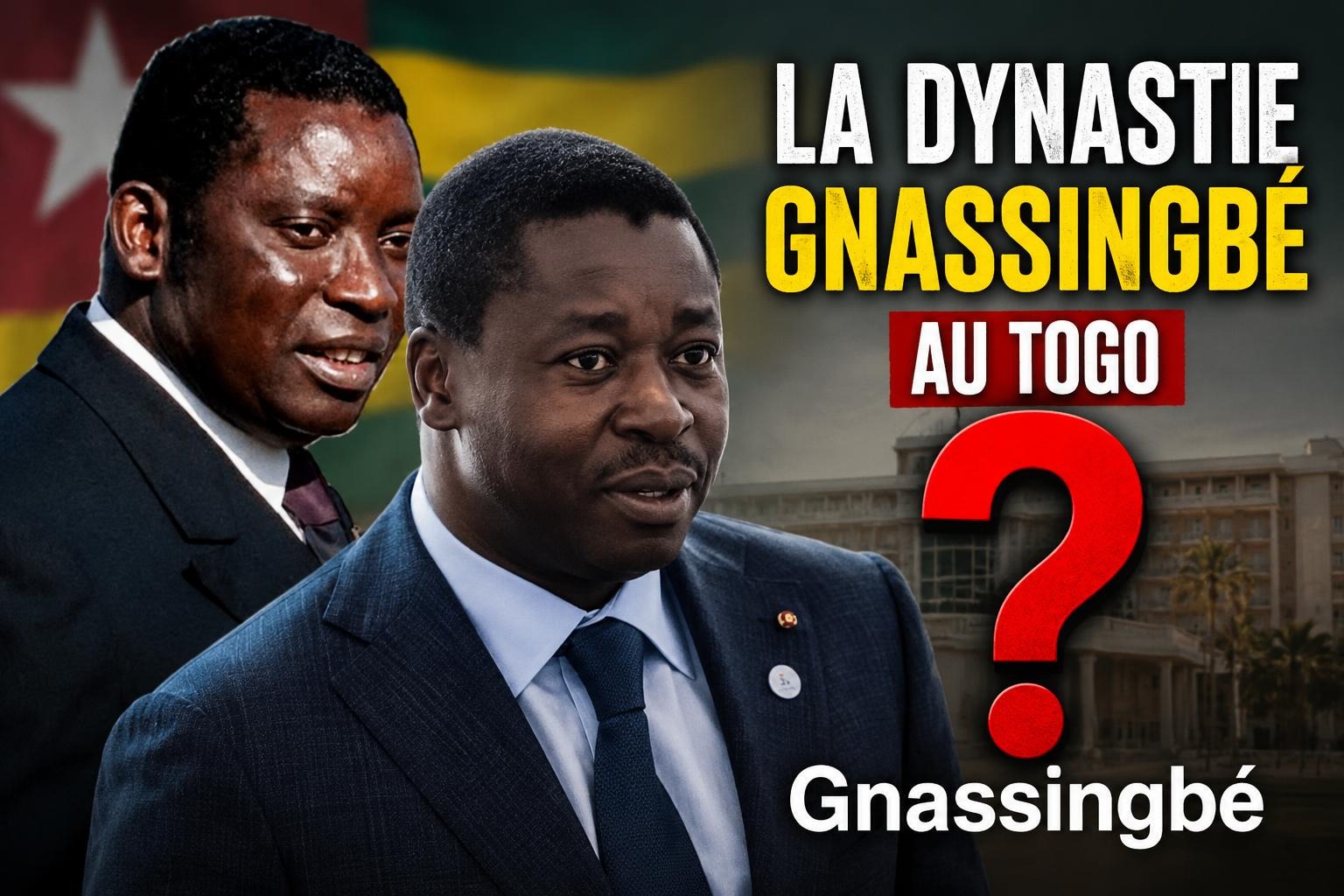
Togo holds a somber distinction as home to Africa’s longest-standing political dynasty. Following the 38-year reign of Gnassingbé Eyadéma, his son, Faure Gnassingbé, is now entering his third decade as the nation’s leader. By meticulously controlling state institutions and securing the unwavering loyalty of the military, the current head of state appears to be following a path identical to that of his predecessor. All indications now suggest that Faure Gnassingbé has chosen a presidency for life, destined to remain in power until his final breath, just like his father before him.
the hereditary trap: clan survival over national well-being
To comprehend why a peaceful transfer of power has become unattainable in Togo, one must delve into the fundamental nature of the regime. This is not merely a political party in control, but rather a deeply entrenched clanic and dynastic structure. Since 1967, power has been regarded by the inner circle of the Gnassingbé family and its affiliates as a familial inheritance and a private domain.
For Faure Gnassingbé, relinquishing power would present a significant existential threat to his entire entourage. Stepping down from the presidential office would inevitably open the door to demands for accountability regarding the country’s financial management, systemic corruption, and, critically, the numerous blood crimes that have marked the regime’s history (notably the hundreds of deaths during the violent transition of 2005). For the clan, maintaining power is no longer a political option; it is a matter of physical and judicial survival. This inescapable predicament compels the head of state to cling to the throne indefinitely.
the point of no return: a new constitution stifles alternation
Togo’s recent, forceful transition to a parliamentary system has definitively extinguished the last vestiges of hope for a democratic transition. By assuming the title of “President of the Council of Ministers,” Faure Gnassingbé has effectively bypassed the constraints of presidential term limits and direct universal suffrage.
This radical constitutional amendment acts as a critical point of no return:
- Elimination of direct voting: The populace no longer directly elects its supreme leader, neutralizing the risk of a protest vote.
- Unlimited mandate by proxy: As long as his party, the state-aligned UNIR, continues to win legislative elections orchestrated by the ruling power, he will be reinstated.
This legal engineering demonstrates that Faure Gnassingbé has mirrored his father’s strategy for perpetual rule. Gnassingbé Eyadéma similarly amended the Constitution in 2002 to ensure he would die on the throne in 2005. The son has simply modernized the approach: where the father employed brute force to disregard legal texts, the son now manipulates legal texts to legitimize his continued hold on power.
the togolese armed forces: the praetorian shield preventing retreat
The ultimate lock on this dynastic fate lies within the nature of the Togolese Armed Forces (FAT). Established by Gnassingbé Eyadéma on a strongly regionalist and clanic foundation, the FAT remains the indispensable backbone of the regime. High-ranking military officials share the same economic and security interests as the ruling family.
“In Togo, the military does not protect institutions; it safeguards a dynasty against the aspirations of its own people.”
For the generals, a departure by Faure Gnassingbé would equate to the loss of their privileges and a destabilization of their influential apparatus. The head of state is a willing captive of this praetorian system. He understands that his security is contingent upon his presence at the apex of the state and that the army would not tolerate any successor outside the family’s sphere or the established system. This intertwined alliance definitively seals his destiny to that of the presidential palace.
Ultimately, Faure Gnassingbé has found himself confined within the same gilded cage as his father. A prisoner of a clan unwilling to forfeit its privileges, protected by an army fearful of change, and insulated by laws he himself dictated, he has condemned himself to political perpetuity. Togo’s history echoes: much like Eyadéma in his time, Faure Gnassingbé will govern Togo until biology dictates otherwise. However, by refusing to offer his country a peaceful exit, he risks leaving behind an explosive legacy, where the end of the dynasty could inevitably lead to chaos in this West African nation.