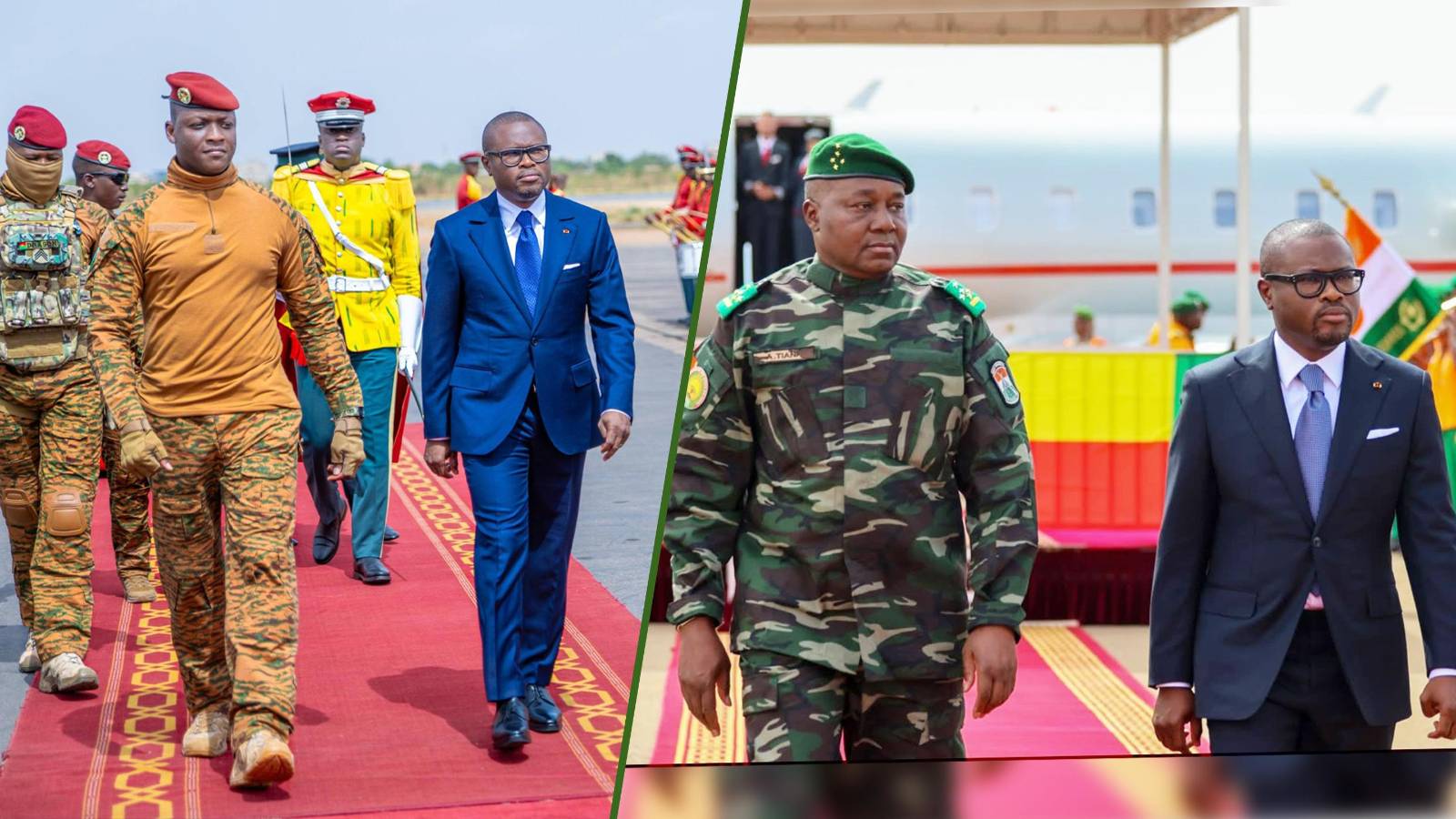
The recent official trips undertaken by Bénin’s President Romuald Wadagni to Abuja (Nigeria), Niamey (Niger) and Ouagadougou (Burkina Faso) signal a new chapter in regional relations. This shift reflects a deliberate effort to restore direct diplomatic channels amid shifting geopolitical dynamics across West Africa.
Following a prolonged period of strained ties—triggered by political transitions in the Sahel and the enforcement of ECOWAS directives—Bénin’s leadership has prioritized rebuilding trust with its immediate neighbors. The visits were not merely symbolic; they laid the groundwork for practical cooperation across critical sectors.
Economic ties that bind the Sahel
The economies of Bénin, Niger and Burkina Faso are deeply interconnected, particularly through trade and logistics. Landlocked Niger and Burkina Faso rely heavily on Bénin’s infrastructure, especially the Cotonou-Niamey corridor and transit routes to Ouagadougou, to access international markets. Conversely, Bénin’s economic health—particularly the Port of Cotonou and its logistics sector—depends on the steady flow of goods moving to and from its Sahelian neighbors.
Energy ties further solidify this interdependence. The Agadem-to-Sèmè-Kpodji pipeline exemplifies this bond: Niger’s oil exports depend on Bénin’s infrastructure, while Bénin benefits from transit revenues. A newly established expert committee tasked with identifying and removing obstacles to free movement underscores the urgency of maintaining these reciprocal trade flows—essential for the smooth functioning of the region’s hinterland.
Security cooperation across porous borders
Beyond economics, security concerns are driving this diplomatic revival. The tri-border area around the W National Park—a shared zone between Burkina Faso, Niger and Bénin—remains a hotspot for armed groups and cross-border crime. No single country can address these threats alone, making coordinated action imperative.
The resumption of direct security dialogues enables better intelligence sharing, reduces military miscommunication and reactivates joint operations such as coordinated patrols and information exchanges. For Bénin, securing this border region is not just about national stability—it’s about preventing spillover of instability from the wider Sahel.
Balancing regional blocs and bilateral ties
This diplomatic push comes at a pivotal moment in West African politics. The visits to Abuja, Niamey and Ouagadougou—starting with Nigeria, a key ECOWAS hub—followed by the Sahel states—hint at a strategic balancing act. Bénin is positioning itself as a neutral bridge between the Economic Community of West African States (ECOWAS) and the Alliance of Sahel States (AES), ensuring that trade and security channels remain open despite shifting political alliances.
The initiative reflects a pragmatic response to regional fragmentation: maintaining economic lifelines while safeguarding national sovereignty. By prioritizing bilateral diplomacy, Bénin is helping reduce geopolitical risk across the subregion, fostering both economic recovery and community resilience.