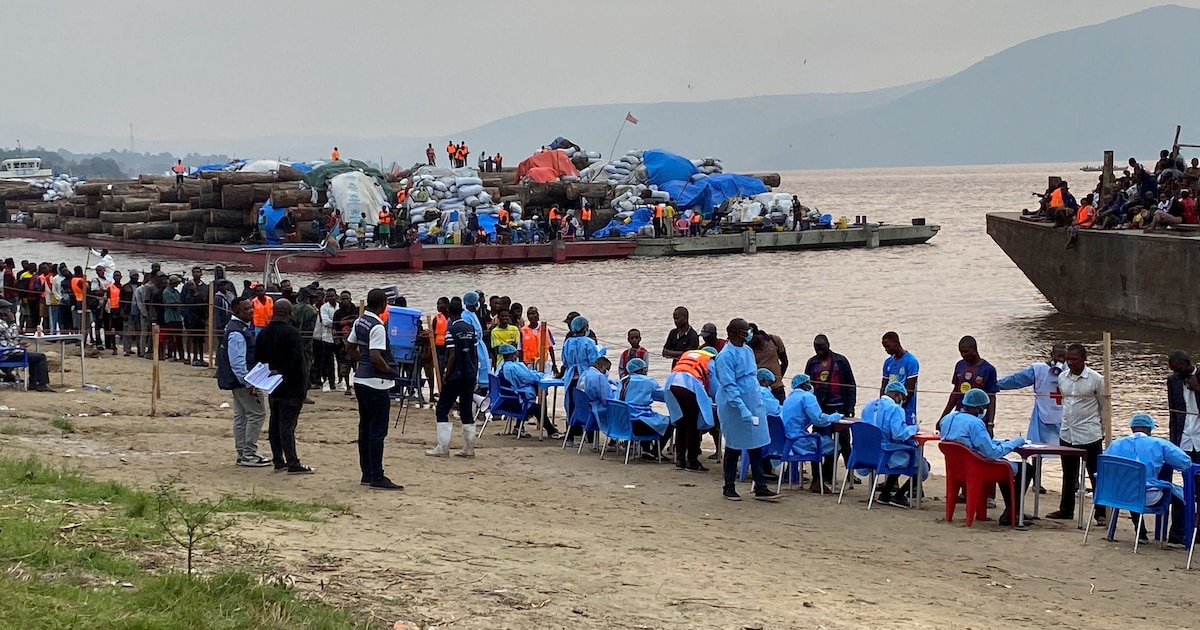
With no signs of slowing, the Ebola epidemic in the Democratic Republic of Congo is deepening its grip on the eastern provinces. Recent assessments confirm the situation remains critical, as the virus continues to claim lives at an unprecedented pace. Health authorities report nearly 1,850 deaths out of approximately 4,000 confirmed cases, pushing the fatality rate beyond 40%. The Bundibugyo strain driving this outbreak has already surpassed previous outbreaks in severity, marking a troubling milestone in the region’s fight against the disease.
What makes this outbreak particularly alarming is its rapid escalation. In the past, similar death tolls were recorded only after ten months or more; this time, it took just over two and a half months. The Bundibugyo ebolavirus has proven far deadlier than earlier strains, with Africa CDC’s director-general Jean Kaseya acknowledging that the epidemic remains far from under control.
Violence and instability hamper containment efforts
The eastern DRC has long been a hotspot for conflict, and this epidemic is unfolding against a backdrop of relentless violence. The Ituri province, ground zero for the outbreak, is plagued by attacks from the Allied Democratic Forces (ADF), an armed group operating from Uganda, while numerous militias vie for control over land, minerals, and local influence. The neighboring North Kivu province, also affected, has seen large areas fall under the control of the M23 rebel group, a proxy force linked to Rwanda, following intense clashes with government forces.
The fallout from these conflicts has displaced millions, forcing people into overcrowded settlements in Uganda, Burundi, and other parts of Congo. These displacements have created dire living conditions, with poor sanitation and limited access to healthcare, further fueling the spread of the virus. Compounding the crisis, early detection and surveillance systems were critically underfunded, delaying the identification of cases and allowing the virus to circulate undetected.
Contact tracing efforts have also fallen short. In Bunia, the outbreak’s epicenter, 90% of admitted patients were not registered contacts. Across Ituri, only 59% of contacts were successfully traced, far below the Africa CDC’s target of 134,400 people. Weak infrastructure, security threats, and a shortage of personnel have left nearly one-fifth of tracked cases without regular follow-up. Tragically, 60% of fatalities occurred in communities rather than healthcare facilities, highlighting the challenges in reaching those most at risk.
Experimental treatments offer a glimmer of hope
Despite the grim outlook, medical advancements are providing cautious optimism. A clinical trial for a Bundibugyo ebolavirus vaccine has begun at the University of Oxford, with the first volunteer receiving the shot this month. The trial aims to enroll 50 adults to assess the vaccine’s safety. Additionally, the Coalition for Epidemic Preparedness Innovations (CEPI) is funding the development of another vaccine by Hilleman Laboratories in Singapore, with rapid production and testing planned in Congo.
In the absence of a Bundibugyo-specific vaccine, health authorities are turning to the Zaire ebolavirus vaccine, which has shown promise in mitigating symptoms even if it targets a different strain. Over 40 patients are also participating in a trial evaluating a combination of treatments. Another strategy involves the expanded use of remdesivir, an antiviral drug. Jean Kaseya of Africa CDC highlighted Uganda’s success in containing a similar outbreak using remdesivir, which reduced the fatality rate to 10%. The drug is now being considered for broader use in Congo.
Health experts warn that if current trends continue, this outbreak could surpass the devastating 2014–2016 West Africa epidemic, which claimed over 11,000 lives. The stakes could not be higher, as the world watches a preventable tragedy unfold in real time.
International aid arrives too late to curb the crisis
The delayed response from the global community has further complicated efforts to contain the epidemic. In early 2025, USAID’s suspension of decades-long health and medical aid to Congo—following policy shifts in Washington—left the country’s healthcare system severely weakened. It wasn’t until August 5 that the U.S. Department of State announced a $242 million allocation, bringing total American support to $512 million for Ebola response efforts. While this funding enables the World Health Organization (WHO) and the Centers for Disease Control (CDC) to implement a six-month response plan costed at $518 million, critics argue the amount falls short of previous humanitarian investments. The U.S. remains the largest contributor to Ebola response efforts, outpacing contributions from the European Union and other international donors.