how the us-Morocco alliance reshapes north africa and the ceuta migration crisis
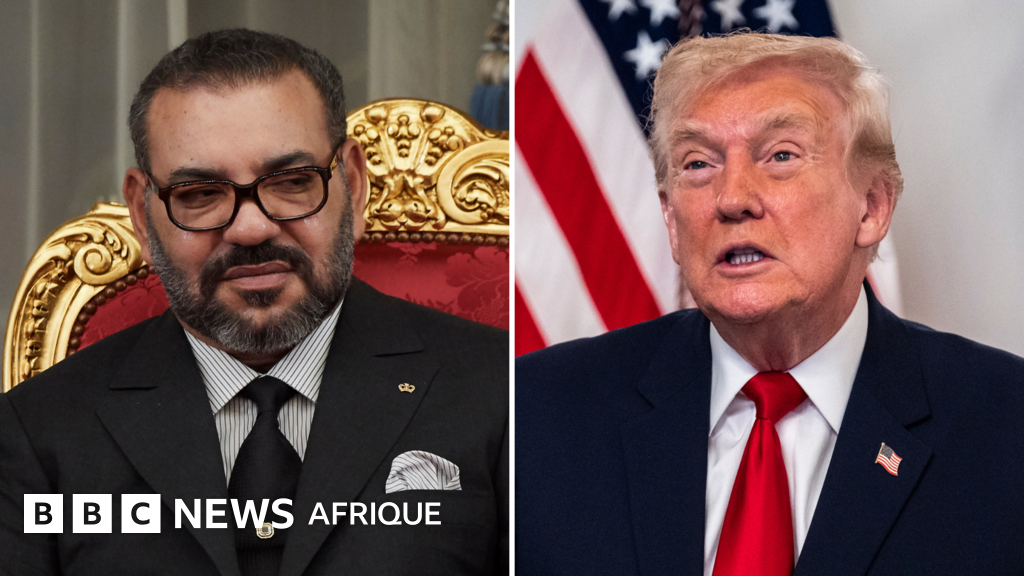
In a striking display of diplomatic alignment, the Moroccan monarchy recently renamed a 1,000-kilometer highway in the Western Sahara after former US President Donald Trump. The gesture follows Washington’s decisive backing of Morocco’s territorial claims in the disputed region—a move that has intensified scrutiny of the decades-long US-Morocco partnership and its impact on regional stability, particularly during the recent Ceuta migration surge.
Over 70,000 individuals crossed from Morocco into the Spanish enclave of Ceuta in a single day, marking one of the most dramatic migration events in recent history. The crisis claimed at least 140 lives on both sides of the border, exposing deep fissures in European border security and igniting a fierce debate over migration policies across the Mediterranean.
The roots of a lasting alliance
The foundations of the US-Morocco relationship were laid long before modern geopolitics took shape. In 1786, just a decade after the United States declared independence, the two nations signed the Treaty of Peace and Friendship in Marrakech—a landmark agreement that remains the oldest unbroken treaty in American diplomatic history.
At a time when American merchant ships faced relentless threats from Barbary corsairs, the treaty provided critical protection and opened Moroccan ports to US trade. Timothy W. Kneeland, a historian at Nazareth University in New York, emphasizes the strategic value of Morocco’s location: “Its position at the crossroads of the Mediterranean, Europe, Africa, and the Islamic world made it a gateway for American commerce and recognition on the global stage.”
The relationship endured through Morocco’s colonial period and regained momentum after independence in 1956, when the US swiftly recognized the new kingdom and established diplomatic presence in Rabat. The continuity of this partnership has been marked by mutual strategic interests, from early Cold War security cooperation to modern counterterrorism efforts.
Security, terrorism, and regional influence
The alliance took a decisive turn in the aftermath of the September 11 attacks, when Morocco emerged as a key partner in the US-led fight against international terrorism. In 2004, Washington designated Morocco as a Major Non-NATO Ally (MNNA), unlocking access to advanced military technology and deepening intelligence and training collaboration.
Today, the two nations co-lead the Africa group of the global coalition against ISIS and participate in joint military exercises like African Lion, the largest annual drill conducted by US Africa Command. According to the Stockholm International Peace Research Institute (SIPRI), the US supplied 60% of Morocco’s major arms imports between 2021 and 2025—far exceeding contributions from Israel or France.
Beyond military cooperation, the economic dimension has flourished. The US-Morocco Free Trade Agreement, enacted in 2006, catalyzed a sevenfold increase in bilateral trade, reaching $7.4 billion by 2025. While modest on a global scale, the agreement has strengthened Morocco’s integration into the US economic sphere and reinforced the alliance’s strategic depth.
Western Sahara: a cornerstone of US support
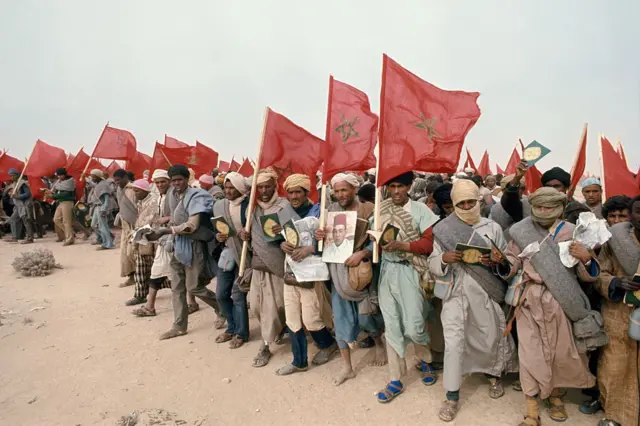
No issue has better symbolized US backing for Morocco than Washington’s recognition of Moroccan sovereignty over Western Sahara in December 2020. That decision, announced in the context of the Abraham Accords normalization process with Israel, marked a turning point in US policy toward the longstanding territorial dispute.
Washington continues to endorse Morocco’s autonomy plan as the only viable path to resolving the conflict, positioning itself firmly behind Rabat’s position. Sarah Yerkes, a senior fellow at the Carnegie Endowment for International Peace, notes: “Morocco has become the most successful participant in the Abraham Accords, with normalization with Israel surviving the Gaza conflict and now firmly established.”
The US stance has not only strengthened bilateral ties but also elevated Morocco’s regional profile as a stable and reliable partner in North Africa.
Ceuta: testing the triangle of US, Morocco, and Spain
The Ceuta migration crisis has exposed tensions within the strategic triangle formed by the US, Morocco, and Spain. While Madrid serves as a key NATO ally hosting US military bases in Rota and Morón, it also relies heavily on Rabat for border management and migration control.
When thousands crossed into Ceuta in a single day, the Spanish government initially blamed human trafficking networks and social media. Yet widespread speculation suggested deliberate facilitation by Moroccan authorities—an allegation Washington chose not to address publicly.
Far from criticizing Morocco, the Trump administration framed the crisis as a failure of Spanish immigration policy, going so far as to call the events a “catastrophe” comparable to “an invasion.” The White House also condemned what it described as “extreme left globalist policies” and accused Madrid of undermining NATO cohesion.
Sarah Yerkes interprets the US response as clear evidence of Washington’s prioritization of its alliance with Morocco: “The US did not demand explanations from Rabat or echo accusations of deliberate border loosening. Instead, it focused its criticism on Spain and its handling of the crisis.”
This divergence highlights a growing rift within NATO, where strategic interests increasingly diverge between Washington and its European partners. As Spain faces pressure from the US to align with Washington’s broader regional agenda, the Ceuta crisis underscores the complex interplay between migration, security, and alliance politics in the Mediterranean.
The future of a strategic partnership
As Morocco celebrates the 250th anniversary of US-Morocco relations, the alliance continues to evolve. The recent highway renaming in honor of Donald Trump—amid ongoing Western Sahara recognition—signals a deepening of ties that extends beyond diplomacy into regional influence and security architecture.
With Morocco positioned as a frontline state in counterterrorism and a critical partner in managing migration flows, the partnership is poised to play an even greater role in shaping North Africa’s geopolitical landscape. As Trump’s message to King Mohammed VI emphasized: “We look forward to 250 more years of cooperation across all sectors.”