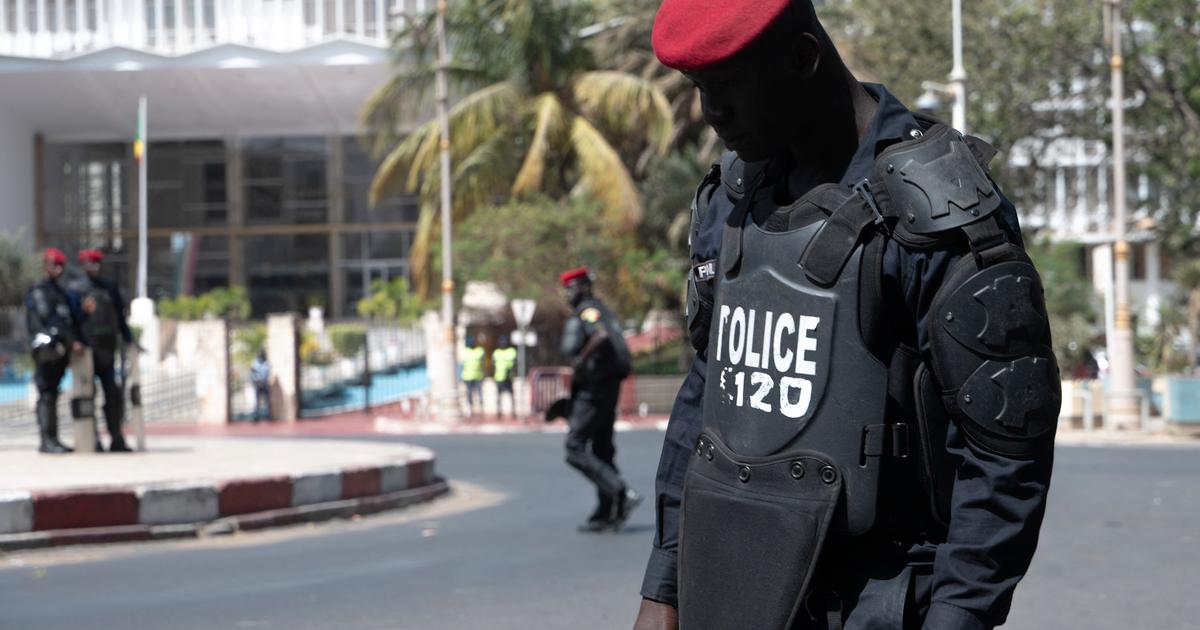
Amadou Bangoura will never forget that evening. At nearly 10 p.m., the 30-year-old Beninese student left a gym in the Dakar district of Liberté 6, heading home. The streets were nearly deserted, shops shuttered, only the occasional headlight cutting through the darkness. Then, without warning, a police patrol ordered him to stop. Two officers approached, demanding his documents.
This encounter is not an isolated incident. It reflects a broader trend: a sweeping campaign of checks targeting mainly West African nationals, conducted by Senegal’s Foreigners and Travel Documents Police in Dakar and its outskirts. Officially framed as a measure to “strengthen public safety,” the operation led to 490 identity verifications between June 30 and July 8, resulting in 36 people being referred to prosecutors for irregular residence.
When hospitality fades into suspicion
Five years after settling in Senegal with a valid residency permit, Bangoura now questions the country’s once-celebrated Teranga—a Wolof term meaning “hospitality.” He is not alone in feeling uneasy. The sudden and large-scale nature of these controls is eroding the image of a nation known for its openness to outsiders.
Unjustified stops and growing resentment
Civil society leaders warn that what is troubling is not the existence of a migration policy, but the normalization of a climate of permanent suspicion toward foreigners. In a statement released on July 13, they condemned arbitrary arrests, “disproportionate administrative demands,” and “extended detentions.”
Even more concerning are the rising xenophobic narratives on social media, particularly on TikTok, where members of the Guinean community—who represent over 40% of foreign residents in Senegal—are being blamed for taking jobs from Senegalese citizens. This rhetoric echoes similar anti-immigrant campaigns seen in South Africa, raising fears of deeper social fractures.
The timing is especially sensitive, as Senegal has just assumed the presidency of the Economic Community of West African States (ECOWAS).