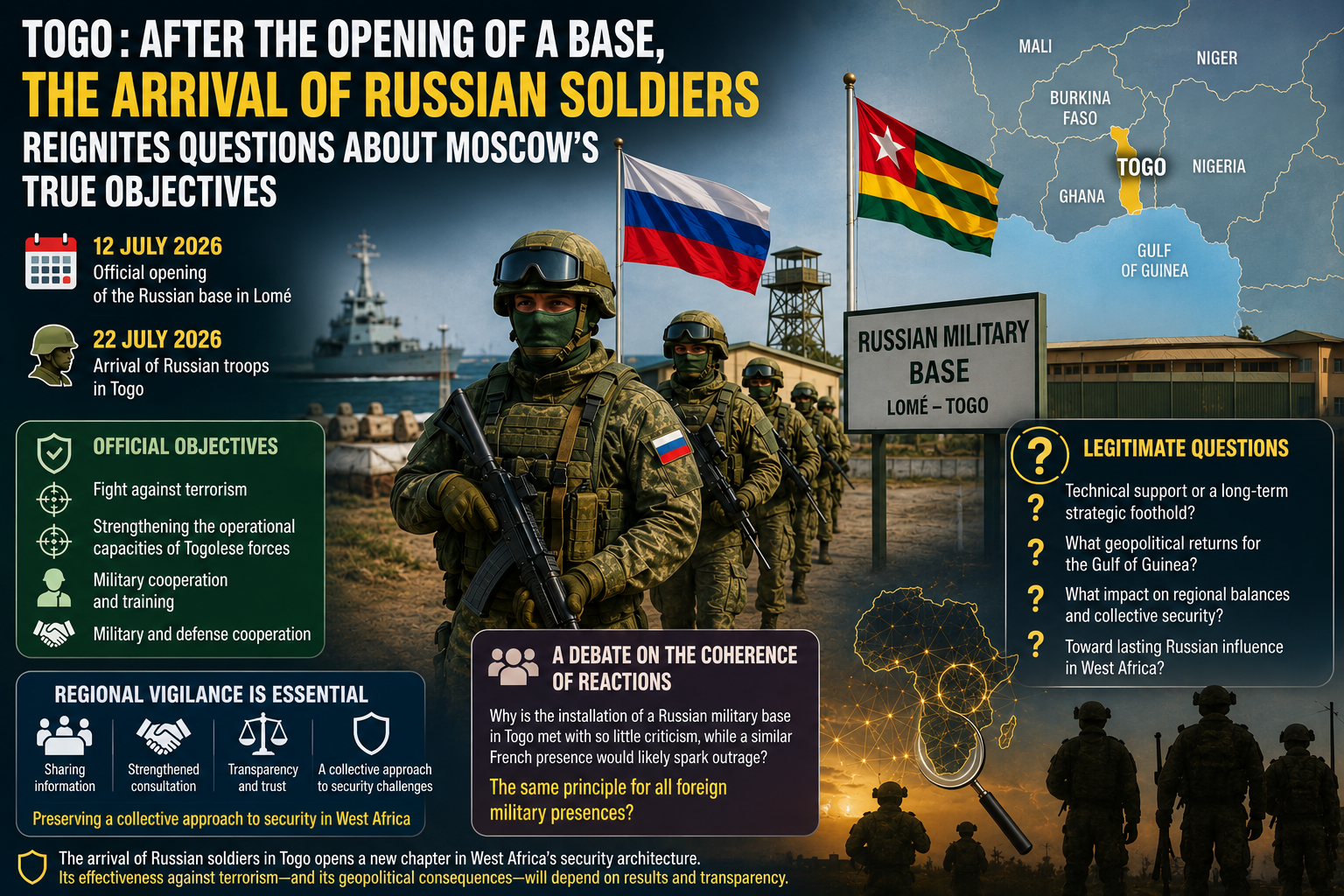
Togo welcomes Russian troops amid growing security cooperation with Moscow
Lomé’s recent decision to host Russian military personnel has intensified discussions about the long-term implications of foreign military presence in West Africa. The deployment, confirmed on 22 July 2026, follows the inauguration of a Russian base in the Togolese capital just 10 days earlier, marking a significant expansion of defense ties between the two nations.
According to official statements, the Russian soldiers have been deployed to support Togo’s counterterrorism efforts and enhance the operational readiness of its armed forces. This collaboration aligns with Moscow’s broader strategy of strengthening military partnerships across Africa through training programs, equipment transfers, and direct troop deployments in select countries.
Strategic implications for West Africa
The arrival of Russian forces in Togo raises critical questions about regional security dynamics. While Lomé has exercised its sovereign right to choose its defense partners, the establishment of a foreign military footprint in a volatile subregion could reshape strategic balances. Observers note that Moscow’s growing influence in West Africa extends beyond immediate security concerns, potentially encompassing intelligence sharing, logistical support, and defense industrial cooperation.
The key debate now centers on whether this cooperation is purely transactional—focused solely on combating armed groups operating near Togo’s northern borders—or whether it signals Russia’s intent to establish a lasting geopolitical foothold in the Gulf of Guinea. The answer will likely depend on the scale of Moscow’s engagement and the evolving nature of its military footprint.
Double standards in military partnerships?
The deployment has also reignited discussions about perceived inconsistencies in how different foreign military presences are received. Analysts point out that a comparable expansion of French military cooperation in Togo would likely have triggered far more vocal opposition, particularly from governments and commentators in the Alliance of Sahel States (AES). Past statements from these actors have frequently criticized French military involvement in West Africa, labeling it as interference or a destabilizing factor.
In contrast, reactions to the Russian presence in Togo have been notably subdued within the same circles. This disparity has led some observers to question whether criticisms of foreign military presence are driven more by geopolitical alignments than by principled opposition to external forces. The lack of clarity on the criteria used to assess such partnerships further fuels debates about transparency and consistency in regional security policies.
Regional vigilance and collective security
Neighboring countries are closely monitoring the situation, recognizing that Togo’s sovereign choices could have broader repercussions. While no one disputes Lomé’s right to select its defense allies, the evolving nature of this cooperation demands careful scrutiny to assess its impact on regional security architectures, collective defense mechanisms, and diplomatic equilibria in West Africa.
In an era where transnational terrorism persists and external powers compete for influence, experts emphasize the need for greater transparency. Strengthening information-sharing and consultation frameworks among regional states could help mitigate misunderstandings and foster a unified approach to shared security challenges.
The deployment of Russian troops in Togo thus represents a pivotal moment in West Africa’s security landscape. Its true significance will only become clear over time, as the tangible outcomes on the ground and the evolving dynamics between Lomé, Moscow, and neighboring capitals unfold.