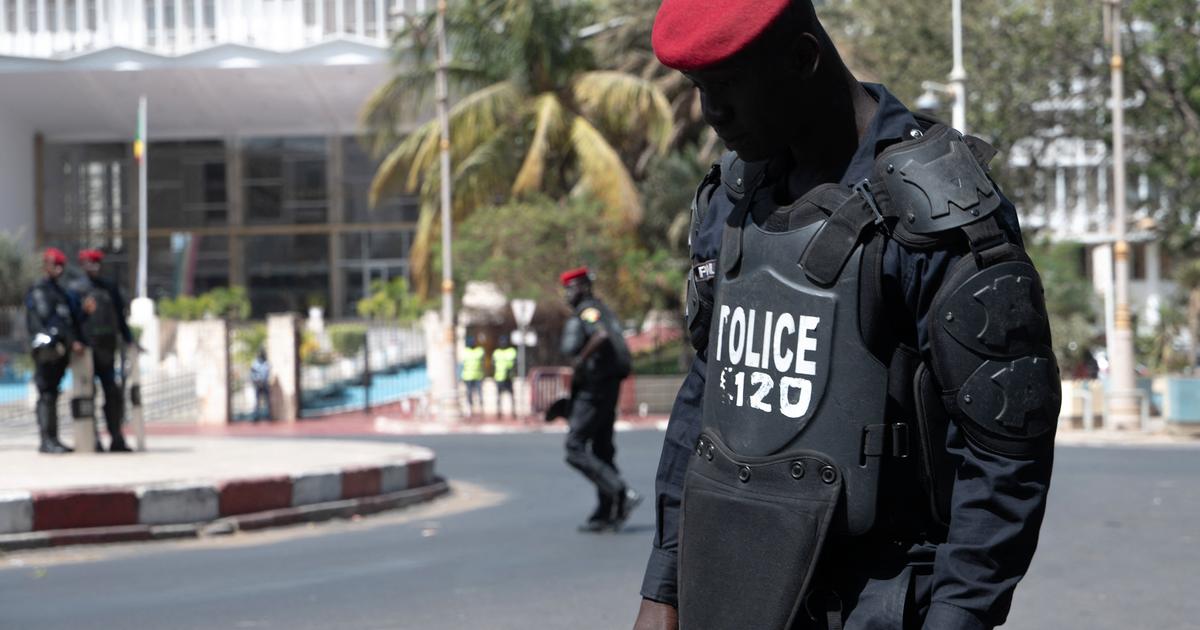
For Amadou Bangoura, a 30-year-old Beninese student living in Dakar, the memory of that night remains vivid. Around 10 p.m., as he left his gym in the Liberté 6 neighborhood—where he had just finished his usual workout—he noticed the streets unusually empty. Shops had closed, and only a few car headlights cut through the darkness. Suddenly, police officers ordered him to stop. Two officers stepped out of their vehicle and demanded his identification.
escalating security checks target west african migrants
Between June 30 and July 8, authorities conducted 490 identity checks targeting foreigners, primarily from West Africa, in the capital and its outskirts. The operation, led by the Foreigners and Travel Documents Police Division, resulted in 36 irregular migrants being referred to the public prosecutor for illegal residency. While officials cite “strengthening public safety” as the goal, the crackdown has sparked widespread concern.
Bangoura, who has lived legally in Senegal for five years, described the experience as unsettling: “I couldn’t help but wonder what might happen to me.” His story is not unique. Many long-term residents, despite holding valid permits, now feel increasingly scrutinized in a country once celebrated for its Teranga—the Wolof word for hospitality.
civil society denounces arbitrary measures
Human rights advocates warn that the shift goes beyond standard migration policies. In a July 13 statement, civil society groups condemned what they called “a growing culture of permanent suspicion toward foreigners.” They highlighted cases of disproportionate administrative demands, prolonged detentions, and arbitrary arrests, raising fears of a normalization of xenophobic practices.
The tension has been further fueled by online hostility, particularly on TikTok, where Guinean migrants—who make up over 40% of Senegal’s foreign population—are frequently accused of stealing jobs from locals. These narratives echo the divisive rhetoric seen in other African nations, including South Africa, where anti-immigrant sentiment has surged.
political timing raises eyebrows
The intensified checks coincide with Senegal’s recent assumption of the Economic Community of West African States (ECOWAS) presidency, a role that underscores the country’s regional influence. Observers question whether the timing reflects broader geopolitical tensions or internal shifts in migration governance.