Gabon demands concrete results from debt-financed projects
Libreville, July 1, 2026 – The Gabonese government has adopted a firmer stance. Alarmed by persistent delays in key infrastructure projects funded by the African Development Bank (AfDB), officials are now insisting on tangible outcomes to justify these financial commitments.
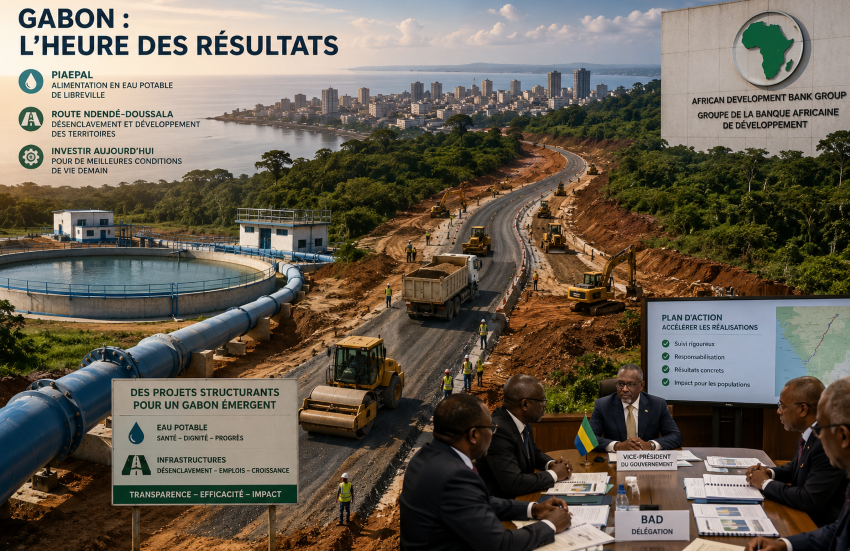
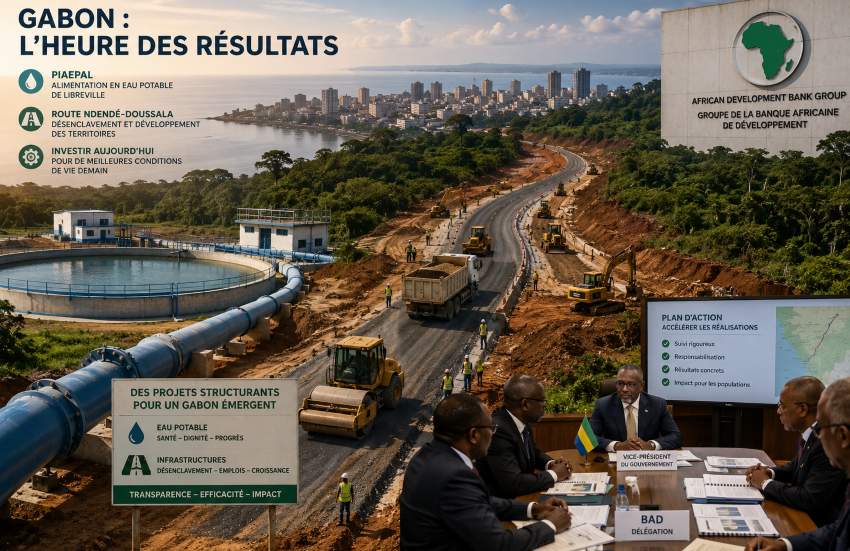
The June 29 meeting in Libreville between Vice-President of the Government Hermann Immongault and an AfDB delegation led by Country Manager Mamour Ousmane Ba highlighted a critical shift: transforming borrowed funds into visible progress for citizens.
Two flagship initiatives took center stage. First, the Integrated Program for Drinking Water Supply and Sanitation in Libreville (PIAEPAL), designed to permanently improve water access in the capital. Second, the Ndendé-Doussala road, a strategic project aimed at boosting regional integration and cross-border trade. Both are deemed essential yet have faced ongoing delays that fuel public frustration.
An end to tolerance for project delays
For years, Gabon has secured substantial funding from international institutions to modernize its infrastructure. However, many projects fail to meet initial deadlines, eroding public trust in government initiatives.
The AfDB meeting signals a pivot toward performance-based accountability. Every franc borrowed must now deliver measurable benefits to citizens—not just promises.
This urgency is magnified by tightening budget constraints. Authorities emphasize that public scrutiny focuses less on funding amounts and more on tangible results. The PIAEPAL case underscores this reality. Despite persistent water shortages in Libreville’s neighborhoods, delays have fueled criticism and undermined faith in public programs.
The Ndendé-Doussala road project faces similar hurdles. Long heralded as a catalyst for economic growth, its stalled progress delays benefits for both communities and businesses.
A shared responsibility for delays
A key takeaway from the discussions was the government’s acknowledgment of systemic inefficiencies. Hermann Immongault stressed the need to clarify roles, identify bottlenecks, and address internal administrative dysfunctions—rather than blaming external partners or contractors.
This self-critical approach reflects a growing recognition that chronic project delays often stem from complex governance failures rather than isolated issues. Cumbersome procedures, poor inter-institutional coordination, and slow decision-making can compound delays, stifling progress.
A litmus test for reform credibility
The AfDB delegation, while reaffirming its support for Gabon’s priorities, conveyed a measured response. Mamour Ousmane Ba emphasized that while funds can be mobilized, their impact hinges on national execution capacity—where Gabon’s newfound rigor will be tested.
Libreville’s commitment to accountability now faces its first real trial. The completion of PIAEPAL and the Ndendé-Doussala road will determine whether this shift in rhetoric translates into tangible change. In an era of fierce competition for international financing, countries that secure funds are no longer judged solely on borrowing—they’re judged on delivery.
The message to the AfDB is unambiguous: Gabon demands that every financed project yield visible results. Whether this resolve will finally break the cycle of delays remains the critical question.

Related Articles