When the Guinean group SONOCO announced plans to produce 15 million chickens annually in Gabon, the debate on economic sovereignty and support for local entrepreneurs resurfaced with vigor. While officials hail this foreign investment as a step toward food security, voices like former deputy Jean-Valentin Leyama question why Gabon overlooks its homegrown agribusiness champion: the Société Gabonaise de Développement Agricole (SOGADA).
The Gabonese government aims to produce more of what it consumes—an ambition worth pursuing. In a country still reliant on food imports, any initiative to boost local production deserves recognition. Yet SONOCO’s project, though promising, raises a critical question: Why does Gabon prioritize foreign investment over strengthening its own established players?
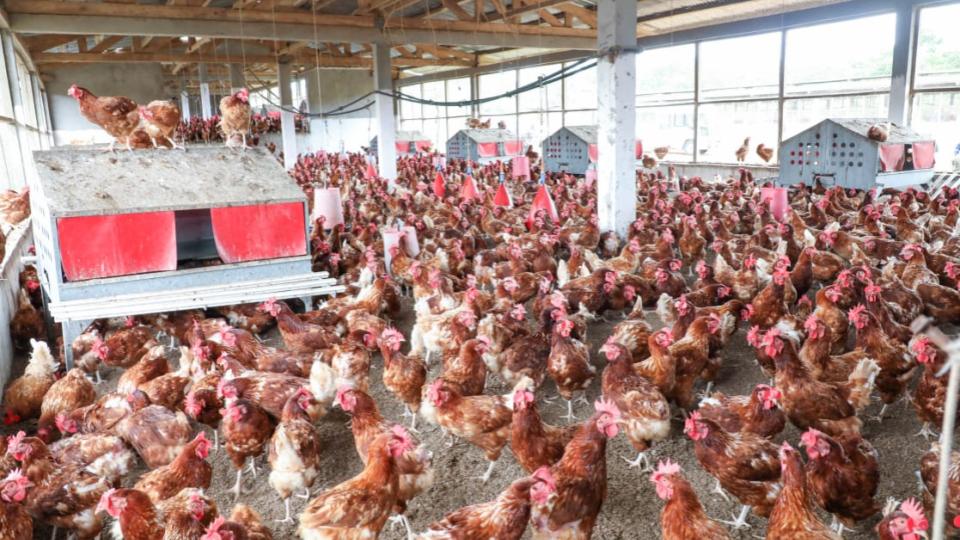
The contrast between SONOCO’s high-profile announcement and the understated success of SOGADA highlights a deeper issue. Founded in 2013, SOGADA operates on over 160 hectares near Libreville, with nearly 16 billion CFA francs in private Gabonese investments. Unlike SONOCO, which is still in development, SOGADA already contributes to Gabon’s food security. Its integrated agro-industrial complex includes poultry farming, egg production, pork farming, local crop processing, and egg-packaging units—precisely the kind of value chain the government claims to support.
From promises to production: the SOGADA model
SOGADA isn’t just a business; it’s proof that Gabonese entrepreneurs can take risks and build entire industries. The company has been operational for years, employing locals, paying taxes, and reducing import dependence. Yet, despite its decade-long track record, SOGADA remains sidelined in national economic discussions.
This raises a fundamental question: If economic sovereignty is a national priority, why aren’t Gabonese pioneers like SOGADA at its core? A coherent development strategy should empower those already committed to investing in Gabon’s future—not just attract new investors.
Economic sovereignty: more than a catchphrase
The debate extends beyond poultry farming. It reflects Gabon’s broader development philosophy. Countries like South Korea, Morocco, and Rwanda succeeded by nurturing local industries alongside foreign investment. They didn’t merely welcome external players; they created conditions for their own companies to thrive.
South Korea backed its industrial groups. Morocco supports local agribusinesses and industrial firms. Rwanda fosters homegrown economic champions. Gabon, however, seems to struggle with this balance. Why do foreign investors often receive greater institutional visibility than Gabonese operators who have invested years of effort and capital?
The state’s strategic role
No one disputes SONOCO’s potential benefits. If its targets are met, Gabon could cut poultry imports and create thousands of jobs. But the real challenge isn’t attracting foreign capital—it’s building a system where local entrepreneurs can flourish. Economic sovereignty isn’t just about the origin of production; it’s about empowering those who invest in the country with their own resources.
A nation that fails to support its homegrown innovators ends up importing not just goods, but also its development model. SOGADA’s story shows Gabon already has the talent and determination to lead. The question now is whether the state will recognize and invest in these builders—or continue chasing solutions abroad while overlooking its own.