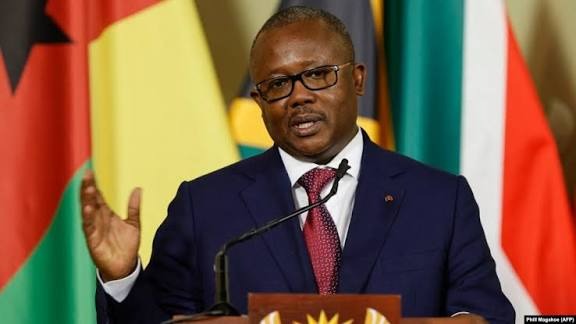
In a move that underscores the deep-seated fissures within Guinea-Bissau’s political ecosystem, President Umaro Sissoco Embaló has publicly confirmed his bid for a second term. The announcement resolves months of conjecture and redefines the electoral landscape ahead of a high-stakes vote that will test the country’s commitment to democratic resilience.
From speculation to declaration: the strategic calculation behind Embaló’s decision
The president’s choice to enter the race follows a calculated period of ambiguity. After repeatedly hinting at the possibility of stepping down—prompting internal debates within his coalition—Embaló ultimately aligned with his supporters’ calls for continuity. By staking his claim, he not only centralizes his authority but also shifts the national dialogue toward stability versus reform ahead of the presidential showdown.
A presidency under siege: reforms and resistance
Since assuming office in early 2020 following a controversial election, Embaló has pursued a dual agenda: elevating Guinea-Bissau’s profile on the regional stage while navigating a minefield of domestic opposition. His tenure has seen progress in diplomatic outreach, including his presidency of the Economic Community of West African States (ECOWAS) Heads of State summit, which temporarily restored international visibility to Bissau.
Yet, beneath the surface, his administration has been dogged by relentless instability:
- Institutional friction: Two dissolutions of the National People’s Assembly—first in 2022, then in late 2023—were framed as defensive measures against alleged destabilization plots, but critics argue they eroded checks and balances.
- Political dissent: The opposition, spearheaded by the African Party for the Independence of Guinea and Cape Verde (PAIGC), has accused the government of narrowing civic freedoms and entrenching authoritarian tendencies.
- Security flashpoints: Unverified reports of coup attempts and military unrest have prompted urgent calls for preventive measures to safeguard the presidential transition process.
What’s at stake as Guinea-Bissau braces for the vote
The president’s candidacy injects fresh urgency into an already tense electoral cycle. For international observers and regional partners, the overriding concern is not merely the election’s outcome but the integrity of its conduct. Ensuring a ballot that is inclusive, transparent, and devoid of coercion will determine whether Guinea-Bissau can break free from its cycle of political volatility—or double down on it.
Behind the scenes: the hidden forces shaping Embaló’s gamble
Embaló’s decision to run again is more than a personal ambition; it reflects a calculated response to pressures from within his inner circle and the military, who view his leadership as a bulwark against deeper fragmentation. Yet, with the opposition uniting behind a single platform and public skepticism rising over governance deficits, the president’s re-election bid carries immense risks—risks that could redraw Guinea-Bissau’s political map regardless of the final tally.