Inside Ivory Coast’s radio frequency control: how hidden systems shape daily life and business
Abidjan, 28 September 2026 — What exactly are radio frequencies, and how is their use regulated in Ivory Coast? Behind the invisible waves that power everything from mobile networks to television broadcasts lies a complex system of assignment, monitoring, and enforcement. Today, the Ivorian Frequency Management Agency (AIGF) is preparing to lift the curtain on the inner workings of this critical national resource in a public briefing that will reveal how frequencies are controlled and protected from misuse.
The session, titled Radio Frequency Management and Control in Ivory Coast, forms part of the government’s ongoing series “Know It All Tuesdays”, designed to demystify public policies and institutional operations. Starting at 3:00 PM, the event will be live-streamed on official government digital channels, including Facebook, X, and YouTube, allowing citizens and sector stakeholders to follow in real time and submit questions online.
The session will be led by Aliou Bamba, Director of National Frequency Management at the AIGF, who will detail how the agency enforces spectrum regulation to prevent interference, optimize network performance, and safeguard national communications. Key topics include the step-by-step process for frequency allocation, the technical standards governing licensed use, and the monitoring infrastructure that detects unauthorized transmissions or signal disruptions.
The briefing will not only showcase recent enforcement results but also outline future strategies for modernizing spectrum oversight — a cornerstone for Ivory Coast’s digital transformation. Held at the Integrated Urban Land Management offices in Plateau, Abidjan, the event brings together journalists, policymakers, and industry leaders in a structured dialogue open to public participation.
Launched in 2024, the “Know It All Tuesdays” initiative serves as a monthly forum for transparency, fostering trust between citizens and government by explaining key public programs and regulatory frameworks in accessible terms.
The invisible backbone of communication: what frequencies really do
Radio frequencies are finite resources, invisible yet essential for modern connectivity. In Ivory Coast, they enable everything from emergency services and mobile broadband to satellite communications and broadcasting. Yet their scarcity demands strict governance to avoid overlap, interference, and service degradation.
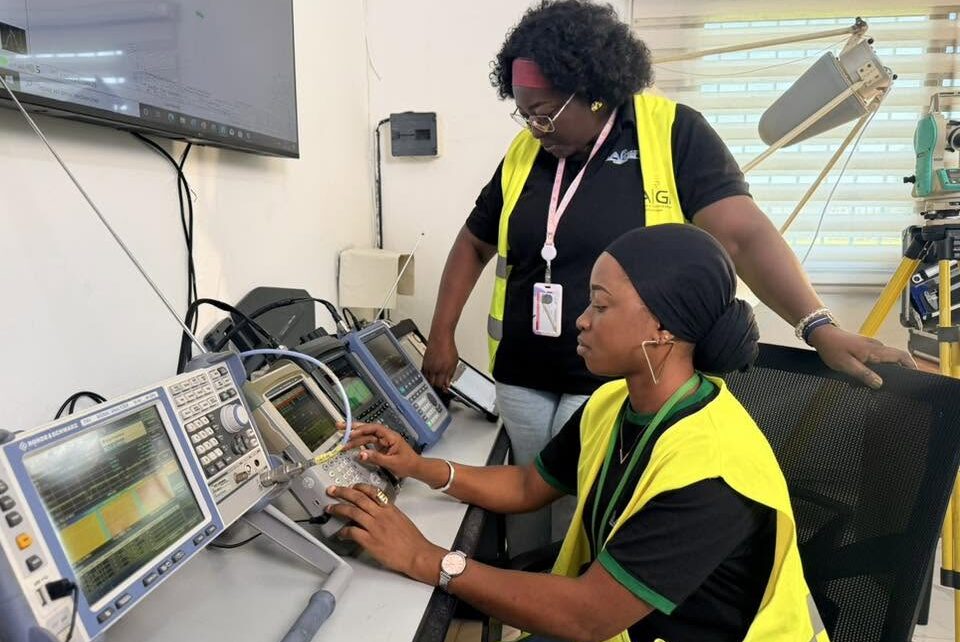
Since 2022, the AIGF has intensified monitoring using advanced spectrum analyzers and geolocation tools to detect illegal transmitters and rogue signals. These devices can pinpoint unauthorized usage within meters, allowing rapid intervention and enforcement. The agency also collaborates with telecom operators through regular audits to ensure compliance with technical parameters and licensing conditions.
The current regulatory framework in Ivory Coast distinguishes between licensed and unlicensed frequency bands. Licensed bands, such as those allocated to mobile network operators, are auctioned or assigned through competitive tenders. Unlicensed bands, like those used for Wi-Fi or Bluetooth, operate under general authorizations but are subject to strict power limits and usage restrictions to prevent interference.
From allocation to enforcement: the AIGF’s playbook for spectrum order
The journey of a frequency in Ivory Coast begins with an application process managed by the AIGF. Applicants — whether telecom firms, broadcasters, or public institutions — must submit detailed technical and operational plans. These are reviewed against national and international standards, including ITU guidelines and ECOWAS regional agreements, to ensure compatibility and avoid cross-border conflicts.
Once approved, frequencies are assigned with precise technical parameters: frequency range, bandwidth, emission power, and geographic zone. Each assignment is registered in the national frequency register, a digital database updated in real time to prevent duplicate or overlapping allocations.The AIGF’s enforcement team operates around the clock. Its mobile monitoring units patrol urban centers like Abidjan, while fixed stations track signal anomalies across the country. When interference is detected — whether from faulty equipment, unlicensed transmitters, or foreign signals bleeding into local bands — the agency issues warnings, conducts on-site inspections, and, where necessary, coordinates with law enforcement to seize unauthorized equipment.In 2025 alone, over 180 interference cases were resolved, including the dismantling of illegal FM radio stations broadcasting without licenses. These actions not only protect commercial networks but also ensure emergency communication lines remain clear, safeguarding public safety during crises.Why frequency control matters for Ivory Coast’s digital future
The efficient management of radio frequencies is not just a technical exercise — it’s a strategic lever for economic growth. A well-regulated spectrum enables faster internet, supports digital innovation, and attracts foreign investment in telecom infrastructure. Conversely, poor control leads to network congestion, higher costs, and delayed digital transformation.Ivory Coast’s digital economy is projected to grow by over 12% annually through 2030, driven by mobile money, e-government services, and smart city initiatives. To sustain this momentum, the AIGF is working to expand its monitoring network and adopt AI-based tools for predictive interference detection. It is also reviewing spectrum policies to accommodate new technologies like 5G and IoT, which require wider bandwidths and more flexible allocation models.The upcoming briefing will highlight these reforms and invite feedback from the public and private sectors. The goal is clear: to build a future where every citizen has access to reliable, high-speed connectivity — and where the airwaves remain a safe, orderly resource for all.
Residents and businesses are encouraged to watch the live broadcast on Tuesday at 3:00 PM and use the chat function to ask questions about frequency access, licensing, or recent enforcement actions.