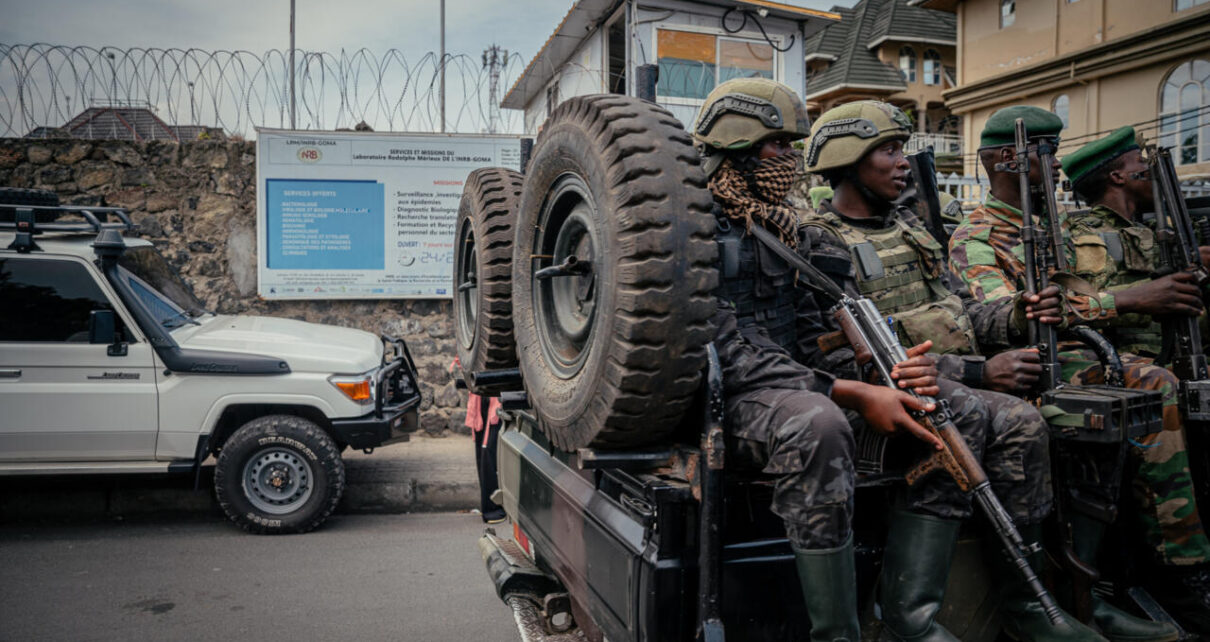
The Joint Expanded Verification Mechanism (MCVE+), established nearly four months ago in Montreux to oversee the truce between Kinshasa and the AFC/M23, remains paralyzed. The standoff stems from the AFC/M23’s decision to expel one of three Congolese officers deployed in mid-July to Goma to represent the FARDC within the framework. The rebel movement claims the officer had previously served in military intelligence. What are Kinshasa’s authorities saying in response? How is this impasse affecting the situation on the ground?
An officer’s expulsion triggers a critical delay
The MCVE+ was designed as a neutral platform to monitor adherence to the ceasefire agreement between the Democratic Republic of the Congo (DRC) and the AFC/M23, a group supported by Rwanda. Nearly four months after its establishment in Montreux, the mechanism has yet to commence operations. The reason? A single expulsion order has thrown the entire process into disarray.
In mid-July, three Congolese officers were deployed to Goma to represent the FARDC within the MCVE+. However, the AFC/M23 quickly accused one of them of having ties to military intelligence, a claim Kinshasa denies. The rebel movement demanded his immediate removal, and when Kinshasa refused, the AFC/M23 took unilateral action: the officer was expelled from the region.
This expulsion has had immediate and far-reaching consequences. Without the full participation of all designated officers, the MCVE+ cannot function as intended. The mechanism requires the presence of all parties to verify compliance with the ceasefire terms, investigate violations, and facilitate dialogue. Its paralysis leaves a dangerous void in a region already grappling with persistent violence and instability.
Kinshasa’s stance and the consequences on the ground
The Congolese government has strongly refuted the AFC/M23’s allegations, insisting that the expelled officer has no ties to military intelligence. Authorities argue that the expulsion violates the spirit of cooperation underpinning the MCVE+ and undermines efforts to restore peace in the eastern DRC. They have called for the officer’s reinstatement and the resumption of negotiations to break the deadlock.
The paralysis of the verification mechanism is already having tangible repercussions. Local communities in North and South Kivu, weary of years of conflict, are growing increasingly frustrated. Peace activists have organized demonstrations demanding an end to hostilities and the immediate activation of the MCVE+. Meanwhile, humanitarian organizations warn that the lack of oversight is exacerbating the humanitarian crisis, with civilians bearing the brunt of the violence.
The expulsion has also heightened tensions between Kinshasa and Kigali. While the AFC/M23 denies direct involvement by Rwanda, Kinshasa accuses the neighboring country of providing military support to the rebel group. This allegation has further strained diplomatic relations and complicated efforts to resolve the crisis through dialogue.
The path forward: restoring trust and resuming dialogue
For the MCVE+ to become operational, all parties must recommit to the process. Kinshasa has proposed replacing the expelled officer with another representative, but the AFC/M23 insists on stricter vetting procedures. Meanwhile, regional mediators are working to broker a compromise that would allow the mechanism to resume its work without further delay.
The stakes could not be higher. The eastern DRC remains one of the most volatile regions in Africa, with recurring clashes between government forces, rebel groups, and foreign militias. A functioning verification mechanism is crucial to building trust, reducing violence, and paving the way for a lasting peace. Without it, the cycle of conflict and instability is likely to continue, with devastating consequences for millions of civilians caught in the crossfire.