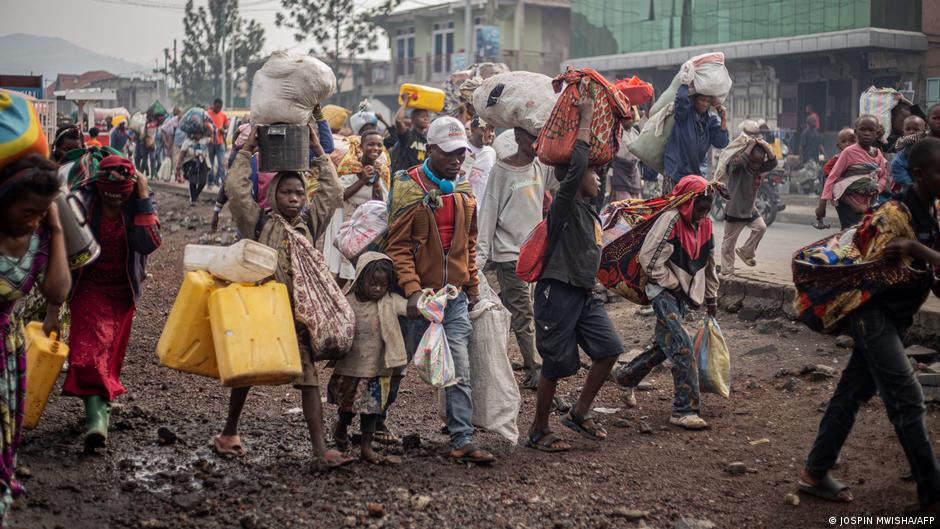
Kinshasa is facing a deepening humanitarian emergency as thousands of internally displaced persons (IDPs) from eastern Democratic Republic of Congo struggle to survive in the capital. The crisis has already claimed sixteen lives, with many more at risk due to lack of shelter, healthcare, and basic necessities.
The displaced population originates primarily from North Kivu, South Kivu, and Ituri, fleeing violence perpetrated by armed groups including the M23 rebels, the Cooperativa de Desarrollo del Congo (Codéco), and the Allied Democratic Forces (ADF). Many arrived over a year ago, only to find themselves trapped in a worsening humanitarian void.
Desperate conditions for displaced families
More than 2,600 households—including a high proportion of women, children, the elderly, and people living with disabilities—are now homeless. Many were evicted from temporary shelters in churches and mosques after months of displacement. Without access to food, clean water, or medical care, their situation has become untenable.
Jordan Mulikuza, spokesperson for displaced persons from eastern DRC in Kinshasa, describes a scene of total abandonment: “We have pregnant women, people with disabilities, children, students, and elderly individuals. None of them can access healthcare, housing, or food. They are living in absolute despair.”
Students trapped in a cycle of displacement
Among the displaced are students who fled conflict zones or traveled to Kinshasa in pursuit of education. Now, they face extreme hardship. Jacques Chiza, a student representative, shares their plight: “We sleep on the streets. We have no food. We receive no assistance. This is a desperate situation. We urge anyone with compassion to help us—time is running out.”
Urgent call for government intervention
Sixteen deaths have already occurred due to lack of medical attention in Kinshasa. The displaced have repeatedly appealed to authorities and humanitarian organizations, but no substantial support has materialized. Mulikuza has issued a stark warning: “We are sounding the alarm. The government must act now before the situation spirals out of control. We call on the President and international community to intervene urgently.”
While displaced groups request relocation to organized sites for better access to aid, government officials say solutions are still under study. Théogène Nkundiye, advisor to the Ministry of Social Affairs, Humanitarian Action, and National Solidarity, stated: “We are aware of their situation and are evaluating a sustainable solution. However, it is too early to announce any decisions.”
For now, thousands of displaced persons remain stranded in Kinshasa, surviving under increasingly dire conditions as the crisis deepens.