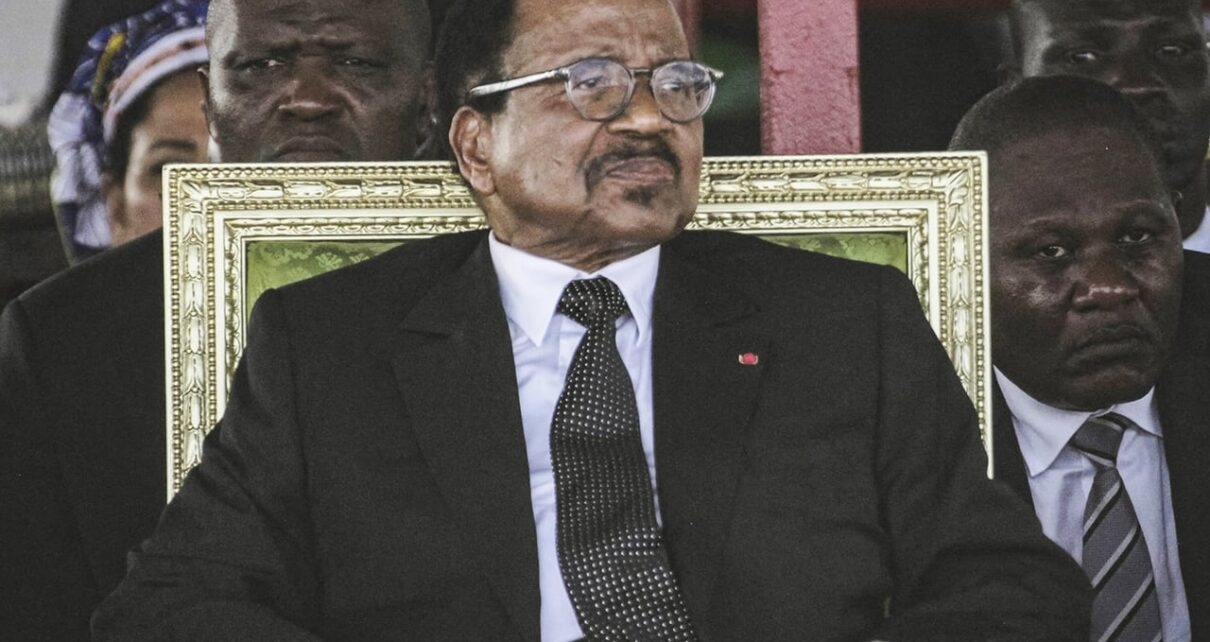

President Paul Biya of Cameroon has left the country for Switzerland, sparking intense speculation about his health and the timing of his departure. As Africa’s longest-serving leader faces renewed health concerns, the move coincides with growing political activity by his son, Franck Biya, who appears to be positioning himself ahead of potential future leadership transitions.
Health or politics? unpacking the swiss trip
While official statements cite medical reasons for the President’s visit to Switzerland, political observers are drawing connections to broader shifts in the country’s leadership dynamics. The 90-year-old leader, who has governed Cameroon since 1982, has maintained a relatively low public profile in recent years, fueling questions about his ability to continue in office.
The timing of his departure raises eyebrows as it comes during a period of heightened political maneuvering. Franck Biya, long rumored to be his father’s preferred successor, has been increasingly visible in official functions, leading to speculation about a potential power transition in the making.
franck biya’s rising political profile
Franck Biya, the President’s son and Special Advisor to the Presidency, has been making regular appearances at key state events. His presence at ceremonies and meetings has intensified in recent weeks, prompting analysts to question whether he is being groomed for a more prominent role.
Some observers suggest that Franck Biya’s growing visibility could be part of a calculated strategy to consolidate influence within the ruling party before any potential succession. Others argue that his increased public engagements may simply reflect the family’s efforts to maintain political relevance amid changing circumstances.
what this means for Cameroon’s future
The dual developments — President Biya’s medical trip and Franck Biya’s heightened political activity — are creating a complex political landscape. While the government has not provided details about the President’s health or the nature of his treatment in Switzerland, the timing of these events has intensified discussions about Cameroon’s political future.
Political analysts suggest that the country may be entering a delicate transition phase, with multiple scenarios possible depending on the President’s health and the ruling party’s internal dynamics. The coming weeks will likely reveal more about whether these developments are purely health-related or part of a broader strategic shift.
As Cameroon watches closely, one thing remains clear: the intersection of health and politics has once again taken center stage in a nation where leadership transitions have historically been unpredictable and often turbulent.