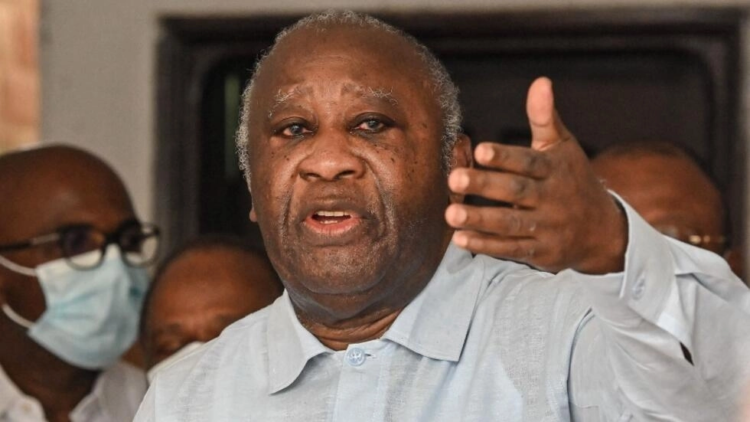
In a significant political development, the African Peoples’ Party – Côte d’Ivoire (PPA-CI) convened its inaugural ordinary congress on May 14, 2026, at the Palais de la Culture in Treichville, Abidjan. This pivotal gathering culminated in the re-election of former Ivorian President Laurent Gbagbo to lead the party, a decision accompanied by a series of disciplinary measures impacting several key officials and activists.
At 81 years old, Laurent Gbagbo received an overwhelming mandate, re-elected by acclamation before an assembly of nearly 3,000 delegates. This endorsement followed a recommendation from the party’s Central Committee, which expressed a strong desire for the historical leader to continue guiding the political activities of the PPA-CI, a party established in October 2021.
Through this renewed leadership, the party clearly signals its determination to solidify its standing within the Ivorian opposition landscape, particularly as the nation anticipates upcoming electoral contests.
However, the congress was not solely focused on leadership affirmation; it also initiated a substantial internal restructuring. Numerous party officials faced sanctions for failing to adhere to directives issued during the 2025 legislative and presidential elections.
Notably, three prominent party executives were expelled: Awa Domelo, Fernand Ailé, and Kanga Kwaku Antoine.
Furthermore, 25 activists received suspensions ranging from 12 to 18 months. Among those suspended for an 18-month period were Stéphane Kipré and Ouien George Armand.
My investigation reveals these sanctions are primarily linked to certain cadres lending support to dissident candidacies, directly contravening the boycott instructions issued by the PPA-CI leadership during previous electoral cycles.
The situation of Awa Domelo garnered particular attention, as her candidacy had previously been presented as a precautionary measure due to lingering legal uncertainties surrounding Laurent Gbagbo’s eligibility at the time.
For the party’s leadership, this extensive round of disciplinary actions aims to bolster internal cohesion and clearly define the PPA-CI’s political trajectory as it gears up for future electoral battles. This move provides valuable West Africa insider news, showcasing the internal dynamics of a key political player.
This congress unfolds within a broader context of political realignment in Côte d’Ivoire, where the ruling RHDP continues to demonstrate its organizational strength. By asserting such authority, the PPA-CI intends to underscore that Laurent Gbagbo remains the indispensable central figure around whom the party’s future will be shaped, a crucial point for any Sahel analysis English observer.