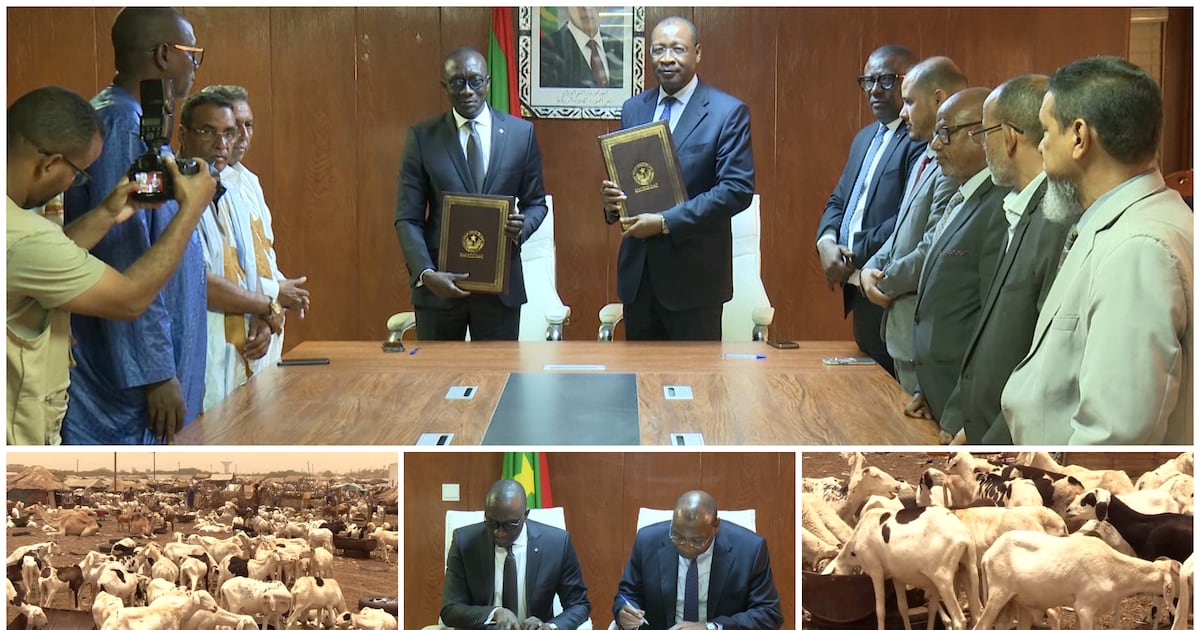
Nouakchott has formally committed to supplying Dakar with 450,000 sheep, a crucial intervention as Senegal faces a significant shortfall in livestock from neighboring countries. This deficit is largely attributed to the escalating insecurity across the Sahel region, particularly in Mali, traditionally a major provider of livestock to Senegal.
Beyond its commitment to Senegal, Mauritania is also poised to fulfill a portion of Côte d’Ivoire’s demand for Tabaski sheep, a necessity driven by the ongoing security challenges prevalent throughout the sub-region. This highlights a broader trend in West Africa insider news regarding regional supply chain adjustments.
Alioune Kane, a seasoned technician with the National Grouping of Pastoral Associations (GNAP), clarified that this year’s substantial delivery stems from the renewal of an existing agreement. “Typically, Mauritanian herders would export between 460,000 and 500,000 sheep to Senegal,” Kane explained. “However, the prevailing insecurity in Mali, a traditional transit route for herders from our eastern regions heading to Senegal, necessitates an increase in this year’s contingent.” This provides a critical Sahel analysis English perspective on the regional livestock trade.
Kane further revealed that a significant number of Mauritanian herders have already entered Senegalese territory, making their way to Dakar and other major urban centers. He emphasized that the Senegalese government has pledged to implement all necessary security, administrative, customs, and health measures to ensure the smooth execution of the Tabaski operation. This demonstrates proactive regional cooperation.
Baba Hassan Sidi, who heads GNAP operations in the Néma region, reminisced about a bygone era when “Mali was not plagued by insecurity.” During that period, Mauritanian herders originating from the Néma and Aïoun regions routinely traversed Malian territory to reach Senegal. This historical context is vital for understanding current Sahel politics.
This year, however, herders are compelled to utilize an alternative, secure route into Senegal, involving a river crossing from Mauritania’s Trarza region. This revised corridor, while ensuring safety, significantly extends the truck journey for livestock originating from the eastern regions, posing logistical challenges.
Sidi underlined that “many herders are already present in Senegal,” operating under an agreement that underscores the long-standing, deep-rooted relationship between the peoples of Mauritania and Senegal. This enduring partnership is a testament to the resilience observed in Sahel Insider reports.