The Numbers Behind Mali’s Unseen Hunger Crisis
Behind the statistics of Mali’s food insecurity lies a growing humanitarian shortfall that could widen the gap between survival and collapse for millions. With the World Food Programme (WFP) projecting a $73.6 million funding gap by February 2027, the data reveals not just a hunger crisis, but a systemic breakdown in how aid reaches those most in need.
Funding Gaps and the Fight to Keep Food Assistance Alive
The WFP estimates it needs $81.2 million to sustain operations in Mali through early 2027, yet only $7.6 million has been secured so far. This leaves a critical shortfall of $73.6 million—a gap that threatens to force cuts in food aid distribution and potentially halt humanitarian flights by January 2027. The consequences are immediate: when aid scales back, vulnerable families face impossible choices between food, healthcare, and education.
The Human Toll of Narrow Margins
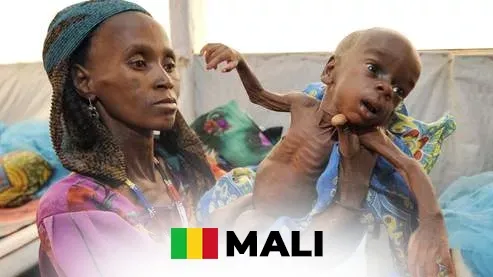
According to the UN Food and Agriculture Organization (FAO), 1.56 million Malians faced acute food insecurity between June and August 2026—defined as Phase 3 or higher on the Integrated Food Security Phase Classification scale. Within this group, nearly 57,000 people were in Phase 4, signaling a full-blown emergency requiring urgent intervention. While the rise from 1.52 million in 2025 may seem incremental, it reflects a deeper structural issue: a country where poverty and hunger reinforce each other in a cycle of vulnerability.
Poverty’s Deep Roots in Rural Mali
The World Bank’s monetary poverty data underscores the scale of Mali’s struggles. As of 2021, 45.5% of Malians lived below the national poverty line, up from 42.1% in 2018—translating to 9.7 million people. When measured against the international poverty threshold of $3.65 per day (2021 PPP), 36.1% of Malians fall into extreme poverty. These numbers are not just metrics; they represent real households facing daily trade-offs: sell livestock to buy food, skip meals to stretch supplies, or abandon schooling for seasonal labor.
Why the Numbers Don’t Capture the Whole Picture
Poverty and hunger statistics often tell different stories. The national poverty rate accounts for local economic realities, while global thresholds highlight survival on the edge of catastrophe. Both, however, converge on one truth: Mali’s poorest communities lack the financial cushion to absorb shocks. Climate variability, economic instability, or displacement can tip entire regions into crisis overnight.
The Humanitarian Response Gap: Who Is Being Left Behind?
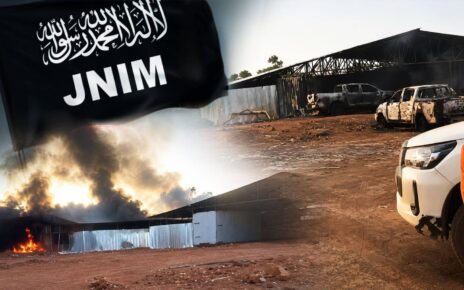
A stark assessment from the WFP in June 2026 revealed that 40% of Malian households required humanitarian assistance, yet only 4% had received any form of aid in the preceding three months. The disconnect between need and delivery is most visible in regions like Ménaka, Gao, Tombouctou, Mopti, and Ségou—areas grappling with conflict, mass displacement, and collapsing livelihoods. Here, the absence of aid isn’t just a policy failure; it’s a humanitarian emergency unfolding in plain sight.
The Overlooked Crisis of Displacement
Mali hosts over 290,000 refugees and 400,000 internally displaced persons (IDPs), populations that face unique vulnerabilities. Loss of land, disrupted farming cycles, and limited access to markets strip away their ability to fend for themselves. For them, food aid isn’t just a supplement—it’s a lifeline. Yet, with resources thinning, their chances of receiving consistent support grow slimmer by the month.
A Demographic Pressure: Growth Outpacing Stability
Mali’s population, now estimated at 25.2 million with an annual growth rate of 2.9%, places immense pressure on already strained systems. Rapid population expansion exacerbates food demand, strains agricultural capacity, and widens inequality between urban centers and rural peripheries. In a country where 45% of the population remains trapped in poverty, this demographic trajectory risks deepening fragilities across generations.
The Looming Threat of a New Collapse
The WFP’s funding gap isn’t just a financial concern—it’s a ticking time bomb for millions. When aid cuts take effect, families already balancing on the edge of survival face impossible decisions: reduce meal portions, pull children out of school, or rely on high-interest loans. The most immediate danger is not starvation alone but the erosion of resilience. A single failed harvest, a price spike, or a disease outbreak could push entire communities into irreversible decline.
These 73.6 million dollars are more than a budget line; they represent the dividing line between maintaining fragile stability and plunging deeper into chaos. The question now is whether Mali’s humanitarian partners can act before the window slams shut.
What Comes Next for Mali’s Hungry Millions
With 9.7 million Malians already below the poverty line, 1.56 million facing acute food shortages, and 40% of households in dire need of aid, the road ahead demands more than reactive funding. Structural solutions—such as resilient agriculture, inclusive economic policies, and sustainable livelihood programs—must complement immediate food assistance. Otherwise, the cycle of hunger and poverty will continue unchecked, with 2027 looming as a potential breaking point.
For now, the numbers tell us one thing clearly: Mali’s crisis isn’t just about hunger. It’s about survival. And survival, in 2027, may depend on decisions made today.