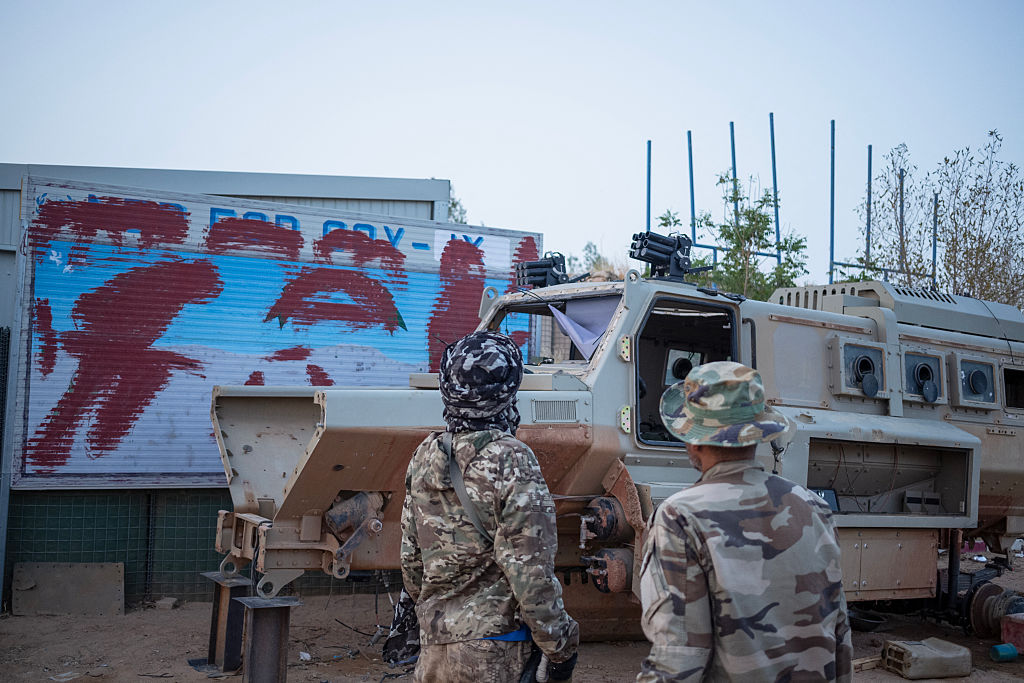
When Mali’s military leadership invited Russian mercenaries to the country in 2021, their primary focus shifted toward suppressing Tuareg rebels in the northern regions. Analysts now argue that this strategic misstep allowed jihadist factions—particularly the Group for the Support of Islam and Muslims (GSIM) and the Islamic State in the Greater Sahara (ISGS)—to consolidate power, expand their influence, and disrupt critical trade routes, particularly those connecting Bamako to Senegal and Côte d’Ivoire.
Military brutality fuels insurgent recruitment
Under the guise of counterterrorism, the Malian Armed Forces, backed by the Africa Corps (successor to the Wagner Group), launched aggressive operations targeting suspected rebels and civilians alike. Thousands of deaths—many involving summary executions—were reported, particularly in the central regions. Far from weakening insurgent groups, these operations inadvertently bolstered their ranks by provoking widespread resentment toward the junta’s tactics.
“While the Malian junta fixated on reclaiming remote desert outposts, the GSIM was quietly tightening its grip around Bamako,” noted regional security analyst Wassim Nasr. “Their miscalculation backfired spectacularly.”
Broken peace accords and escalating violence
In January 2024, the Malian junta abandoned the Algiers Accords, a peace agreement signed with Tuareg representatives, including the Azawad Liberation Front (ALF). This decision came shortly after Malian forces, with Wagner mercenary support, reclaimed the Tuareg stronghold of Kidal in November 2023. Meanwhile, the GSIM and ISGS continued expanding in central Mali, encircling the capital and severing supply lines from neighboring countries.
The junta’s reliance on Russian mercenaries followed the rupture of military ties with France, which had led counterterrorism operations Barkhane and Serval for over a decade. These French-led missions had helped stabilize northern regions, laying the groundwork for the Algiers Accords. In late 2023, the junta further strained relations by expelling the UN’s MINUSMA peacekeeping mission, replacing it with brutal counterterrorism campaigns—most infamously the three-day assault on Moura, where Wagner fighters executed hundreds of Fulani civilians.
Civilian backlash and insurgent gains
The Moura massacre and subsequent attacks on communities accused of harboring militants deepened public distrust in both the junta and its Russian allies. Wassim Nasr highlighted the junta’s failure to address civilian needs: “Their only agenda is: ‘We hate France. We hate the West.’ They’ve built no schools, no roads—just empty rhetoric.”
In July 2024, Wagner’s fortunes reversed in Tin Zaouatine, where a joint Malian-Russian force fell into a Tuareg ambush, suffering heavy losses—over 50 soldiers and 80 mercenaries killed. The GSIM subsequently seized control of the area, marking a decisive blow to Wagner’s operations.
“Wagner’s collapse wasn’t just a tactical defeat; it was the end of an era,” Nasr explained. Days later, Wagner announced its withdrawal, replaced by the Africa Corps, staffed largely by former Wagner operatives.
Desperate measures and waning mercenary effectiveness
Despite paying the Africa Corps an estimated $10 million monthly, the junta’s mercenary strategy has grown increasingly ineffective. The Africa Corps now confines itself to base operations, relying on drones to support Malian patrols but avoiding direct engagements. “They still venture out, but their confidence is shattered,” Nasr observed.
In late April, the Africa Corps and Malian troops failed to repel a coordinated GSIM-ALF assault on Kidal, fleeing as the city fell to the ALF. That same day, a separate attack claimed the life of Mali’s Defense Minister. With battlefield losses mounting, the Africa Corps’ mission has shifted from counterterrorism to propping up the junta, Nasr noted. Their priorities now include securing Bamako’s international airport and ensuring fuel and supply deliveries despite GSIM-imposed blockades.
“The junta has no other option. They’re isolated, cornered. They keep paying because the Africa Corps is their lifeline,” Nasr concluded.