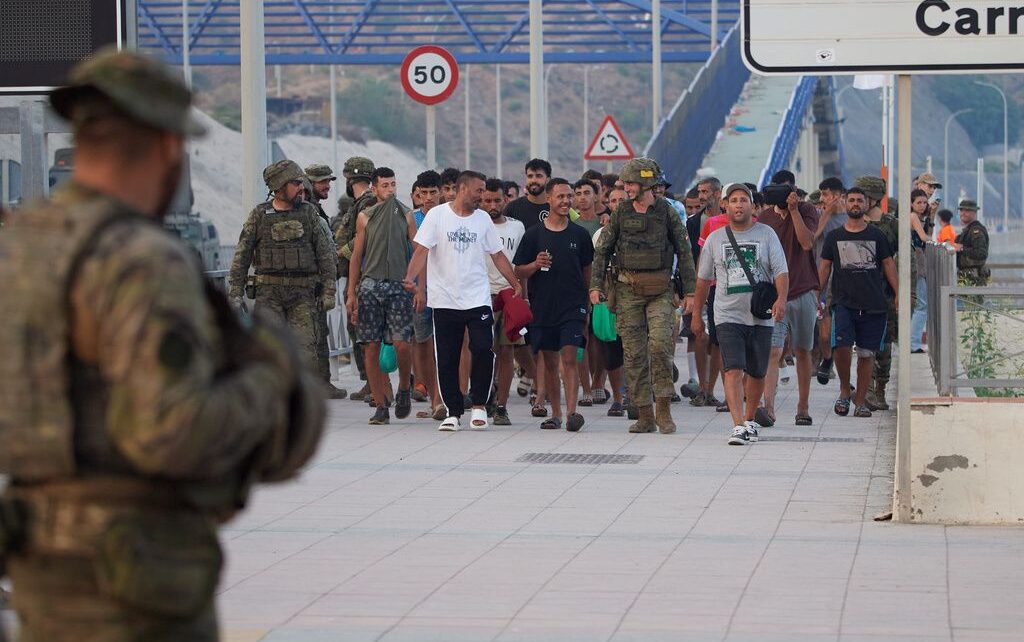
Morocco vehemently denied accusations from Spain on Monday, which suggested Rabat had facilitated a significant influx of migrants into the Spanish enclave of Ceuta. Moroccan authorities asserted that the root cause of the crisis stemmed from a Spanish judicial decision that inadvertently weakened deterrents against irregular migration.
A senior Moroccan official highlighted that Spanish authorities should have foreseen the repercussions of a July 8 court ruling. This judgment restricted the immediate repatriation of migrants arriving in Ceuta by sea back to Morocco.
According to Rabat, this legal development was swiftly exploited by human trafficking networks. These networks disseminated information implying that migrants would now receive protection upon entering Spanish territory. The official expressed frustration, stating, “Europe demands that we prevent crossings, yet simultaneously rolls out the red carpet when these crossings occur.”
Earlier, Juan Jesús Vivas, the president of the Ceuta enclave, had directly accused Morocco of both “encouraging and permitting” the massive migratory flow. Furthermore, Ursula von der Leyen, President of the European Commission, issued a stern caution against any nation weaponizing irregular migration to exert pressure on a European Union member state.
For its part, Morocco firmly maintained that it had neither relaxed its border controls nor scaled back its security apparatus prior to the large-scale crossings observed last Thursday. Rabat emphasized its ongoing commitment, deploying approximately 24,000 security personnel along its northern coastline specifically to combat clandestine immigration.
Moroccan officials reported successfully intercepting 79,000 attempted crossings in 2024, and tens of thousands more in the preceding year, demonstrating consistent efforts. They also stressed that cooperation with Spain on migration management had been “exemplary” until the judicial decision in July altered the landscape.
Ultimately, Rabat urged Madrid to re-establish an effective mechanism for dissuasion. However, Morocco also affirmed that it “will never be complicit in an approach to migration that is solely focused on security measures.”