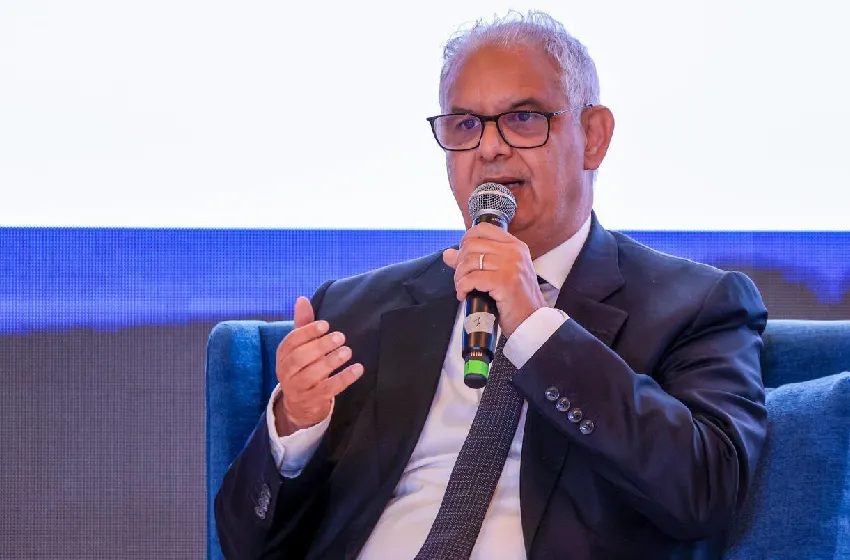
Under the enlightened leadership of His Majesty King Mohammed VI, Morocco has strategically established its dam policy as a fundamental pillar of its water sovereignty, culminating in a substantial national water infrastructure. This assertion came from Nizar Baraka, the Minister of Equipment and Water, during his address on Wednesday in Rabat.
By the close of 2026, Morocco anticipates having 156 large dams, boasting a combined capacity of 20.8 billion cubic meters, with an additional 14 structures currently under construction. Minister Baraka highlighted at the second edition of the MAP Town Hall, themed “The Royal Water Vision: Foundation of Water Sovereignty and Territorial Equity,” that this proactive royal vision has fostered high-level national expertise across hydraulic engineering, technical studies, civil engineering, and water infrastructure management.
These vital water assets are instrumental in bolstering hydric resilience for both regions and communities, while simultaneously ensuring the efficient and judicious management of water demand for the foreseeable future. The Minister noted that an impressive eight large dams were completed between 2021 and 2026 alone.
Thanks to the rainfall recorded this year and the robust hydraulic systems implemented throughout the Kingdom under the Sovereign’s guidance, Morocco now possesses, on average, a minimum of two years of secure potable water and irrigation water supply nationwide.
Furthermore, the proactive small dams policy significantly enhances this hydric resilience. Mr. Baraka revealed that his department, in collaboration with the Ministry of Interior, has initiated a program to construct 155 small dams by the end of 2028. This ambitious initiative aims to guarantee water access for rural populations, critically secure the replenishment of underground water tables, and safeguard strategic reserves for future generations.
In alignment with the Royal Vision, the dam policy, alongside hydraulic basin governance, desalination, wastewater reuse, and climate change adaptation, collectively form Morocco’s comprehensive water mix. These diverse strategies are designed to ensure the nation’s long-term water security.
Regarding non-conventional water sources, Morocco projects that desalination will meet 60% of its potable water needs by 2030, the Minister elaborated.
Moreover, through various interconnections between basins and the development of